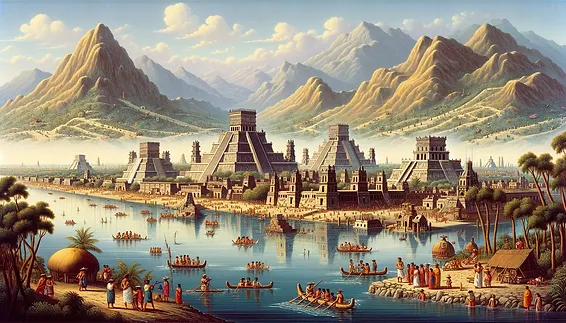
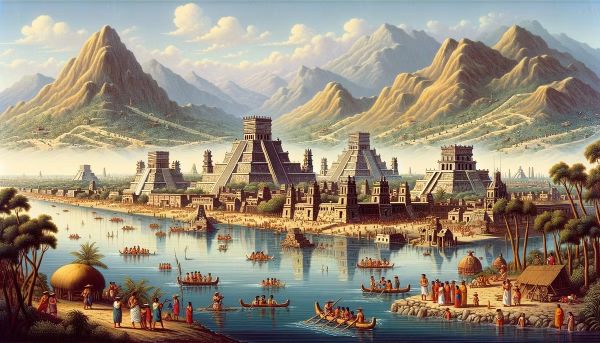
The Mexica — commonly called the Aztecs — arrived late in the Valley of Mexico and rose fast. By 1500 their capital, Tenochtitlan, was built on an island in Lake Texcoco and held perhaps 200,000 people, making it larger than any city in Spain, supplied by causeways, aqueducts and floating garden plots called chinampas.
Theirs was a tribute empire. The Triple Alliance of Tenochtitlan, Texcoco and Tlacopan did not usually replace local rulers; it demanded goods, and the Codex Mendoza records those demands in detail — cotton, cacao, feathers, jade, warriors.
Human sacrifice was central to Mexica religion. Spanish soldiers who entered the city described the great skull rack beside the Templo Mayor, and archaeologists found its remains in 2015, with hundreds of skulls. When the empire fell in 1521, the army besieging Tenochtitlan was made up mostly of Tlaxcalan and other Native allies of Cortés, and smallpox had killed great numbers of the city's people the year before.
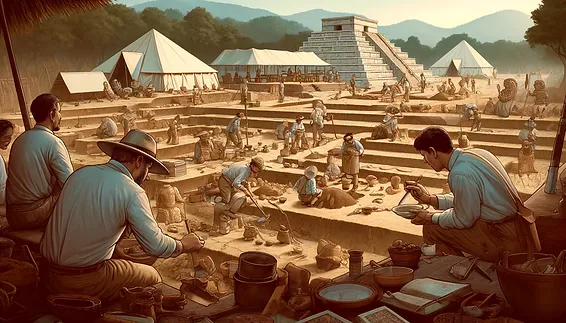
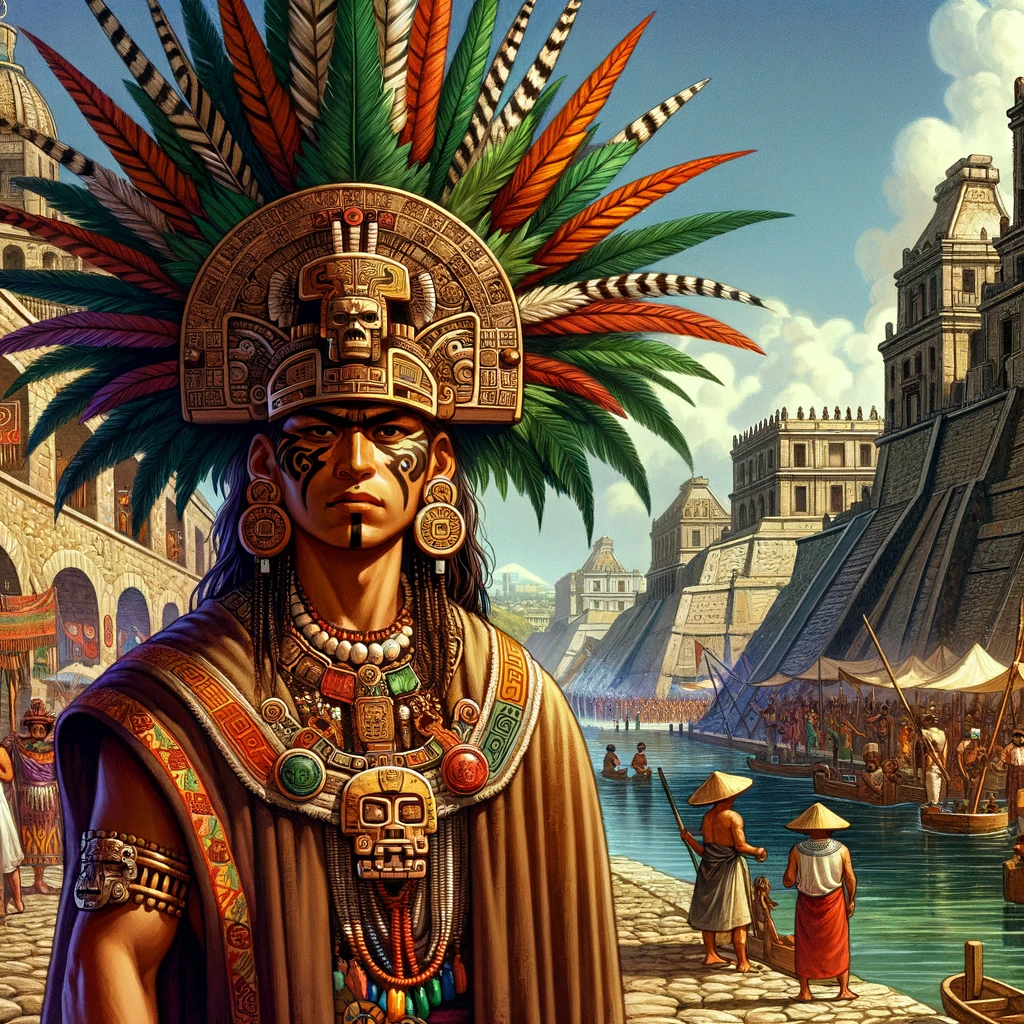
Tenochtitlan on the lakeExcavating an Aztec siteAcamapichtli, the first tlatoani
Look for these
A city built on a lake, and the engineering that required
Tribute empires versus territorial empires
The fall of Tenochtitlan in 1521
What this chapter teaches
Tenochtitlan
Chinampas
Tlatoani
Huitzilopochtli
The Triple Alliance
Calpulli
Tribute
Nahuatl
Who you will meet
Acamapichtlir. 1376–1395 — the first tlatoani
Itzcoatlr. 1427–1440 — who built the Triple Alliance
Moctezuma Ir. 1440–1469 — who expanded the empire
Moctezuma IIr. 1502–1520 — who met Cortés
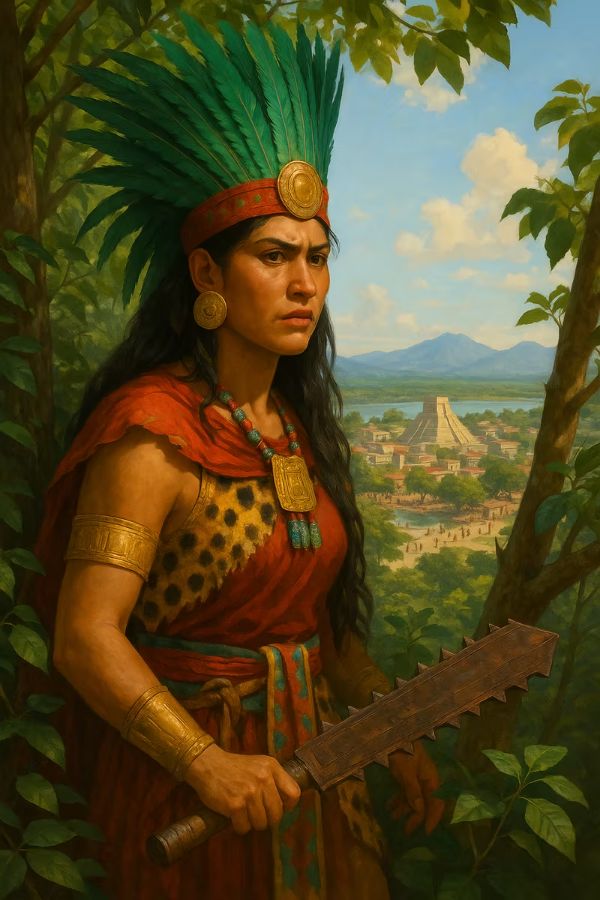
Malinchec. 1500–1529 — interpreter and adviser to Cortés, baptised Marina
While this was happening in the Americas, these were happening everywhere else.
The Mongol Empire under Genghis Khan
1206 – 1227 AD
The Mali Empire in West Africa
c. 1200 – 1400 AD
Magna Carta sealed in England
1215 AD
The fall of Constantinople
1453 AD
How to use this lesson. Read the chapter first — then work across the tabs in
order. The music hands you the era in a song, the subject matter expert puts a face to the
history, the reading takes you past the chapter, the video teaches it, the activity puts it
in your hands, and the exam at the end is how you check it stuck.
Read first
pages 152–165 —
The History of Ancient America: Ultimate Guide to Learning, the lesson plan and
activity book. This is where the activity on tab six comes from.
pages 143–158 —
Living History: Ancient America, Told By Those Who Were There, where the people
on the Subject Matter Expert tab tell it themselves.
The Music of This Era
Nothing sticks like a song. Written for this chapter, and worth having on while you do the activity.
Listen for the details. A specialist tells the story as someone who was there. The
things they mention in passing — what they ate, how they travelled, what they made, who
ruled them — are the details worth writing down.
Heroes & Villains — told in the first person
Acamapichtli, first ruler of the Aztec
Acamapichtli tells his story of building Tenochtitlan
0:00
Who they were
Acamapichtli · First tlatoani of Tenochtitlan, r. c. 1376–1395
The first tlatoani, or ruler, of Tenochtitlan. The Mexica had founded their city on an island in Lake Texcoco and paid tribute to the powerful city of Azcapotzalco. They chose Acamapichtli for his descent from the royal house of Culhuacán, which traced its line to the Toltecs. During his reign the Mexica built chinampas, the floating-garden fields that fed the island city, and every later Aztec emperor descended from him. Listen for how a city was built on a lake.
More voices from this chapter
0:00
Moctezuma II on guiding the Aztec and meeting Cortés
Who they were
Moctezuma II · Aztec emperor, r. 1502–1520
Ruler of Tenochtitlan and the largest state in Mesoamerica from 1502. His armies extended the empire's reach toward Oaxaca and the Gulf Coast. On 8 November 1519 he met Hernán Cortés on the causeway into the city and received the Spaniards as guests in the palace of Axayacatl, where they later held him. He died in June 1520. Spanish accounts say he was struck by stones while speaking to his people from the palace; the Indigenous accounts gathered in the Florentine Codex say he was killed by the Spaniards. Listen for how he describes governing his empire.
0:00
Tlacaelel on his power behind the Aztec throne
Who they were
Tlacaelel · Aztec cihuacóatl, c. 1397–1487
The cihuacóatl, or chief counsellor, who served several Mexica rulers, beginning with Itzcoatl. The chronicles of Diego Durán and Hernando Alvarado Tezozómoc describe him as a leader of the 1428 war that defeated Azcapotzalco and formed the Triple Alliance of Tenochtitlan, Texcoco and Tlacopan, the alliance that became the Aztec Empire. They also credit him with raising the god Huitzilopochtli to the centre of Mexica religion and state ceremony. Listen for how the empire was organised.
0:00
An Aztec jaguar warrior on his culture
What this video covers
A jaguar warrior · Aztec ocēlōtl, 15th–16th century not a specific person
Not a named man but a real institution. The jaguar warriors (ocēlōmeh) and eagle warriors were the elite military orders, entered by capturing enemies alive — captives, not kills, were how a soldier rose. That is why the "flower wars" against Tlaxcala look so strange: they were fought on arrangement, partly to take prisoners. The video is about that career ladder: the Codex Mendoza shows a warrior's dress and rank changing with each captive he took, until he joined the jaguar or eagle order.
0:00
Hernán Cortés on conquering the Aztec empire
Who they were
Hernán Cortés · Spanish conquistador, 1485–1547
A Spanish commander from Medellín who landed on the Gulf Coast of Mexico in 1519 with about 500 men, founded Veracruz and had his ships run aground so the expedition would go inland. He made alliances with Tlaxcala and other Indigenous cities, entered Tenochtitlan in November 1519, and after the siege of 1521 the city surrendered on 13 August. He described these events in five long letters to the Emperor Charles V. He later governed New Spain, led an expedition to Honduras, explored the Gulf of California, and died in Spain in 1547. Listen for how he describes his alliances and the siege.
These are from Living History: Ancient America, Told By Those Who Were
There, which carries the same accounts in print.
Beyond the chapter
Additional Reading
Tenochtitlan was described by the Spanish soldiers who saw it standing, and the Mexica's own memory of it was written down by Nahua scholars in the Florentine Codex.
Excavating an Aztec site
Tenochtitlan in 1519 stood on an island in Lake Texcoco, reached by three causeways with bridges that could be taken up. Fresh water came from the springs of Chapultepec by a double aqueduct built in two channels, so that one could be cleaned while the other ran. Bernal Díaz, a soldier who saw it, wrote that some of his companions asked whether what they were seeing was not a dream. Cortés wrote that the great market of Tlatelolco was twice the size of the square of Salamanca.
The chinampa is how the city was fed. Chinampas are not floating gardens: they are long beds built up from lake mud and plants, held in place by willow trees whose roots bind the edges, with canals between them. They yield several crops a year, and some are still farmed at Xochimilco today.
Human sacrifice was at the centre of Mexica religion, which taught that the sun and the gods were fed by it. The Dominican Diego Durán, writing from Nahua records, gave the number sacrificed at the rededication of the Great Temple in 1487 as more than eighty thousand over four days. Spanish soldiers described the skull racks beside the temple, and since 2015 archaeologists in Mexico City have excavated the great rack, the huey tzompantli, and a tower of skulls built beside it, finding hundreds of skulls.
The Tlaxcalans, who had never been conquered by the Mexica, made alliance with Cortés in 1519. Smallpox struck Tenochtitlan in 1520 and killed the emperor Cuitláhuac. In 1521 Cortés and his allies besieged the city, cut the aqueduct from Chapultepec, and after nearly three months took it on 13 August, capturing the emperor Cuauhtémoc.
Four things worth knowing
Doña Marina — La Malinche — spoke Nahuatl and Maya and became Cortés's interpreter. Bernal Díaz wrote that without her the Spaniards could not have understood the language of New Spain.
The Codex Mendoza shows Mexica children being taught at each age — to carry loads, fish and weave — and boys entering the telpochcalli or calmecac schools.
The eagle on a cactus devouring a serpent — the sign that told the Mexica where to found Tenochtitlan — is on the flag of Mexico today.
Mexico City is sinking, in places by tens of centimetres a year, because it stands on the drained bed of the lake.
Excavating an Aztec site
We know Tenochtitlan from two kinds of source. Spanish soldiers who saw the city standing described it in their letters and memoirs. And the Mexica's own memory of it was written down by Nahua scholars in the Florentine Codex, a great encyclopedia of Mexica life made in the 1500s.
A city on a lake
In 1519 Tenochtitlan stood on an island in Lake Texcoco. Three causeways — raised roads across the water — joined it to the shore, and their bridges could be taken up to cut the city off. Fresh water came from the springs of Chapultepec along a double aqueduct, a channel built to carry water. It had two channels, so one could be cleaned while the other kept running.
Bernal Díaz, a soldier who saw the city, wrote that some of his companions asked whether what they were seeing was not a dream. Hernán Cortés wrote that the great market of Tlatelolco was twice the size of the main square of the Spanish city of Salamanca.
How the city was fed
The city was fed by chinampas. They are sometimes called "floating gardens," but they did not float. They were long beds built up from lake mud and plants, held in place by willow trees whose roots bound the edges, with canals between them. A chinampa gave several crops a year, and some are still farmed at Xochimilco today.
Religion
Human sacrifice was at the centre of Mexica religion, which taught that the sun and the gods were fed by it. The Dominican friar Diego Durán, writing from Nahua records, gave the number sacrificed at the rededication of the Great Temple in 1487 as more than eighty thousand over four days. Spanish soldiers described racks of skulls beside the temple. Since 2015, archaeologists in Mexico City have dug out the great rack, the huey tzompantli, and a tower of skulls built beside it, finding hundreds of skulls.
The fall of the city
The Tlaxcalans, a people the Mexica had never conquered, made an alliance with Cortés in 1519. In 1520 smallpox, a disease new to the Americas, struck Tenochtitlan and killed the emperor Cuitláhuac. In 1521 Cortés and his allies laid siege to the city and cut the aqueduct from Chapultepec. After nearly three months they took Tenochtitlan on 13 August 1521 and captured the emperor Cuauhtémoc.
Four things worth knowing
Doña Marina, also called La Malinche, spoke Nahuatl and Maya and became Cortés's interpreter. Bernal Díaz wrote that without her the Spaniards could not have understood the language of New Spain.
The Codex Mendoza shows Mexica children being taught at each age — to carry loads, fish and weave — and boys entering the schools called the telpochcalli and the calmecac.
The eagle on a cactus eating a serpent — the sign that told the Mexica where to found Tenochtitlan — is on the flag of Mexico today.
Mexico City is sinking, in places by tens of centimetres a year, because it stands on the drained bed of the lake.
Excavating an Aztec site
The Aztecs called themselves the Mexica. Their great city, Tenochtitlan, was built on an island in a lake in the Valley of Mexico. Mexico City stands on the same spot today.
People and their jobs
The tlatoani was the ruler. The word means "speaker." Moctezuma II was tlatoani when the Spanish came.
Priests looked after the temples and kept the calendar of festivals.
Eagle and jaguar warriors were the bravest soldiers, and wore suits made to look like those animals.
Farmers grew maize, beans, squash and flowers on garden beds in the lake.
Merchants walked long distances to trade, and brought back feathers, cacao and jade.
Painter-scribes painted books in pictures and signs.
Children went to school. A painted book, the Codex Mendoza, shows children learning to carry loads, fish and weave.
Animals
The eagle. The Mexica said their god told them to build their city where they saw an eagle on a cactus eating a snake. That eagle is on the flag of Mexico today.
The axolotl is a little lake salamander that lives in the canals of the lake.
Turkeys and dogs were raised by Mexica families.
Things they built and used
A chinampa is a long garden bed built up from lake mud, with willow trees at the edges and canals all around.
Causeways were raised roads across the water that joined the island to the shore.
An aqueduct carried fresh spring water into the city in two channels, so one could be cleaned while the other ran.
Canoes carried people and food along the canals.
Cacao beans, used to make a chocolate drink, were also used like money in the market.
The Great Temple was a huge pyramid with two shrines on top. Mexica religion taught that the sun and the gods had to be fed, and priests there offered them animals and, at times, human lives.
Where this comes from. Everything on this page is drawn from the records of the time —
letters, logs, chronicles, codices and laws — and from what excavations have found. Where a
fact rests on a single account, the page names it.
The chapter taught on video — from the Adventure Box podcast series,
week 2 of Ancient America.
W3:D3 — The Aztec civilization
🎧 Podcast episode — Coming soon
From the Ultimate Guide — pages 152–165
Activity
Hands-on work from The Ultimate Ancient America Lesson Plan and
Activity Book. Pick one — you do not need to do all of them.
Aztec Codex CreationAges 8–14
Make a tribute page in the style of the Codex Mendoza: pick a province, decide what it owes, and draw the goods and their quantities in pictographs with a key.
Why it is worth doing. Students learn how an empire without writing as we know it still ran an accounting system.
Objective
To help students understand the importance of written records in Aztec culture, and practice creating their own symbolic language.
Materials Needed
Paper or cardstock
Markers, crayons, or colored pencils
Reference images of Aztec glyphs
Instructions
Begin by explaining the role of codices in Aztec society, highlighting how they were used to record history, religious practices, and daily life.
Show students examples of Aztec glyphs and symbols.
Ask students to create their own codex page, by drawing a series of glyphs that tell a simple story or describe an aspect of their daily life.
Encourage creativity and provide guidance on how to structure their codex page in a visually appealing way. Extension: Students can present their codex pages to the class, explaining the story or information depicted in their symbols.
Learning Outcome
Students learn how an empire without writing as we know it still ran an accounting system.
Aztec Marketplace Role-PlayAges 8–14
Run the Tlatelolco market. Assign roles — farmer, feather-worker, obsidian trader, cacao merchant, official — and trade using cacao beans as currency, with an official settling disputes.
Why it is worth doing. Students see a pre-coinage economy work, and why cacao made good money.
Objective
To provide students with an understanding of Aztec commerce, trade, and social interaction through role-play.
Materials Needed
Play money or tokens
Small items for trade (e.g., beads, craft supplies, snacks)
Costumes or props (optional)
Instructions
Set up a classroom marketplace with different "stalls," where students can trade items.
Assign roles, such as merchants, buyers, and sellers, and provide each student with play money or tokens.
Allow students to interact, negotiate, and trade items in the marketplace.
Encourage students to think about the value of goods, and how trade worked in the Aztec society. Extension: After the activity, discuss the experience with the students. Ask them what they learned about Aztec trade, and how it compares to modern marketplaces.
Learning Outcome
Students see a pre-coinage economy work, and why cacao made good money.
Aztec Architecture and Engineering ProjectAges 10–16
Model a chinampa in a shallow tray of water using a woven frame and soil. Plant seeds. Then design the causeways and aqueducts a lake city needs.
Why it is worth doing. Students engage with how you feed 200,000 people on an island.
Objective
To explore Aztec architectural and engineering achievements, through a hands-on building project.
Materials Needed
Cardboard, foam board, or building blocks
Scissors and glue
Rulers and measuring tools
Reference images of Aztec structures (e.g., Templo Mayor, canals)
Instructions
Introduce students to the architectural feats of the Aztecs, including the construction of Tenochtitlan and its temples.
Divide students into small groups, and assign each group a specific structure or aspect of Aztec engineering to replicate.
Provide materials and reference images to guide their construction.
Have each group build a model of their assigned structure, paying attention to detail and scale. Extension: Display the completed models in the classroom or school and invite students to present their projects, explaining the significance of their structures in Aztec society.
Learning Outcome
Students engage with how you feed 200,000 people on an island.
Aztec Mythology StorytellingAges 8–14
Read the migration story from Aztlán and the founding sign of the eagle on the cactus, then retell it as a performance. Compare it with the flag of Mexico.
Why it is worth doing. Students trace a founding myth into a living national symbol.
Objective
To engage students with Aztec mythology and develop their storytelling skills.
Materials Needed
Storybooks or online resources about Aztec myths
Art supplies (paper, markers, crayons)
Props or costumes (optional)
Instructions
Share stories from Aztec mythology with the students, such as the tale of Huitzilopochtli or the creation myth involving Quetzalcoatl.
Divide students into small groups, and assign each group a myth to retell in their own words.
Encourage students to create visual aids, such as drawings or masks, to accompany their storytelling.
Have each group perform their myth for the class, using props or costumes, if available. Extension: Discuss the themes and morals of the myths and their significance in Aztec culture. Students can also write their own myths, inspired by Aztec themes.
Learning Outcome
Students trace a founding myth into a living national symbol.
The Monthly Adventure Box ships
the craft kit for this era, so most of these arrive with the materials already cut.
Activity journal
Write about doing this activity. What did you actually make or do? What surprised you? What was harder than you expected, and what would you do differently next time? Then say one thing about Aztec Civilization that you understand better now than you did before you started.
Saved on this device as you type. Send to my parent account submits it to the
Xogos parent/teacher grade page — you can keep editing and send again.
Extra
Do not have the book with you? These cover the same chapter, free, on
our blog — read them on a phone at a kitchen table or in the back of a car.
8 questions drawn from a pool of 16, plus one to
write in your own words. Open book — you are meant to look things up.
How this one works. You get four attempts. Each retake takes 5 points off
the top, never more than 20 — so a perfect paper passes however many tries it took. The
pass mark is 80%, and passing is what opens the next chapter. Every attempt draws
a different paper.
Sign in to take the exam
Your attempts, your score and your place in the course are kept on your
account, so the exam needs to know who you are.