History Curriculum/Book 23
Book twenty-three of the curriculum
The History of the Roaring 1920s
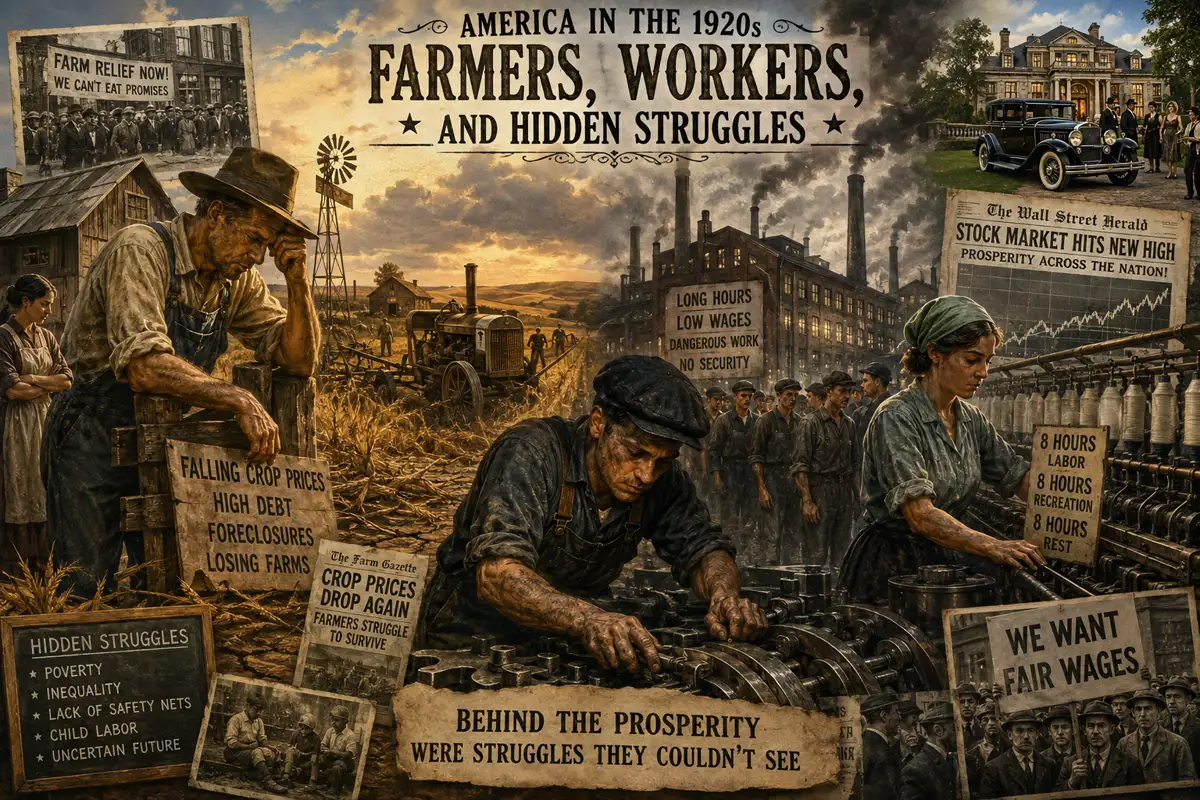
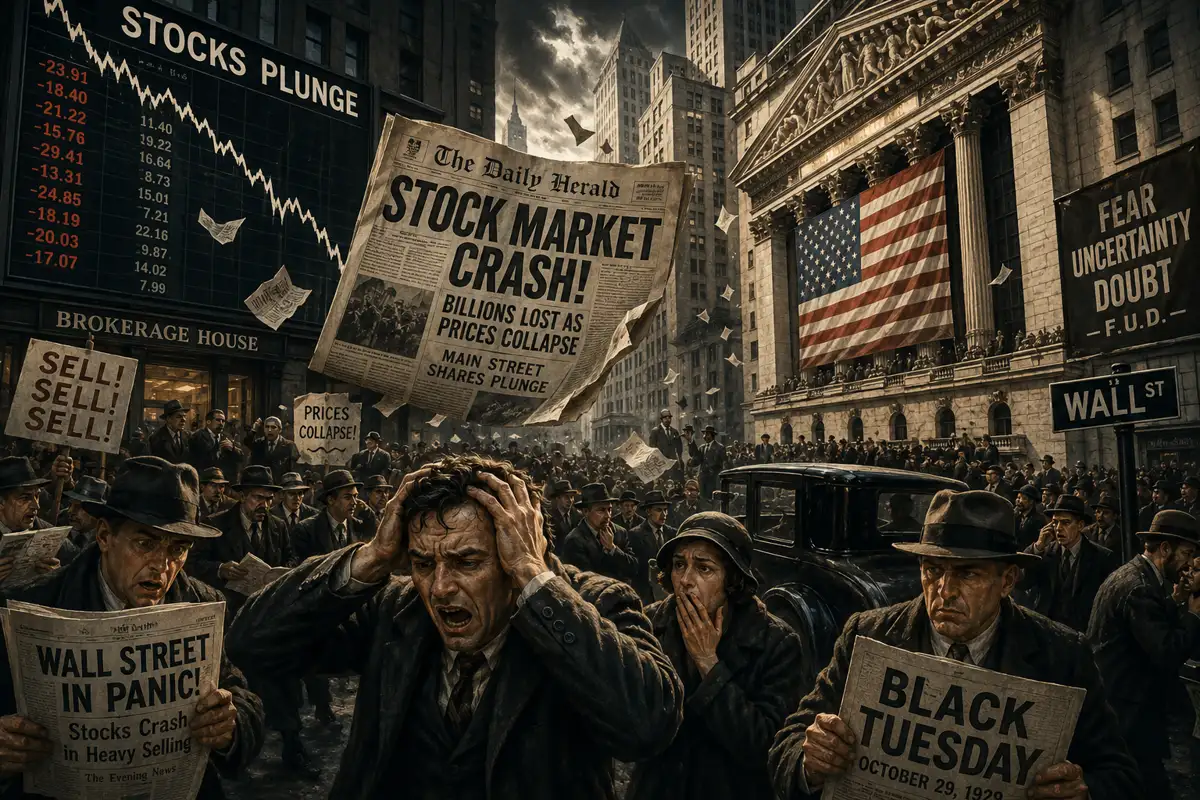
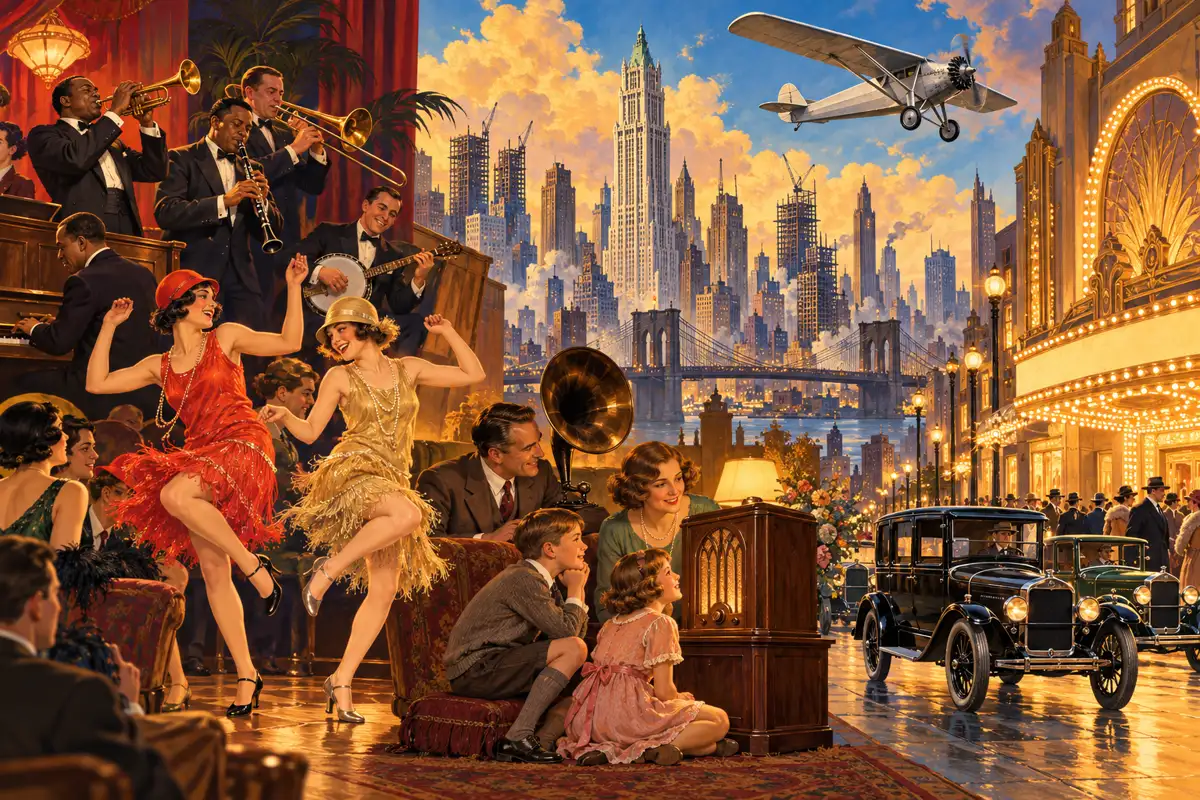
The twenty-third book in the curriculum and the fifth of the Late American History set. Sixteen chapters across four weeks — first the road into the decade: the world after the First World War, the Red Scare of 1919–1920, the changing American economy, and health, leisure and everyday life before Prohibition; then culture and social change: jazz and radio, the Harlem Renaissance, women's new vote and new roles, and the sports stars and films of the decade; then the conflicts beneath the prosperity: Prohibition and the gangs, the immigration laws of 1921 and 1924, the Ku Klux Klan as the hearings, courts and newspapers of the time recorded it, and the Scopes trial; and last the end of the decade: the stock market boom, the farmers' and workers' struggles, the crash of October 1929, and what the decade left behind. TWO THINGS TO KNOW BEFORE YOU START. First, the first-person accounts in both printed editions are HISTORICAL FICTION — written to tell the story, informed by the surviving record, and not the words of the people named. Most narrators are real people, but some speak of things that happened after they died, and some meet in conversations that never took place. The record itself is large: the amendments and statutes, the presidents' messages, the court records and verdicts, the hearings of Congress, the census and the Federal Reserve's reports, the newspapers and magazines, and the recordings, films and photographs of the decade — and this course quotes them. Second, at the back of the Ultimate Guide, after the chapters (pages 309–357), there are Cross-Curricular sections — Math, Science, English and Social Studies — and three exams with their keys, to use alongside this course. They are not a fifth week and there is nothing to hand in for them.
Read the book
Turn the pages of both editions right here. The Roaring 1920s is a members’ book: subscribers and Adventure Box Course families read every page.
🔒 A members’ book — Living History 326 pages, Standard Book 357 pages. Subscribe, or buy an Adventure Box, to read it.
4 Weeks, 16 Chapters, Choose 8+ to Read
Pick the chapters you want to read each week. The living books and the sources are one click away.
Pick two or more of these chapters to read. Finish two of the ones you choose to open Week 2.
K–5th Grade
6th–8th Grade
9th–12th Grade
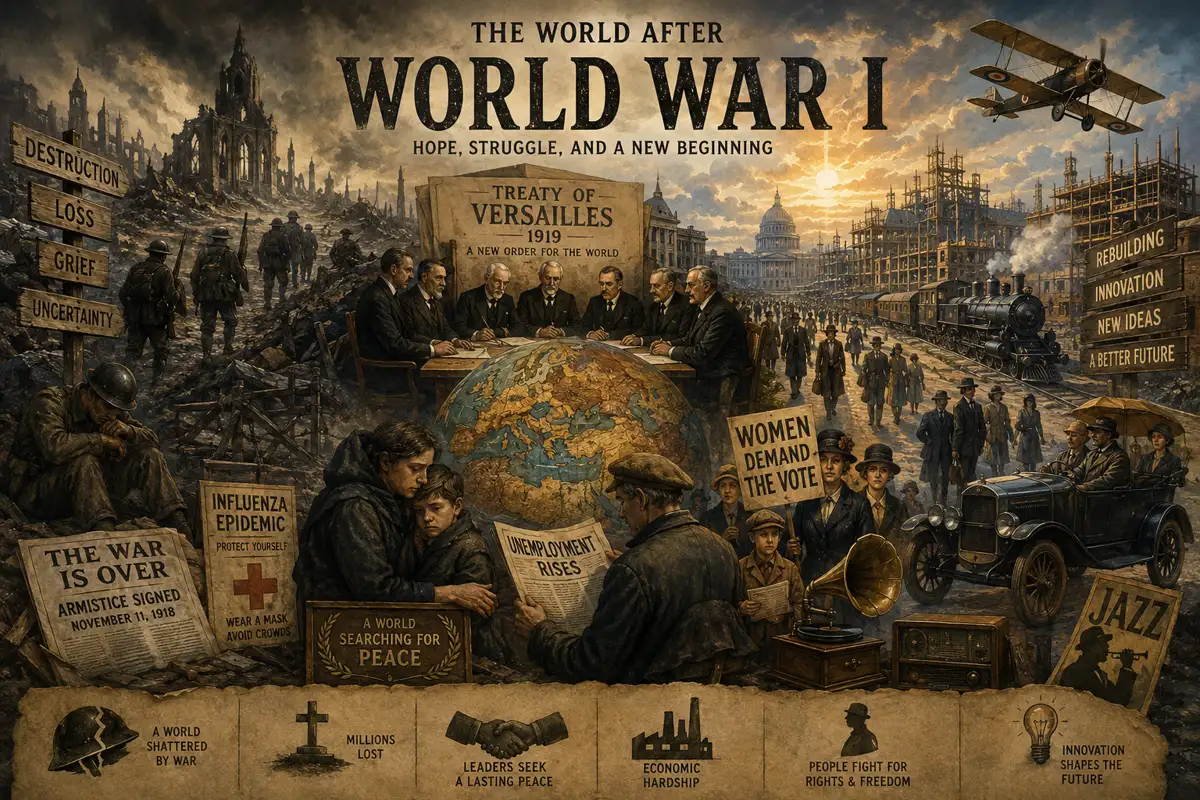
The Peace of 1919
- Woodrow Wilson, Address to a Joint Session of Congress on the Conditions of Peace ("The Fourteen Points") 8 January 1918Wilson's peace programme, point by point. Point XIV: "A general association of nations must be formed under specific covenants for the purpose of affording mutual guarantees of political independence and territorial integrity to great and small states alike." Read the exact words of each point before reading what was agreed at Paris a year later.
- The Treaty of Versailles, Part VIII: Reparation (Article 231) Treaty of Peace between the Allied and Associated Powers and Germany, signed at Versailles, 28 June 1919Article 231 exactly: "The Allied and Associated Governments affirm and Germany accepts the responsibility of Germany and her allies for causing all the loss and damage to which the Allied and Associated Governments and their nationals have been subjected as a consequence of the war imposed upon them by the aggression of Germany and her allies." Read the articles that follow it on how the sum was to be fixed.
- The Covenant of the League of Nations Part I of the Treaty of Versailles, 28 June 1919The League's own constitution: its Assembly and Council, Article 10 on the members' promise to respect and preserve one another's territory and independence, and Article 22 on the mandates for former colonies and Ottoman lands. The United States Senate did not ratify the treaty, so the United States never joined.
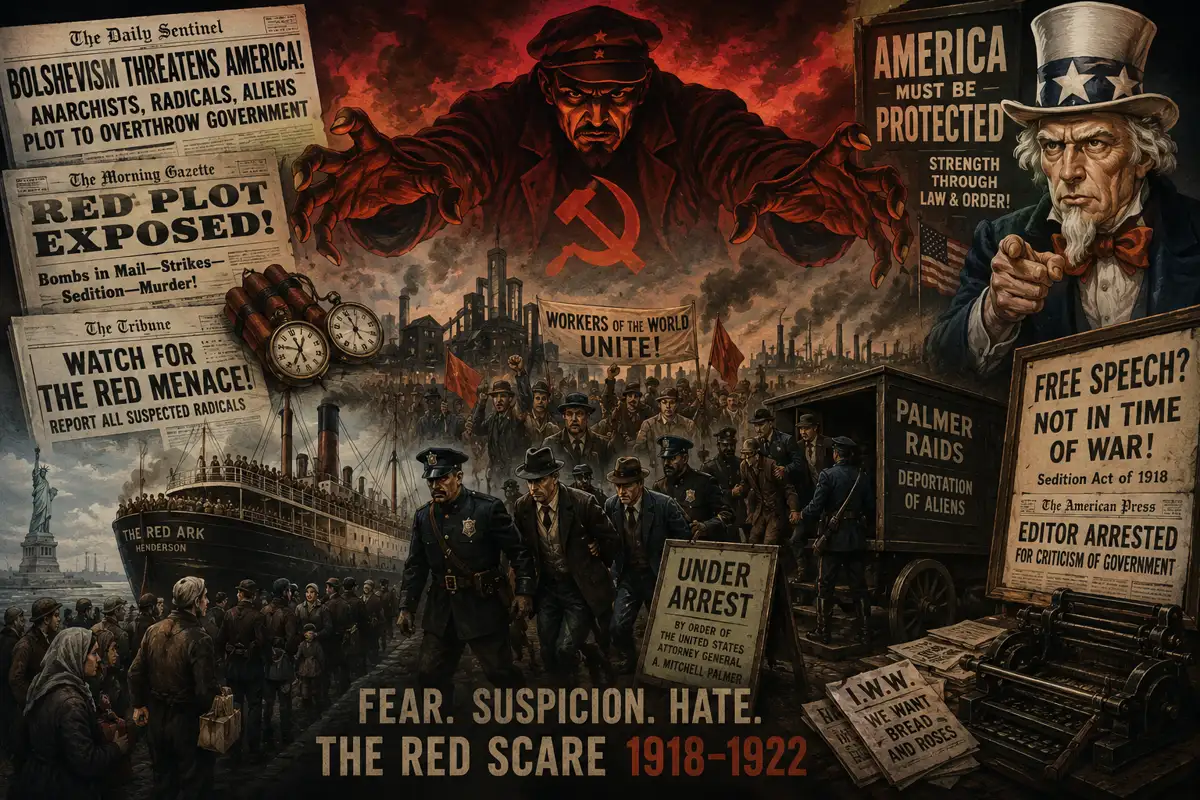
Fear of Revolution, 1919–1920
- Calvin Coolidge, telegram to Samuel Gompers on the Boston police strike Boston, 14 September 1919The governor of Massachusetts answered the president of the American Federation of Labor: "I have already refused to remove the Police Commissioner of Boston." Then the sentence that made him known across the country: "There is no right to strike against the public safety by anybody, anywhere, any time."
- A. Mitchell Palmer, "The Case Against the 'Reds'" The Forum, vol. 63 (February 1920), pp. 173–185The Attorney General's own defence of the raids of November 1919 and January 1920, written while they were going on: "Like a prairie-fire, the blaze of revolution was sweeping over every American institution of law and order a year ago." Read it beside the lawyers' report below — each side in its own words.
- To the American People: Report upon the Illegal Practices of the United States Department of Justice Washington, D.C.: National Popular Government League, May 1920Twelve lawyers and law professors, among them Zechariah Chafee Jr., Felix Frankfurter and Roscoe Pound, set out with sworn statements and exhibits what they said the Department of Justice had done in the raids. Read what they charge, and what Palmer had written three months earlier.
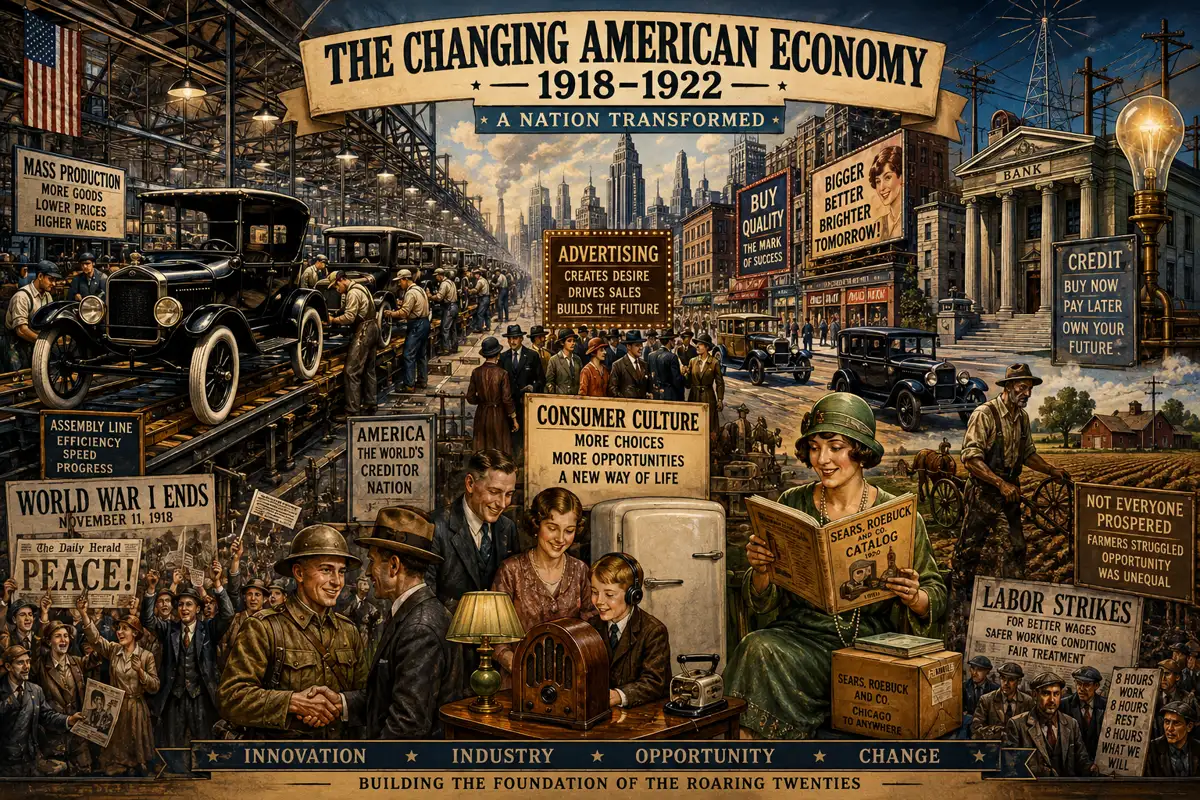
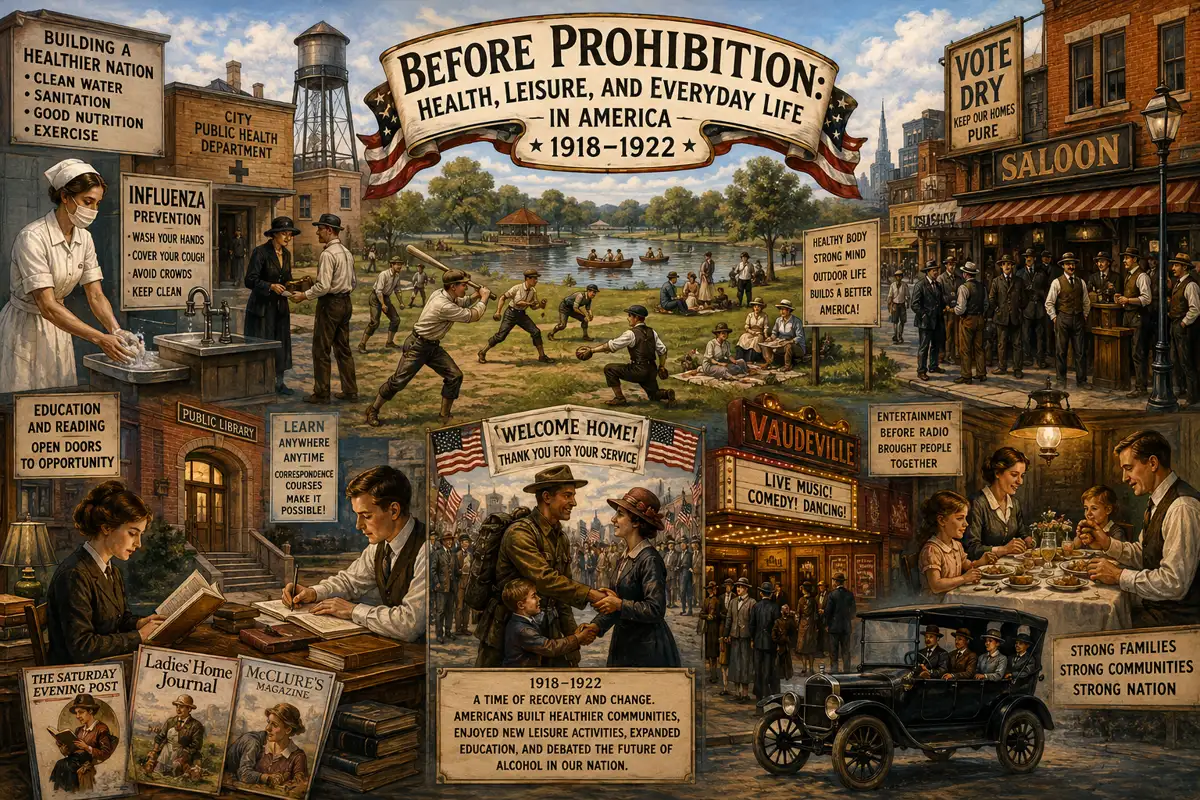
From War to Peacetime at Home
- United States Public Health Service, Epidemic Influenza ("Spanish Influenza") Pamphlet issued by Surgeon General Rupert Blue, 27 September 1918The Surgeon General's advice to the public as the second wave of influenza spread through the camps and cities in the autumn of 1918: what the disease was, how it passed from person to person, and what to do. A government's own words in the middle of the epidemic.
- Charles Lathrop Pack, The War Garden Victorious Philadelphia: J. B. Lippincott, 1919The president of the National War Garden Commission tells the story of the home gardens planted during the war, and how the commission's "war gardens" became "victory gardens" once the fighting ended. Its appendix reprints the commission's Victory editions of War Gardening and Home Canning and Drying (1919).
- Henry Ford, in collaboration with Samuel Crowther, My Life and Work Garden City, N.Y.: Doubleday, Page, 1922Ford's own account, written in 1922, of the Model T, the moving assembly line at Highland Park and the five-dollar day of 1914, and of his views on business. It is one man's account of his own company; compare it with the Census of 1920 and the advertisements of the time.
Pick two or more of these chapters to read. Finish two of the ones you choose to open Week 3.
K–5th Grade
6th–8th Grade
9th–12th Grade
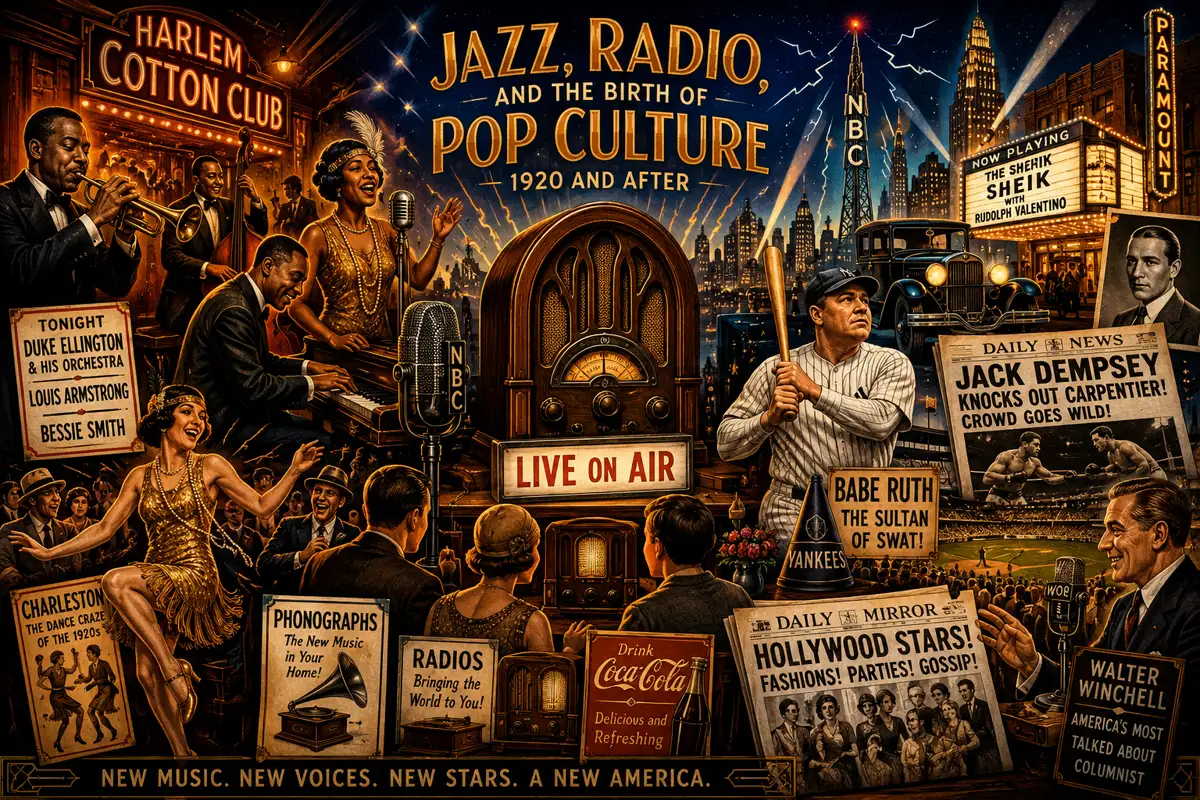
Radio and Records
- KDKA's broadcast of the 1920 election returns: the notices, the licence and the reviews 27 October – 6 November 1920, as reproduced by the Early Radio History siteThe Westinghouse station at East Pittsburgh was licensed on 27 October 1920 and broadcast the Harding–Cox election returns on 2 November. The page reproduces and quotes the newspapers of the week, among them the Cleveland Plain Dealer of 28 October, "To Give Election Returns by Radio". Cite the newspapers themselves.
- The Radio Act of 1927 Public Law 69-632, 44 Stat. 1162, approved 23 February 1927The law that created the Federal Radio Commission to license stations, assign wavelengths and decide hours of operation, as the number of stations crowded the air. Read what it says a licensee must serve.
- Louis Armstrong and his Hot Five, "Cornet Chop Suey" Recorded in Chicago, 26 February 1926; first issued as OKeh 8299 (this copy a later British pressing)A 78 rpm recording that can be heard as it was made: Armstrong's cornet with the Hot Five, the studio band he recorded with in Chicago from 1925 to 1928. The recording itself is the document.
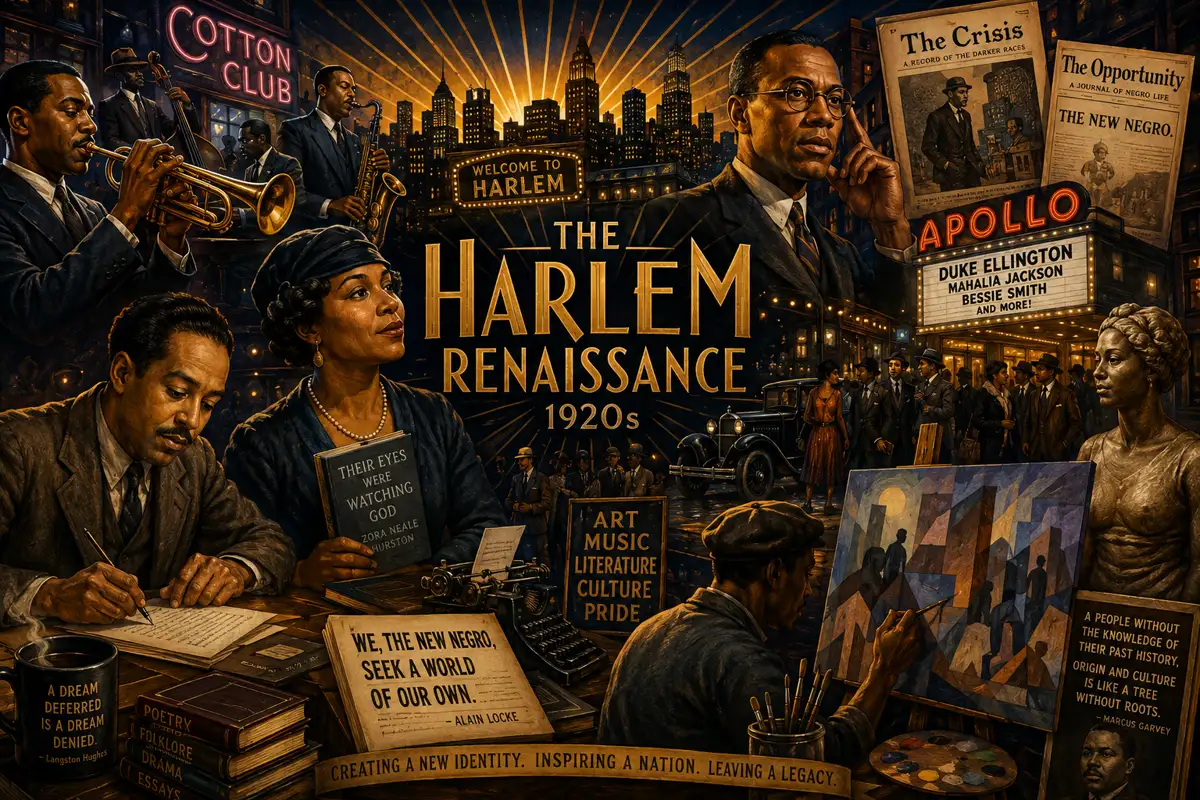
Harlem's Own Pages
- The Crisis, June 1921, with Langston Hughes, "The Negro Speaks of Rivers" (p. 71) The Crisis, vol. 22, no. 2, June 1921; edited by W. E. B. Du BoisThe NAACP's monthly magazine, edited by Du Bois from 1910, printed a nineteen-year-old poet's work: "I've known rivers ancient as the world." Read the whole issue to see what else its readers found beside the poem.
- Survey Graphic, "Harlem: Mecca of the New Negro" The Survey, vol. 53, no. 11, 1 March 1925The special number edited by Alain Locke, which opens with his essay "Enter the New Negro" and which he enlarged that year into the book The New Negro. The writers of Harlem in their own pages, in 1925.
- W. E. B. Du Bois, "Criteria of Negro Art" The Crisis, vol. 32, no. 6, October 1926, p. 290 (an address to the NAACP's Chicago conference, June 1926)Du Bois's own statement of what he thought art was for: "Thus all Art is propaganda and ever must be, despite the wailing of the purists." Writers of the time answered him in print; read their essays beside his.
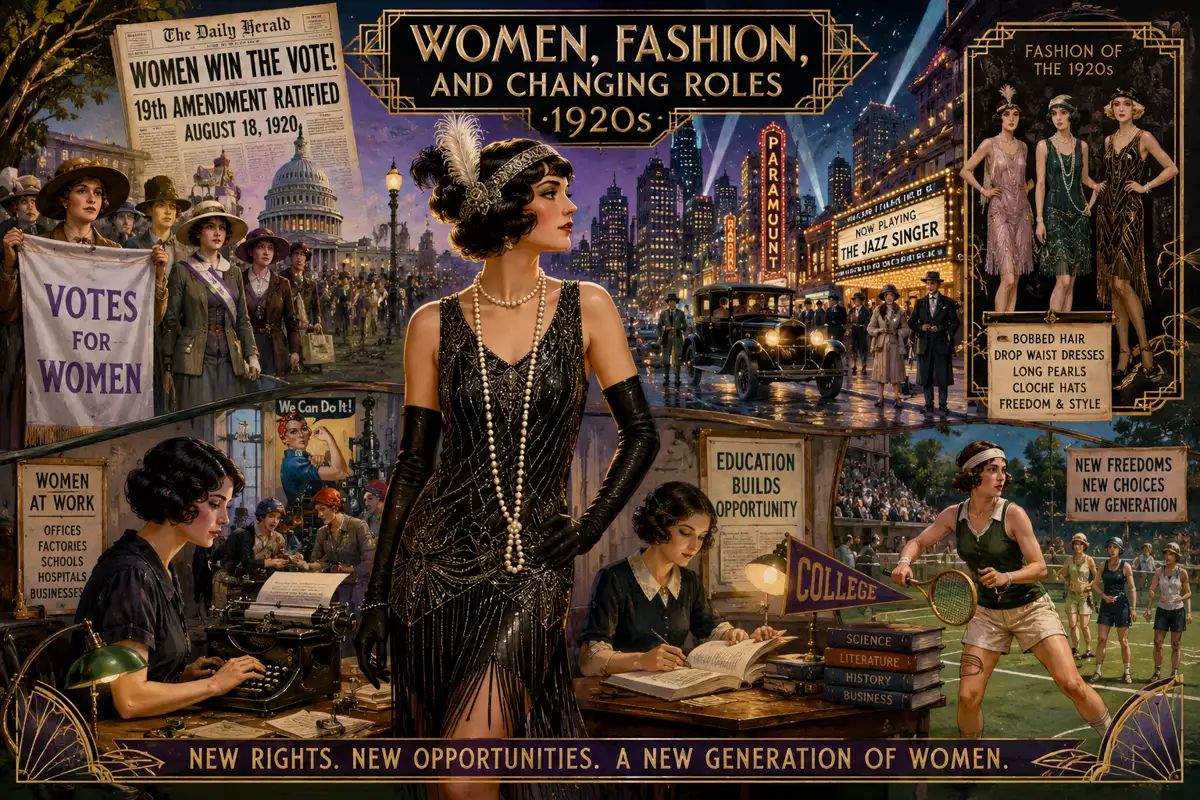
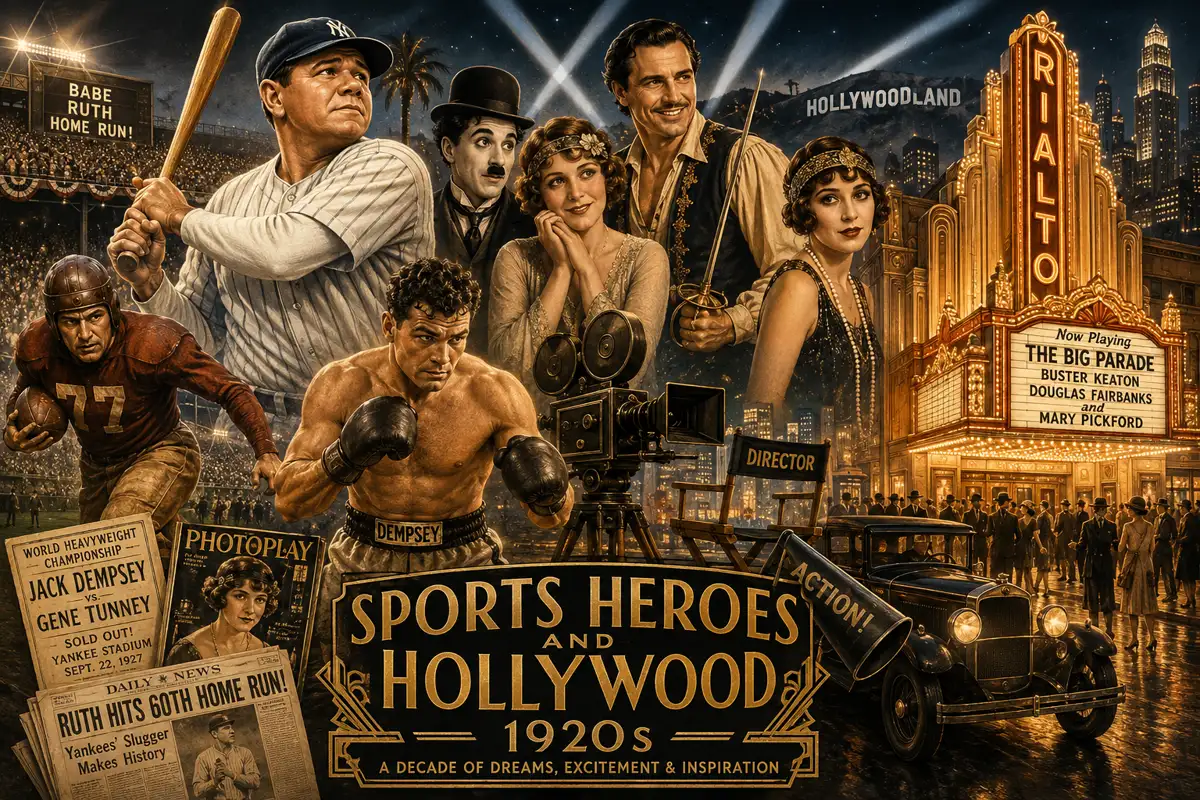
The Vote, the Screen and the Ring
- Joint Resolution proposing the Nineteenth Amendment Passed by Congress 4 June 1919; ratified 18 August 1920; certified 26 August 1920"The right of citizens of the United States to vote shall not be denied or abridged by the United States or by any State on account of sex." The enrolled resolution as the Archives keeps it.
- The Woman Citizen, 4 September 1920: the proclamation and Carrie Chapman Catt, "Two Greetings" The Woman Citizen, vol. 5, no. 14, 4 September 1920The suffrage weekly printed the text of the proclamation signed by Secretary of State Bainbridge Colby and the greeting of the president of the National American Woman Suffrage Association: "The vote is won."
- Morning Oregonian, 4 July 1921: the Dempsey–Carpentier fight Morning Oregonian (Portland, Oregon), 4 July 1921, p. 1The wire report of Jack Dempsey's fourth-round knockout of Georges Carpentier at Jersey City on 2 July: the promoter Tex Rickard expected the gross receipts to "exceed $1,600,000", and hundreds of reporters and telegraphers sat at the ringside.
Pick two or more of these chapters to read. Finish two of the ones you choose to open Week 4.

K–5th Grade
6th–8th Grade
9th–12th Grade
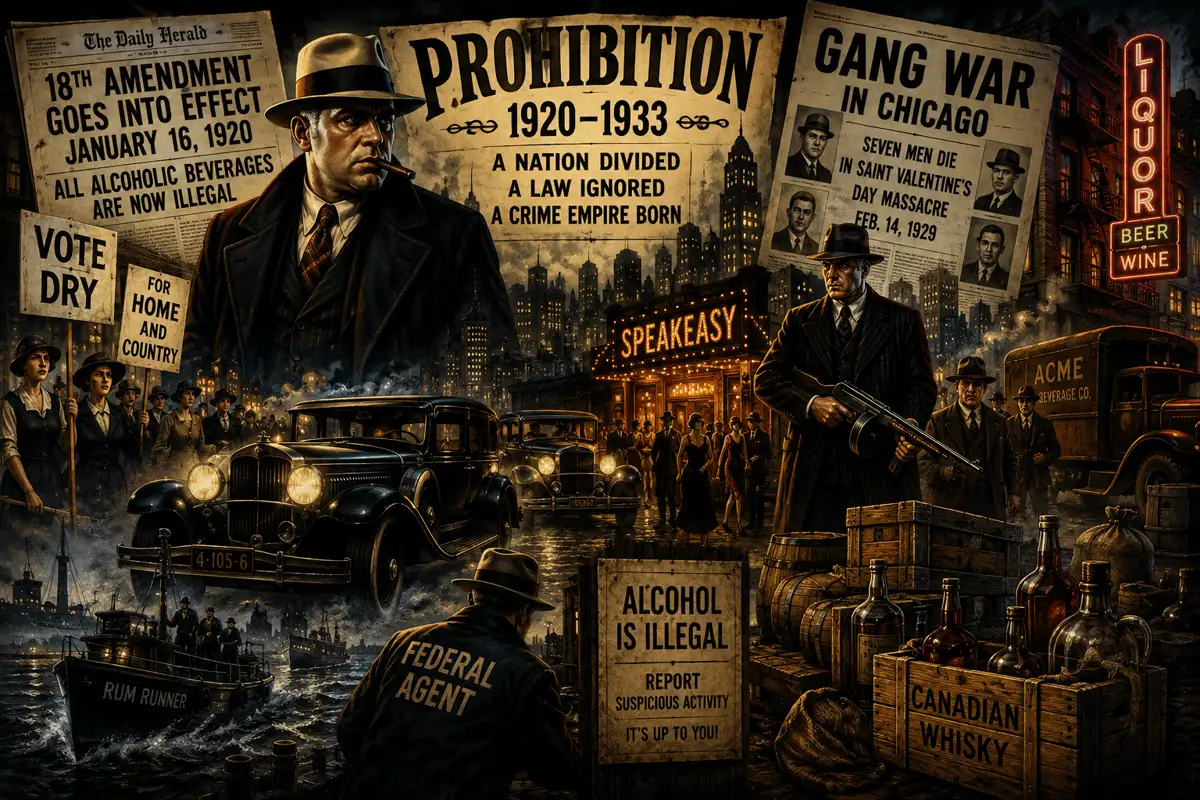
Prohibition in Law and in Court
- Joint Resolution proposing the Eighteenth Amendment Passed by Congress 18 December 1917; ratified 16 January 1919; in force 17 January 1920Section 1 forbids "the manufacture, sale, or transportation of intoxicating liquors within, the importation thereof into, or the exportation thereof from the United States and all territory subject to the jurisdiction thereof for beverage purposes." Note that it does not forbid drinking.
- The National Prohibition Act (the Volstead Act), enrolled act 41 Stat. 305, chapter 85; passed over President Wilson's veto, 28 October 1919The law that enforced the amendment. It defined intoxicating liquor as anything containing one-half of one per centum or more of alcohol by volume, and it set out the permits, searches and penalties.
- United States v. Alphonse Capone: the jury's verdict U.S. District Court, Northern District of Illinois, 17 October 1931 (Record Group 21, National Archives at Chicago)The Archives' account of the case file, with the verdict form: guilty on five counts of income-tax evasion and failure to file returns. Judge James H. Wilkerson sentenced him to eleven years in federal prison, a $50,000 fine and costs.
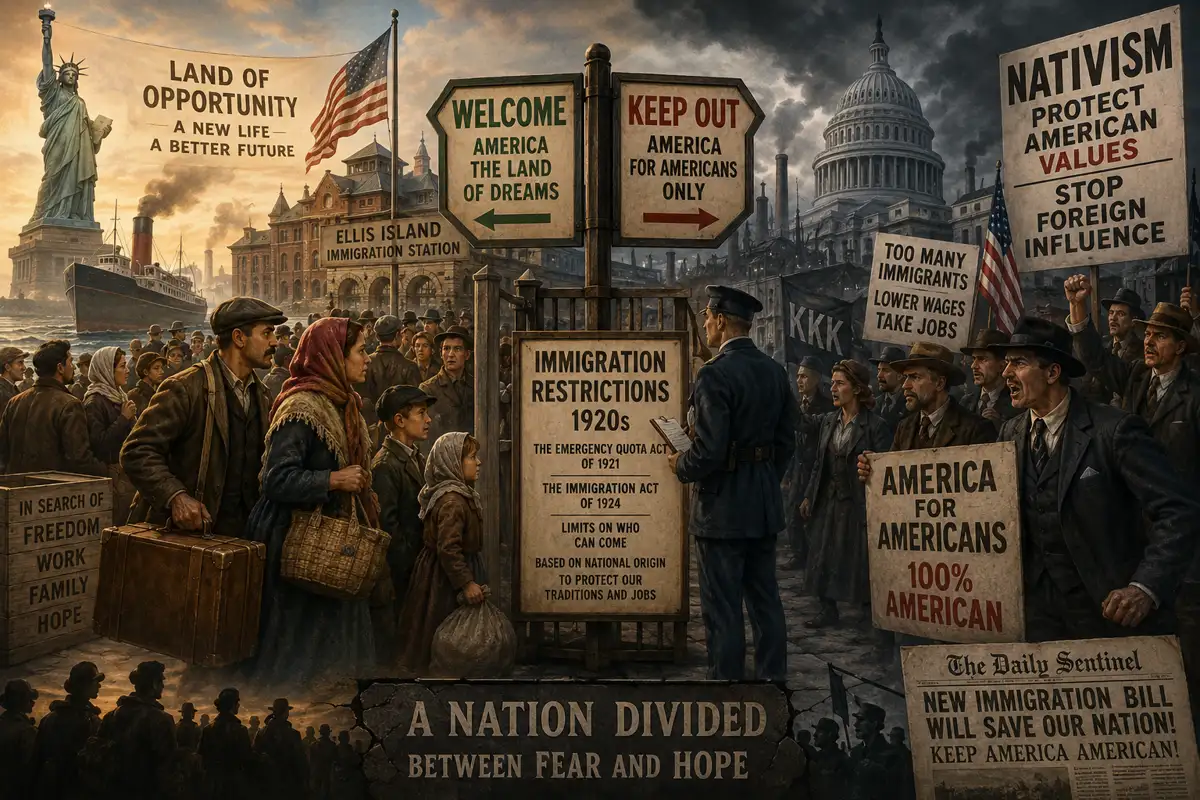
Restriction and Its Arguments
- Calvin Coolidge, First Annual Message to Congress 6 December 1923The President's message asks Congress for restricted and selective immigration: "America must be kept American." Read the whole passage on immigration and what he proposed for the newcomers already admitted.
- The Immigration Act of 1924 (the Johnson–Reed Act), enrolled act Public Law 68-139, 43 Stat. 153, approved 26 May 1924Section 11 sets each nationality's quota at two per cent of its foreign-born people in the Census of 1890 (at least 100), and from 1927 a total of 150,000 by national origins; section 13(c) bars aliens ineligible to citizenship. The law as signed.
- Sacco–Vanzetti Case Records, 1920–1928 Digitized trial and appeal records, Harvard Law School Library (Digital Commonwealth)The court papers of the Dedham trial of 1921 and the motions and appeals that followed, to the executions of 23 August 1927. The record of what was charged, said and decided, in the court's own papers.
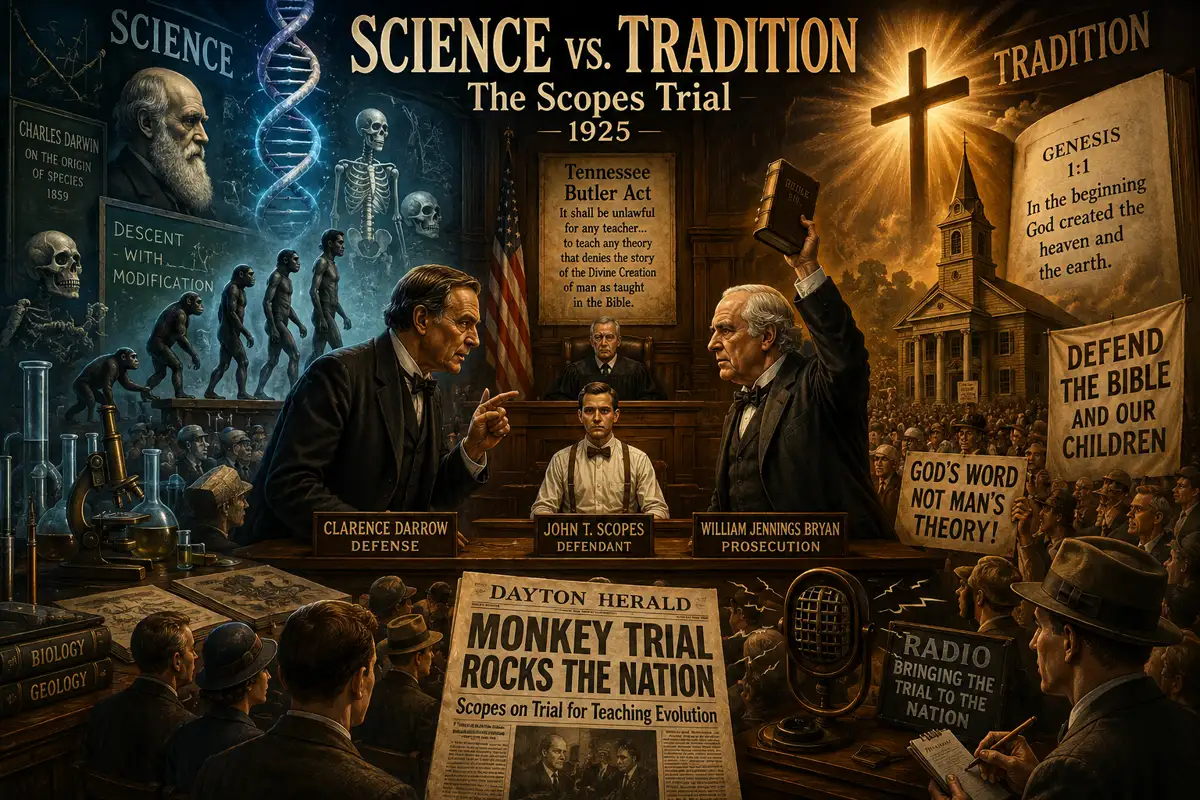
The Klan Investigated; Dayton, 1925
- A petition to Congress for the Dyer Anti-Lynching Bill, and the "Red Record of Lynching" map 1922 (National Archives, Records of the U.S. House of Representatives)Citizens' petitions asked Congress to pass H.R. 13, Representative Leonidas Dyer's bill, which passed the House on 26 January 1922 and was stopped by a filibuster in the Senate. The Archives shows the petition and the map Dyer put before Congress.
- Tennessee's anti-evolution statute (the Butler Act) Public Acts of Tennessee, 1925, chapter 27, approved 21 March 1925Section 1 made it unlawful for a teacher in the public schools "to teach any theory that denies the story of the Divine Creation of man as taught in the Bible, and to teach instead that man has descended from a lower order of animals." The fine was $100 to $500.
- The World's Most Famous Court Trial: Tennessee Evolution Case Cincinnati: National Book Company, 1925 (complete stenographic report, 10–21 July 1925)The word-for-word record of the trial at Dayton, including Clarence Darrow's questioning of William Jennings Bryan on 20 July, which Judge John T. Raulston struck from the record the next morning. Read both men in their own words.
Pick two or more of these chapters to read.
K–5th Grade
6th–8th Grade
9th–12th Grade
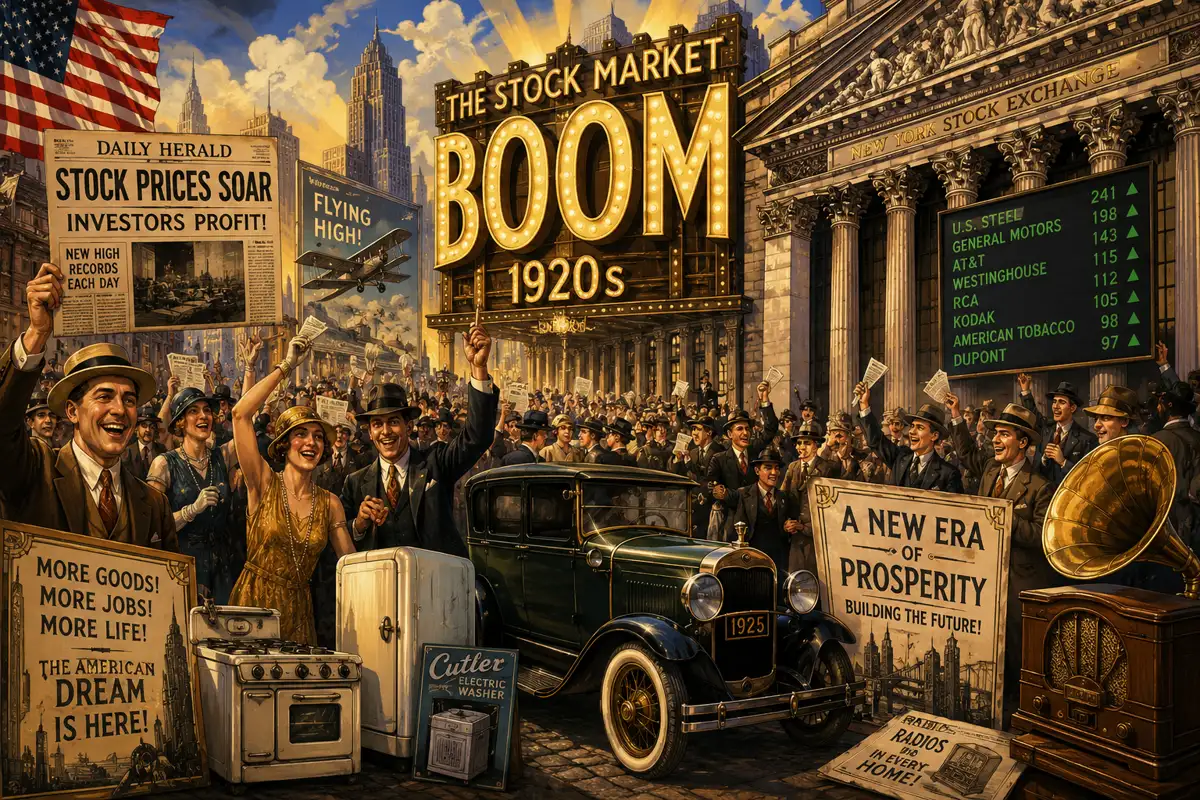
The Boom in Its Own Words
- Calvin Coolidge, Address to the American Society of Newspaper Editors Washington, D.C., 17 January 1925The President on the press and business: "After all, the chief business of the American people is business." Read the sentences that follow it, in which he says what else the American people want.
- "Everybody Ought to Be Rich": an interview with John J. Raskob, by Samuel Crowther Ladies' Home Journal, August 1929, pp. 9, 36The chairman of the Democratic National Committee and General Motors financier proposes that a person save fifteen dollars a month and put it into stocks through a new "equity securities corporation." It opens: "Being rich is, of course, a comparative status."
- Federal Reserve Bulletin, February 1929 Federal Reserve Board, Washington, February 1929The Board's own statement on the credit situation, warning against "the extraordinary absorption of funds in speculative security loans." A warning printed eight months before the crash, in the Board's own words.
October 1929
- Herbert Hoover, Statement on the National Business and Economic Situation 25 October 1929, the day after Black ThursdayThe President's statement to the press that the fundamental business of the country "is on a sound and prosperous basis." Read it beside the Federal Reserve Board's report for the year.
- Sixteenth Annual Report of the Federal Reserve Board, covering operations for the year 1929 Washington: Government Printing Office, 1930The Board's own account of 1929: brokers' loans, the rise and fall of security prices, the money markets in October and the bank suspensions of the year, with its tables.
- Stock Exchange Practices: Hearings before the Senate Committee on Banking and Currency, Part 6 (National City Bank) 21 February – 2 March 1933 (written later: three to four years after the crash)The sworn testimony of Charles E. Mitchell, chairman of the National City Bank in 1929, about the bank's selling of securities in the boom. A later record, labelled as one, of what one of the bankers of Black Thursday did.
Farms, Flight and Film
- Calvin Coolidge, Message to the Senate returning without approval S. 4808, the McNary–Haugen Farm Relief Bill 25 February 1927The President's reasons for vetoing the farm bill, among them his objection to its "equalization fee." Read it beside his second veto of 23 May 1928 and the Agricultural Marketing Act of 1929.
- The Agricultural Marketing Act Act of 15 June 1929, chapter 24, 46 Stat. 11"An Act To establish a Federal Farm Board": the law President Hoover signed to lend money to farmers' co-operatives and stabilization corporations. The statute as printed in the Statutes at Large.
- Charles A. Lindbergh, "We" New York and London: G. P. Putnam's Sons, July 1927Lindbergh's own account, written within weeks of landing at Le Bourget on 21 May 1927, of his boyhood, his flying and the nonstop flight from New York to Paris, with a foreword by Ambassador Myron T. Herrick.
What comes with the book
The Ultimate Guide
The textbook itself — the sixteen chapters these lessons are built from.
Living History
The Roaring 1920s — Living History edition. The Heroes & Villains series, in the first person.
The Adventure Box
Cards, lesson plans, activities, coloring pages and the craft kit for this era.