History Curriculum/Book 20
Book twenty of the curriculum
The History of the Reconstruction Era
The twentieth book in the curriculum and the second of the Late American History set. Seventeen chapters across four weeks — from the Emancipation Proclamation and the Thirteenth Amendment, the death of Lincoln and Andrew Johnson's plan for the South; through the Reconstruction Acts, the Freedmen's Bureau, the Fourteenth and Fifteenth Amendments, the first Black members of Congress and the impeachment of a president; then the Black Codes and sharecropping, the Ku Klux Klan and the laws and trials against it, women's petitions, Southern industry and the Supreme Court's narrowing of the new amendments; and last the disputed election of 1876, the end of federal Reconstruction in 1877, the laws of separation, and Plessy v. Ferguson in 1896. TWO THINGS TO KNOW BEFORE YOU START. First, the first-person accounts in both printed editions are HISTORICAL FICTION — written to tell the story, informed by the surviving record, and not the words of the people named. The narrators are real people, but some speak of things that happened after they died, and some meet in scenes that never took place. The record itself is very large: the laws and amendments, the presidents' messages and vetoes, the Congressional Globe, the Freedmen's Bureau records, the sworn testimony of 1871–72, the Supreme Court's opinions and dissents, the newspapers of the day, and the letters, speeches and memoirs of the people who lived it — and this course quotes them. Second, at the back of the Ultimate Guide, after the chapters (pages 331–366), there are Cross-Curricular sections — Math, Science, Health, Social Studies and English — and comprehension questions with answer keys, to use alongside this course. They are not a fifth week and there is nothing to hand in for them.
Read the book
Turn the pages of both editions right here. Reconstruction Era is a members’ book: subscribers and Adventure Box Course families read every page.
🔒 A members’ book — Living History 347 pages, Standard Book 366 pages. Subscribe, or buy an Adventure Box, to read it.
4 Weeks, 17 Chapters, Choose 8+ to Read
Pick the chapters you want to read each week. The living books and the sources are one click away.
Pick two or more of these chapters to read. Finish two of the ones you choose to open Week 2.
K–5th Grade
6th–8th Grade
9th–12th Grade
Freedom Proclaimed, 1863
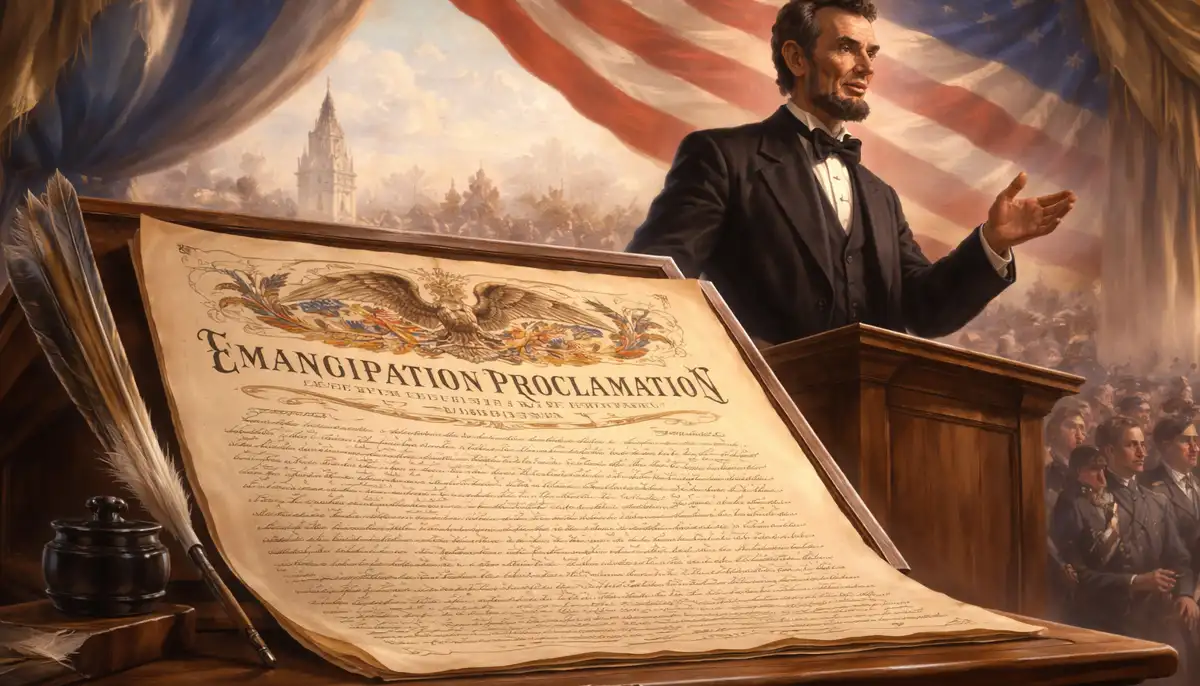
- The Emancipation Proclamation 1 January 1863 (preliminary proclamation 22 September 1862)Read exactly whom it frees — persons held as slaves in the states and parts of states then in rebellion, declared "then, thenceforward, and forever free" — and which places it lists as exempt. Then find the paragraph that opened the army and navy to the men it freed.
- Thomas Wentworth Higginson, Army Life in a Black Regiment ("Camp Diary") entry of 1 January 1863, Camp Saxton, Port Royal, South Carolina; first published 1869The colonel of the 1st South Carolina Volunteers, a regiment of men who had been enslaved on the Sea Islands, kept a diary of the day the proclamation was read to them. When the flag was presented, freed people near the platform began, unbidden, to sing "My Country, 'tis of thee."
- Abraham Lincoln, Letter to James C. Conkling Washington, 26 August 1863Lincoln's public answer to Northerners who opposed emancipation and Black enlistment, written to be read at a mass meeting in Springfield: one day there will be Black men "who can remember that with silent tongue, and clenched teeth, and steady eye, and well-poised bayonet, they have helped mankind on to this great consummation."
Slavery Ended, and Lincoln Lost
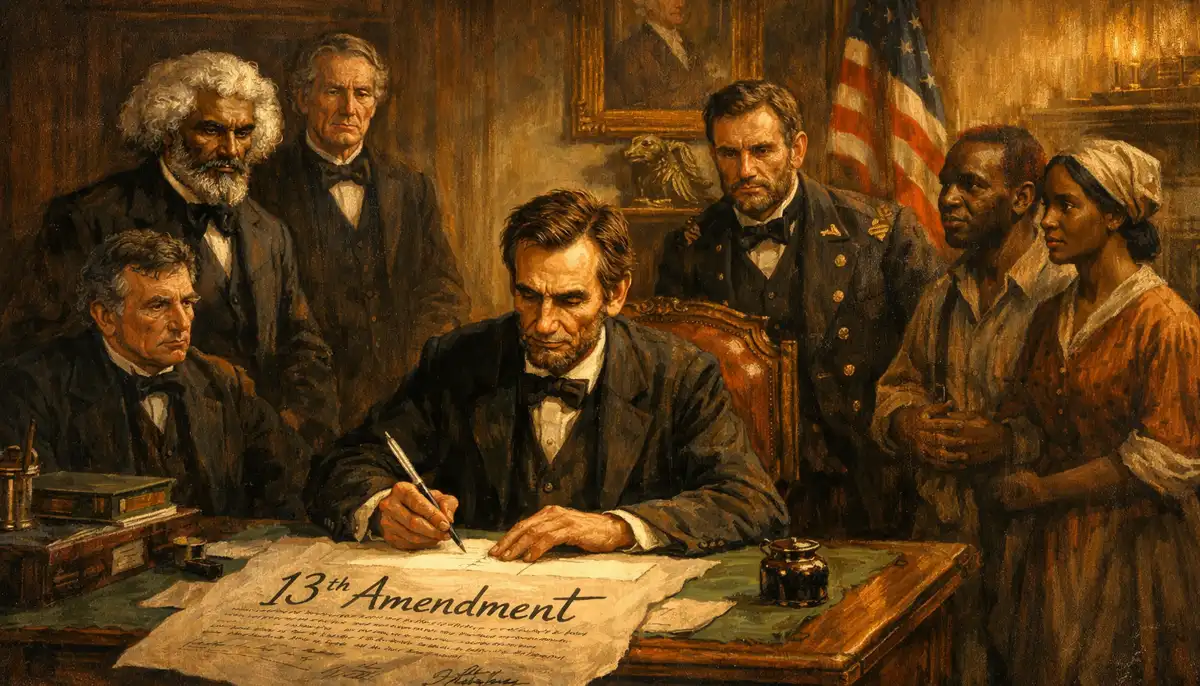
- Joint Resolution submitting the Thirteenth Amendment to the States, signed by Abraham Lincoln and Congress (Abraham Lincoln Papers) 1 February 1865"Neither slavery nor involuntary servitude, except as a punishment for crime whereof the party shall have been duly convicted, shall exist within the United States." Lincoln signed this copy the day after the House vote, though a president's signature is not required on an amendment. Ratification came on 6 December 1865, eight months after his death.
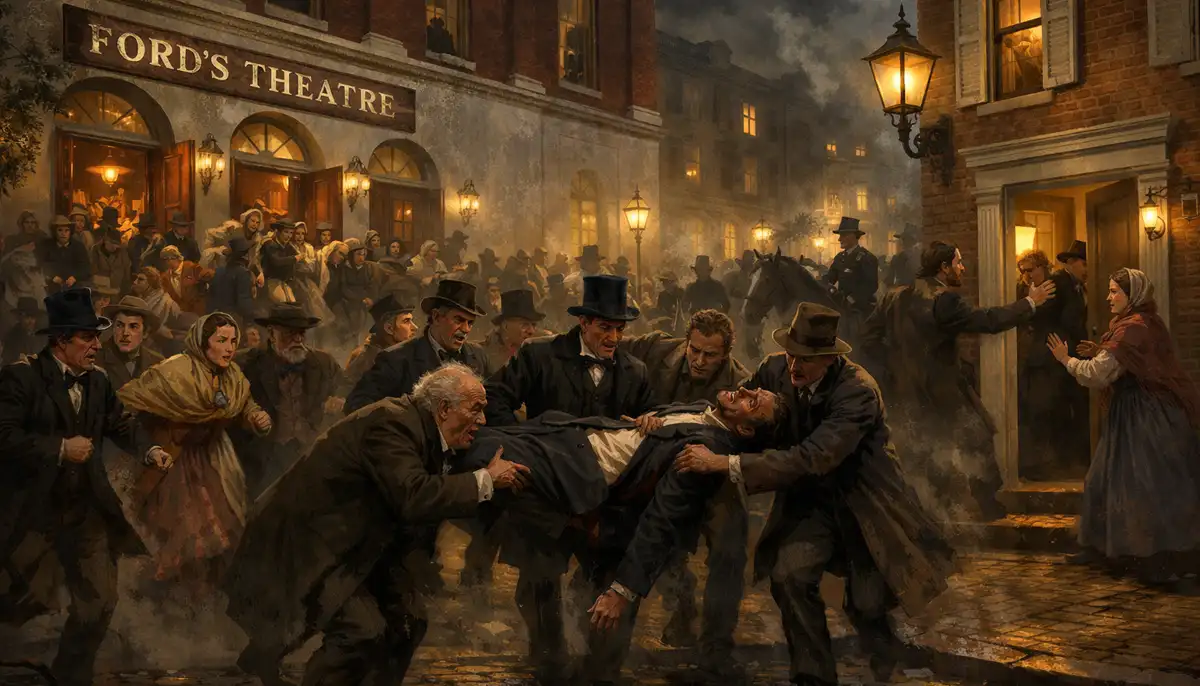
- Abraham Lincoln, "The President's Last Public Address" Washington, 11 April 1865Two days after Appomattox, from a White House window, on Louisiana's new government and how the seceded states should return. Of the vote: "I would myself prefer that it were now conferred on the very intelligent, and on those who serve our cause as soldiers." Three days later he was shot at Ford's Theatre.
- Benn Pitman, comp., The Assassination of President Lincoln and the Trial of the Conspirators Cincinnati and New York: Moore, Wilstach & Baldwin, 1865The record of the military commission of May–June 1865, compiled by its official recorder: the testimony, the arguments for the defence and the prosecution, and the findings and sentences of the eight accused. Read the defence as well as the prosecution; both are printed.
The President's Plan, and What People Wrote
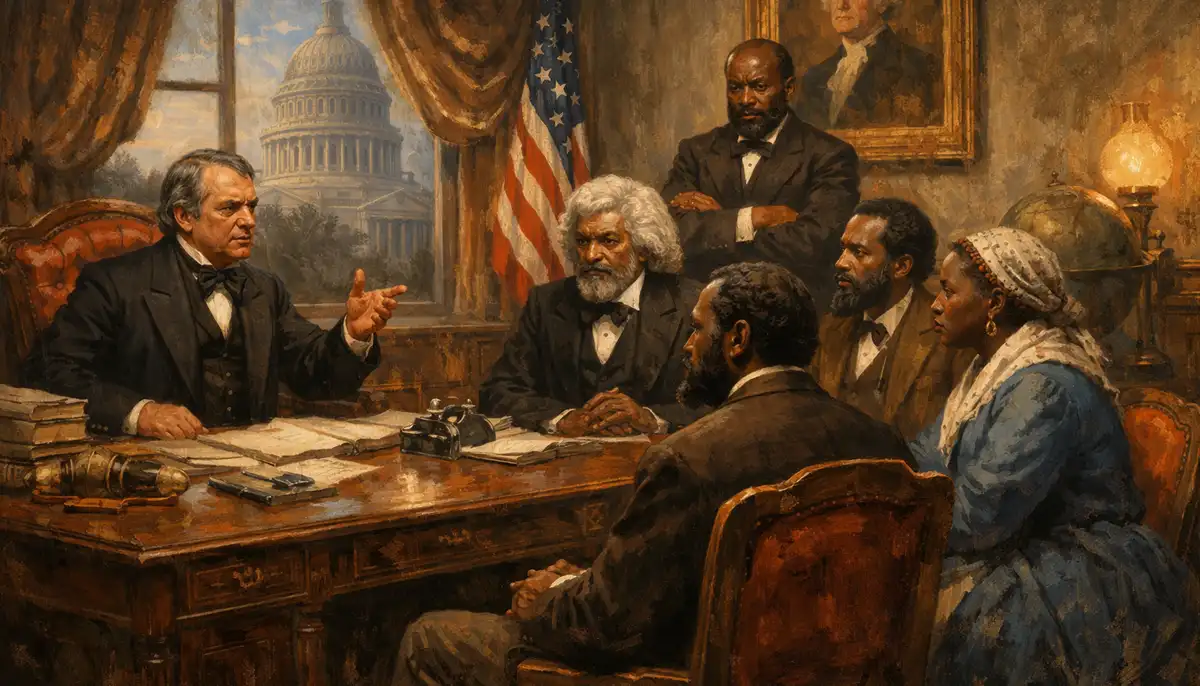
- Andrew Johnson, Proclamation 134 — Granting Amnesty to Participants in the Rebellion, with Certain Exceptions 29 May 1865Johnson's terms for pardon, and the fourteen classes of people left out, who had to apply to him personally — among them those whose taxable property was worth over $20,000. Read it with his proclamation of the same day for North Carolina, the model for the other states that summer.
- Carl Schurz, Report on the Condition of the South made to President Johnson; sent to the Senate 19 December 1865A former Union general's report from South Carolina, Georgia, Alabama, Mississippi and Louisiana in the summer of 1865: what white Southerners told him — among them the widely held belief "that the negro will not work without physical compulsion" — and what freed people and army officers told him.
- Statement by a Discharged Virginia Black Soldier (John Berry), Freedmen's Bureau records Alexandria, Virginia, 11 August 1865A soldier back from the war complains to the Bureau that the man who had held his family will not let them go and has threatened to shoot anyone who comes for them. "Berry has wife and 6 children from 4 to 14 years of age." The record is in the National Archives, Record Group 105.
Pick two or more of these chapters to read. Finish two of the ones you choose to open Week 3.
K–5th Grade
6th–8th Grade
9th–12th Grade
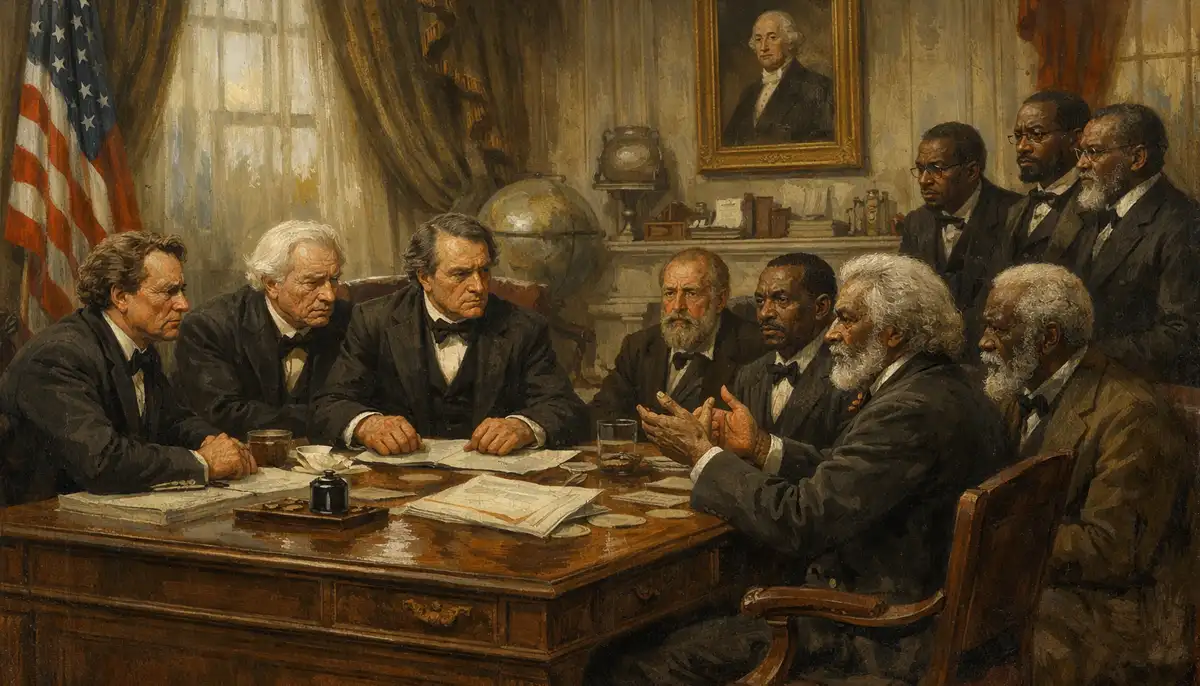
Congress and the President
- Andrew Johnson, Veto of the Civil Rights Bill 27 March 1866The President's reasons in his own words: the bill would "establish for the security of the colored race safeguards which go infinitely beyond any that the General Government has ever provided for the white race." Congress passed the act over his veto on 9 April 1866 — read section 1 of it, 14 Stat. 27.
- Reconstruction Act of 1867 ("An Act to provide for the more efficient Government of the Rebel States") 14 Stat. 428, enacted 2 March 1867 over the President's vetoTen states placed in five military districts until they framed new constitutions by conventions elected by the male citizens "of whatever race, color, or previous condition" and ratified the Fourteenth Amendment. Johnson's veto of the same day said the act placed the people of those states "under the absolute domination of military rulers."
- 1868 Democratic Party Platform New York, July 1868The opposition's case in its own words: it calls "the reconstruction acts so-called, of Congress" an "usurpation, and unconstitutional, revolutionary, and void." The Republican platform of the same year held that "equal suffrage to all loyal men at the South" "must be maintained." Read both.
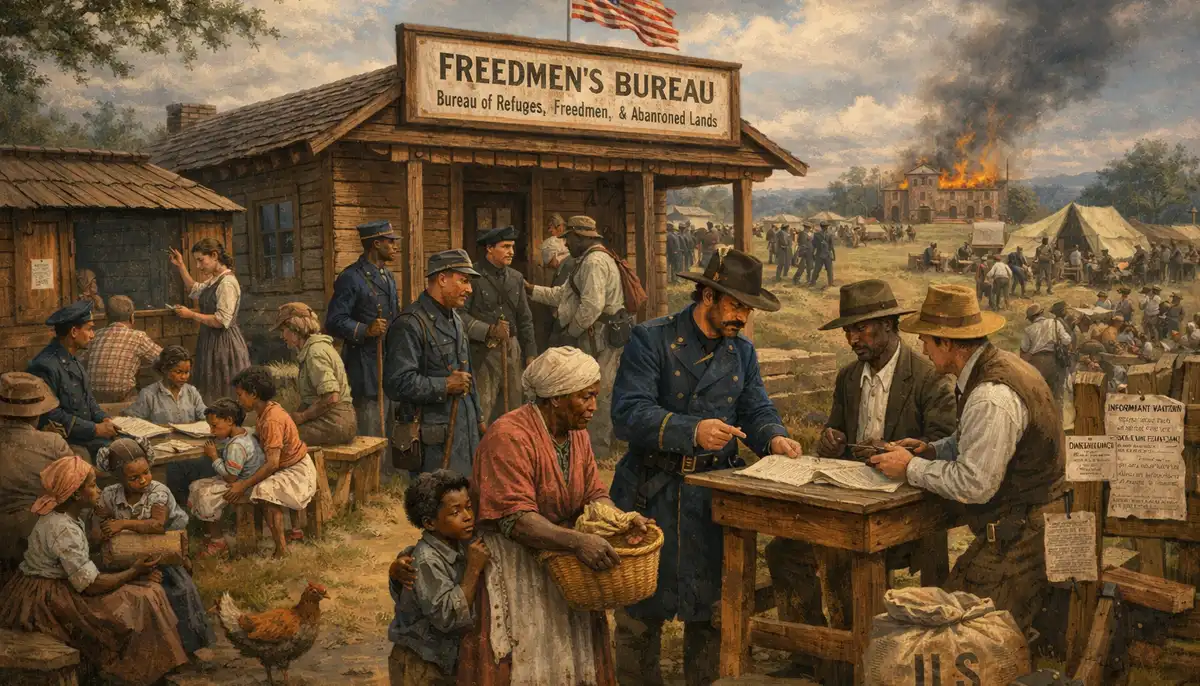
The Bureau and the New Citizens
- An Act to establish a Bureau for the Relief of Freedmen and Refugees 13 Stat. 507, approved 3 March 1865The Bureau's founding law, "to continue during the present war of rebellion, and for one year thereafter." Section 4: to every male refugee or freedman "there shall be assigned not more than forty acres" of abandoned or confiscated land, rented for three years with the right to buy.
- Report of a Speech by a Virginia Freedman (Bayley Wyat) Yorktown, Virginia, December 1866Freed people near Yorktown had been advised by the Bureau to leave the land they had settled. Wyat's answer at a mass meeting, as the Quaker school superintendent wrote it down: "we has a right to the land where we are located."
- Civil rights. Address of the colored citizens of Chicago to the Congress of the United States (House Misc. Doc. No. 109, 39th Congress) presented 10 May 1866Resolutions of a mass meeting at the Olive Baptist Church, John Jones in the chair, thanking Congress for passing the Civil Rights Act over the veto — "a new magna charta to all persons" — referred to the Committee on Reconstruction, which was then drafting the Fourteenth Amendment.
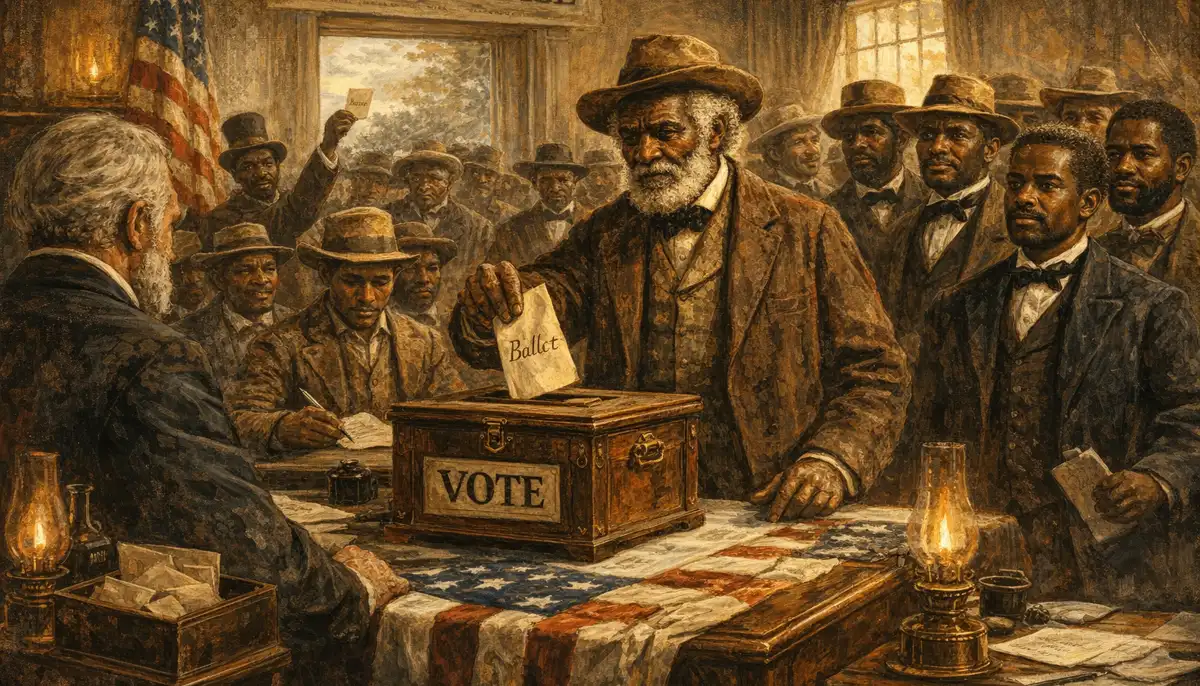
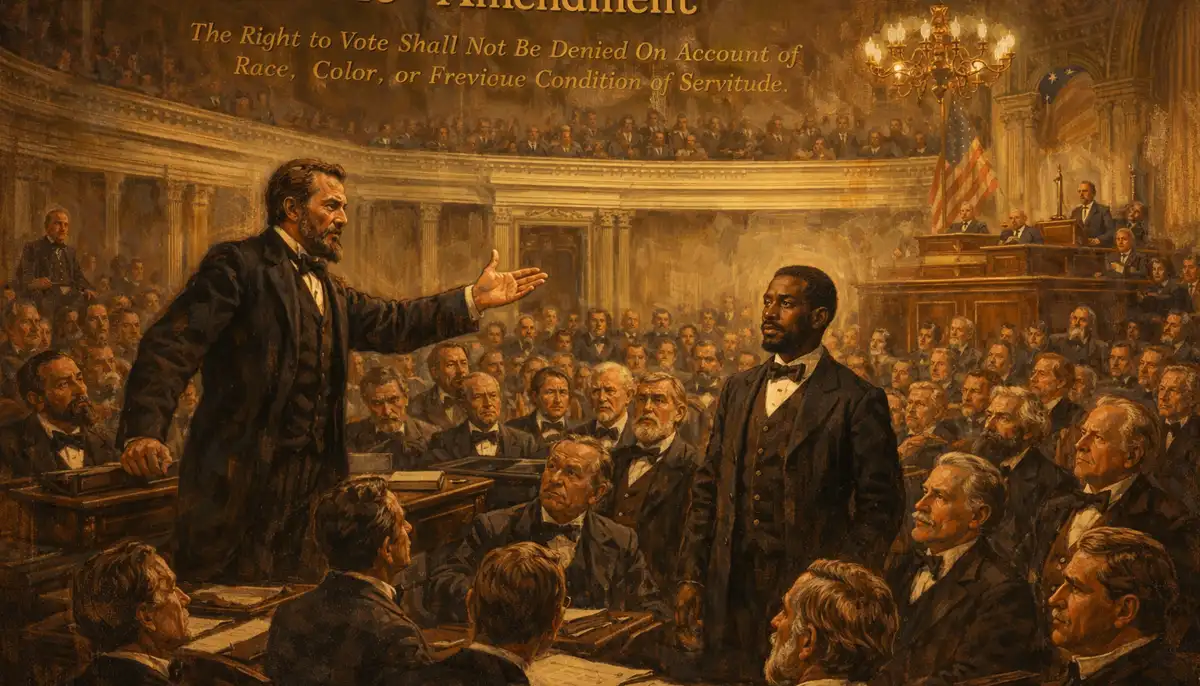
The Ballot and the Impeachment
- The Fifteenth Amendment passed by Congress 26 February 1869; ratified 3 February 1870"The right of citizens of the United States to vote shall not be denied or abridged by the United States or by any State on account of race, color, or previous condition of servitude." President Grant called its ratification "the most important event that has occurred since the nation came into life."
- The first colored senator and representatives — in the 41st and 42nd Congress of the United States New York: Currier & Ives, 1872A popular print of Senator Hiram Revels of Mississippi and Representatives Benjamin Turner, Robert De Large, Josiah Walls, Jefferson Long, Joseph Rainey and Robert Elliott — among the first Black members of Congress.
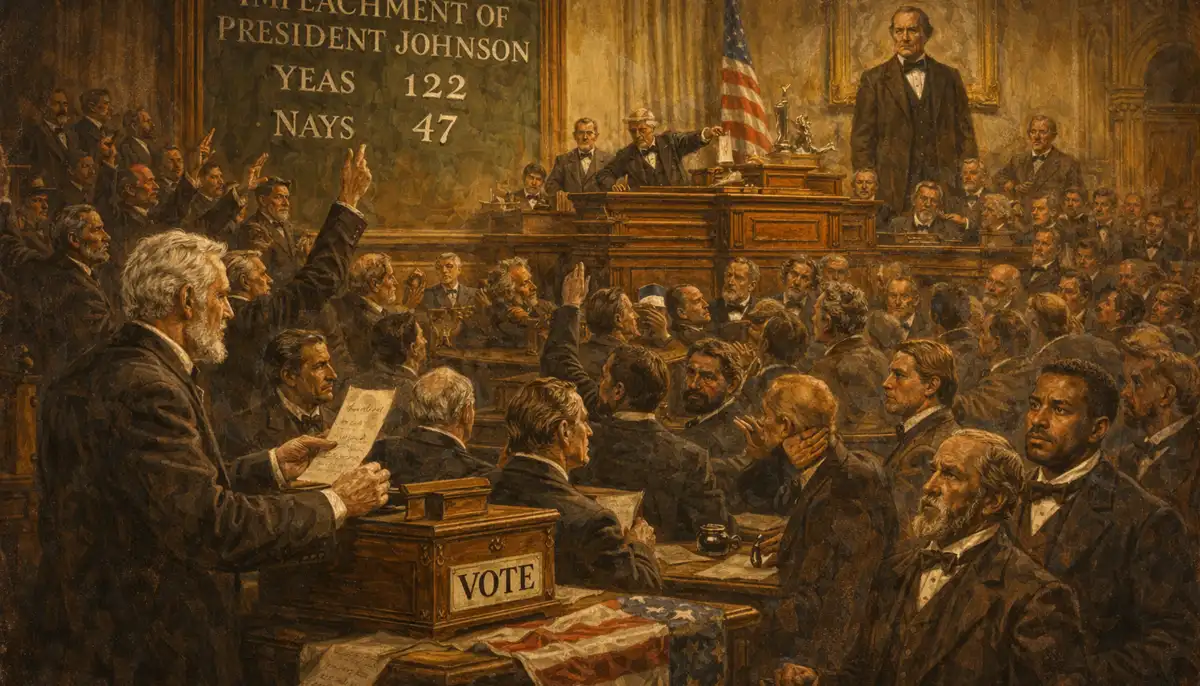
- Trial of Andrew Johnson, President of the United States, before the Senate of the United States, Volume II Washington: Government Printing Office, 1868The verbatim record of the trial, with the votes of 16 and 26 May 1868: thirty-five "guilty", nineteen "not guilty", each senator named. "Two-thirds not having pronounced him guilty, he stands acquitted upon this article."
Pick two or more of these chapters to read. Finish two of the ones you choose to open Week 4.
K–5th Grade
6th–8th Grade
9th–12th Grade
Codes and Contracts
- Laws in relation to freedmen (Senate Ex. Doc. No. 6, 39th Congress, 2d session) compiled by the Freedmen's Bureau; sent to the Senate 3 January 1867The Southern states' laws of 1865–66 on freed people, printed in full: Mississippi's acts of November 1865 on apprenticeship, vagrancy and the "civil rights of freedmen" on pp. 190–197, South Carolina's of December 1865 from p. 202. Commissioner Howard's covering letter calls "special attention to the vagrant laws."
- Contract between a Georgia Planter and Georgia Freedpeople Decatur County, Georgia, 8 July 1865A labor contract between McQueen McIntosh and the freed men and women on his plantation, each named, to the end of the year, with the rules they agreed to; the first: "Each person shall and will be obedient to orders." The original is in the Freedmen's Bureau records, National Archives.
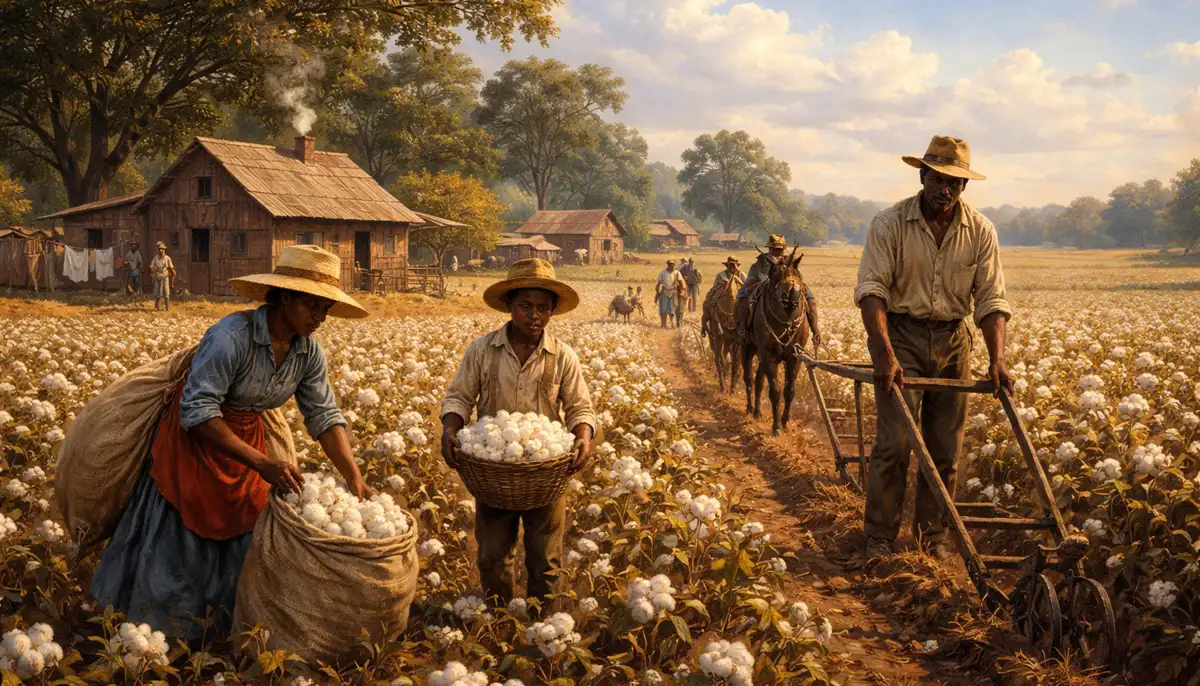
- Mississippi Freedman to His Wife in Virginia (Moses Scott) Aberdeen, Mississippi, 17 December 1865Sharecropping described by a man beginning it: "He provides all the stock, farming utensils and land, and gives us half we can make." He asks his wife to come with the children. The Bureau's note tells that she brought the letter to its Charlottesville office the next August, having heard nothing more.
The Klan and the Government's Answer
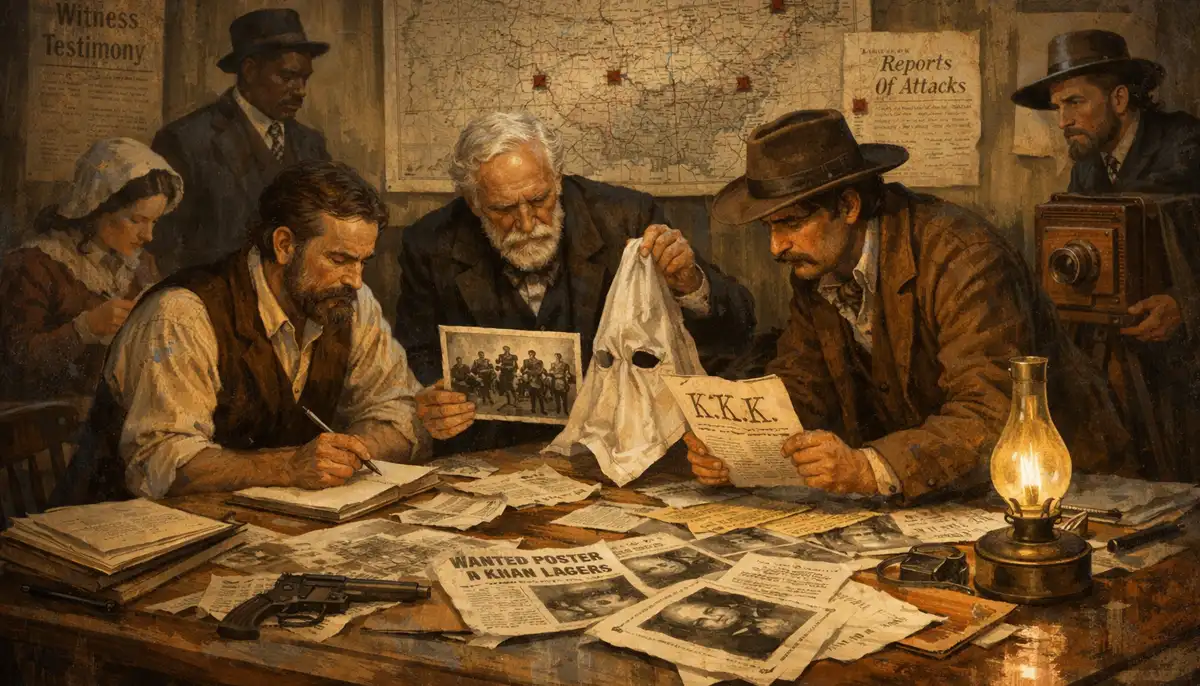
- Report of the Joint Select Committee to Inquire into the Condition of Affairs in the Late Insurrectionary States, Volume I made to Congress 19 February 1872BOTH SIDES IN ONE VOLUME: the majority's report on the "organized bands of armed and disguised men, known as Ku-Klux," and the views of the minority disputing it. The other twelve volumes print the sworn testimony, state by state.
- Testimony taken by the Joint Select Committee: South Carolina, Volume III (Elias Hill) Yorkville, South Carolina, 25 July 1871 (p. 1406 ff.)Sworn testimony of Elias Hill, a preacher born enslaved in 1819 and unable to walk since the age of seven, on what the disguised men who came to his house asked him and did. Nathan Bedford Forrest's testimony of 27 June 1871 is in Volume XIII; read the two beside each other.
- Ulysses S. Grant, Proclamation 201 — Suspending the Writ of Habeas Corpus in Certain Counties of South Carolina 17 October 1871The Ku Klux Klan Act of 20 April 1871 put to use: the writ suspended in nine South Carolina counties where "unlawful combinations and conspiracies" were declared by the act to be rebellion. The prosecutions that followed were tried at Columbia that November.
Women, Money and the Court
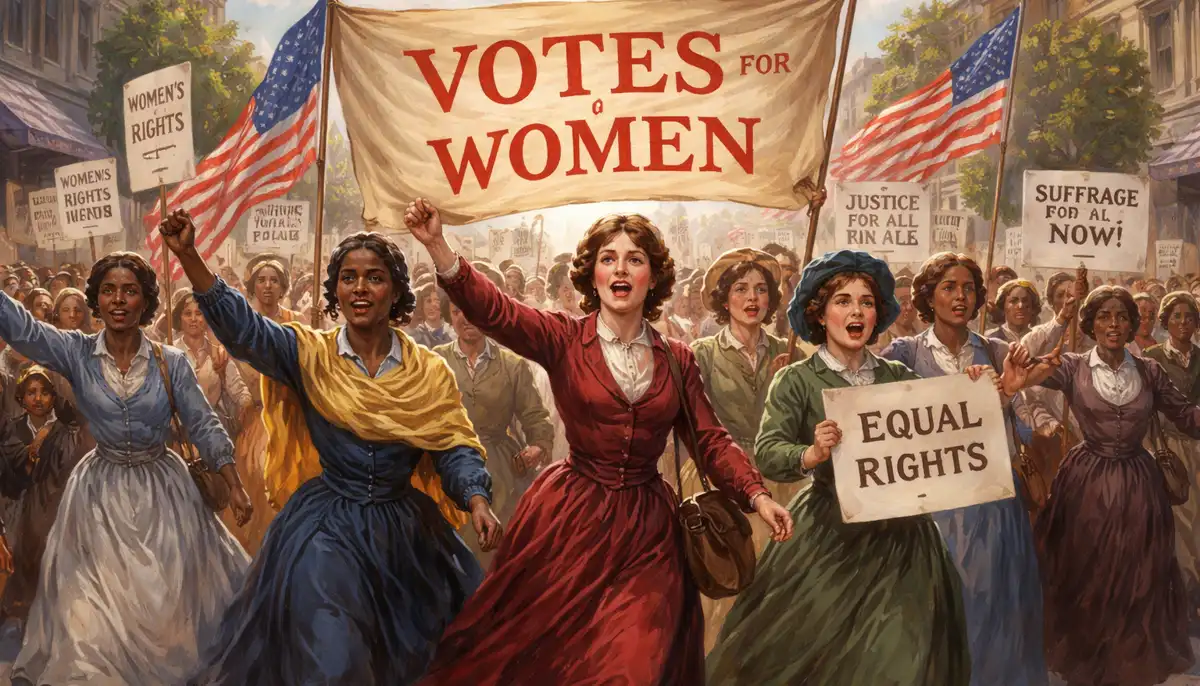
- Petition for Universal Suffrage (Center for Legislative Archives) presented in the House by Thaddeus Stevens, 29 January 1866Signed by Elizabeth Cady Stanton, Susan B. Anthony, Lucy Stone and others while Congress drafted the Fourteenth Amendment — one of several hundred petitions in "the first national petition drive that featured woman suffrage among its demands."
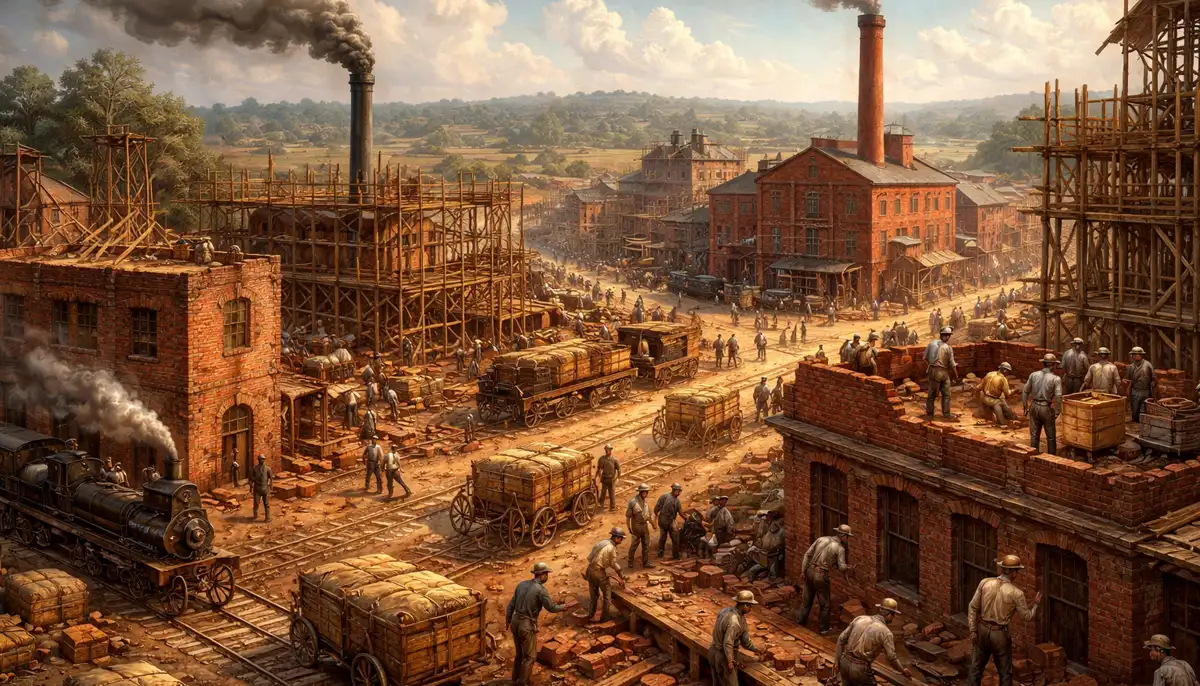
- Edward King, The Great South: A Record of Journeys Hartford: American Publishing Company, 1875 (first published in Scribner's Monthly, 1873–74)A Northern journalist's reports from every Southern state, illustrated by J. Wells Champney: mills, mines, railroads and plantations, and the change in the cotton trade "now that the plantations are mainly worked on shares by the freedmen."
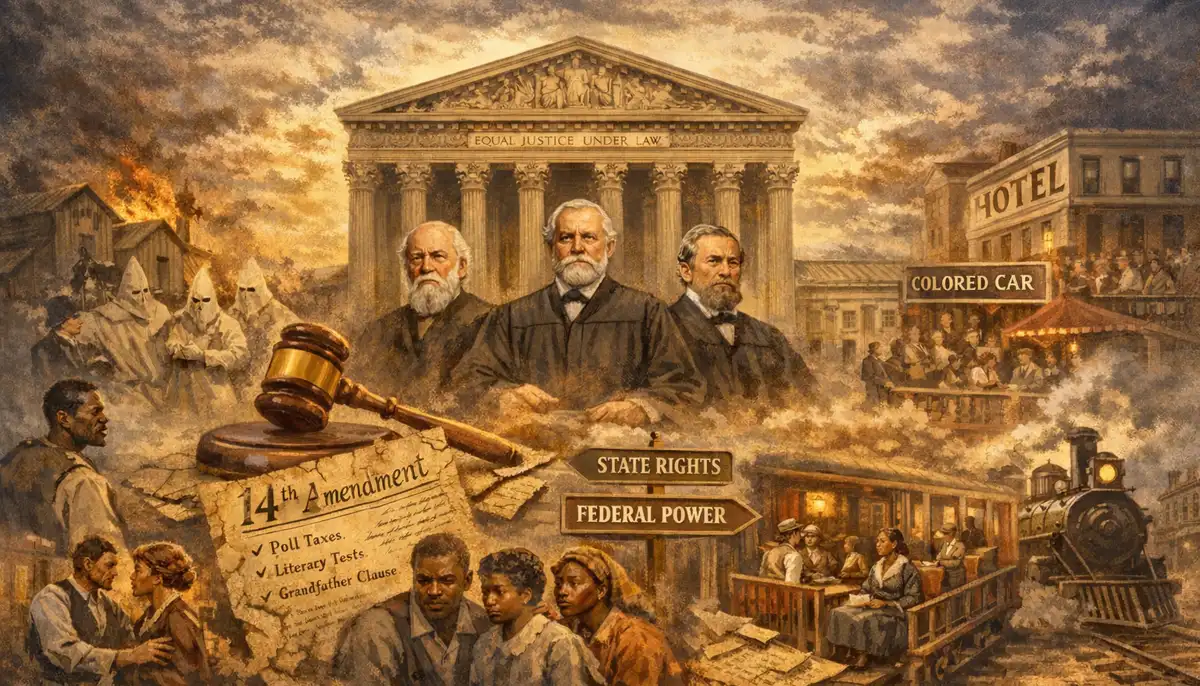
- Slaughter-House Cases 83 U.S. 36, decided 14 April 1873The Court's first reading of the new amendments. Justice Miller found in them "one pervading purpose," the freedom of the former slaves, and read the privileges or immunities of national citizenship narrowly; four justices dissented. Cruikshank (1876) and Reese (1876) followed.
Pick two or more of these chapters to read.
K–5th Grade
6th–8th Grade
9th–12th Grade
The Disputed Election of 1876
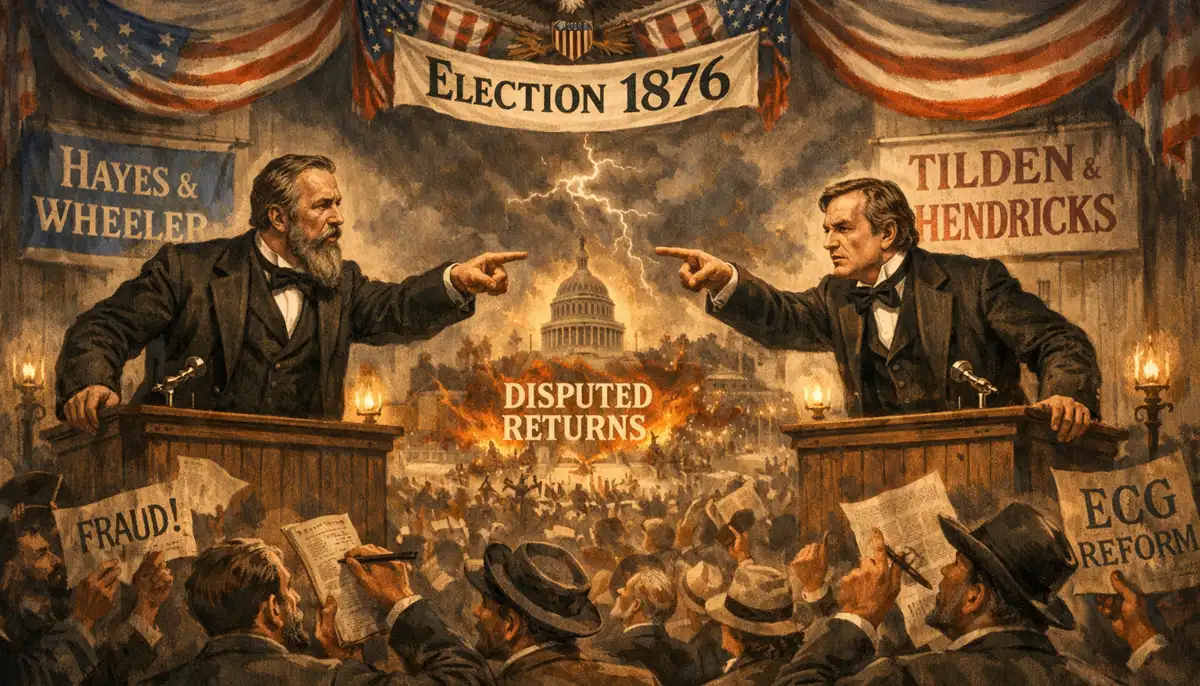
- 1876 Democratic Party Platform St. Louis, 1876Tilden's party, its paragraphs opening with "Reform is necessary". The Republican platform that nominated Hayes pledged "The permanent pacification of the Southern section of the Union and the complete protection of all its citizens in the free enjoyment of all their rights." Read the two side by side.
- Proceedings of the Electoral Commission appointed under the act of Congress approved January 29, 1877 Washington: Government Printing Office, 1877The commission of five senators, five representatives and five justices that decided the disputed returns of Florida, Louisiana, Oregon and South Carolina: the arguments of counsel for both candidates, and the votes recorded name by name, eight to seven.
- Rutherford B. Hayes, Inaugural Address Washington, 5 March 1877Hayes on the South: "The permanent pacification of the country upon such principles and by such measures as will secure the complete protection of all its citizens in the free enjoyment of all their constitutional rights."
The New Laws of the 1890s
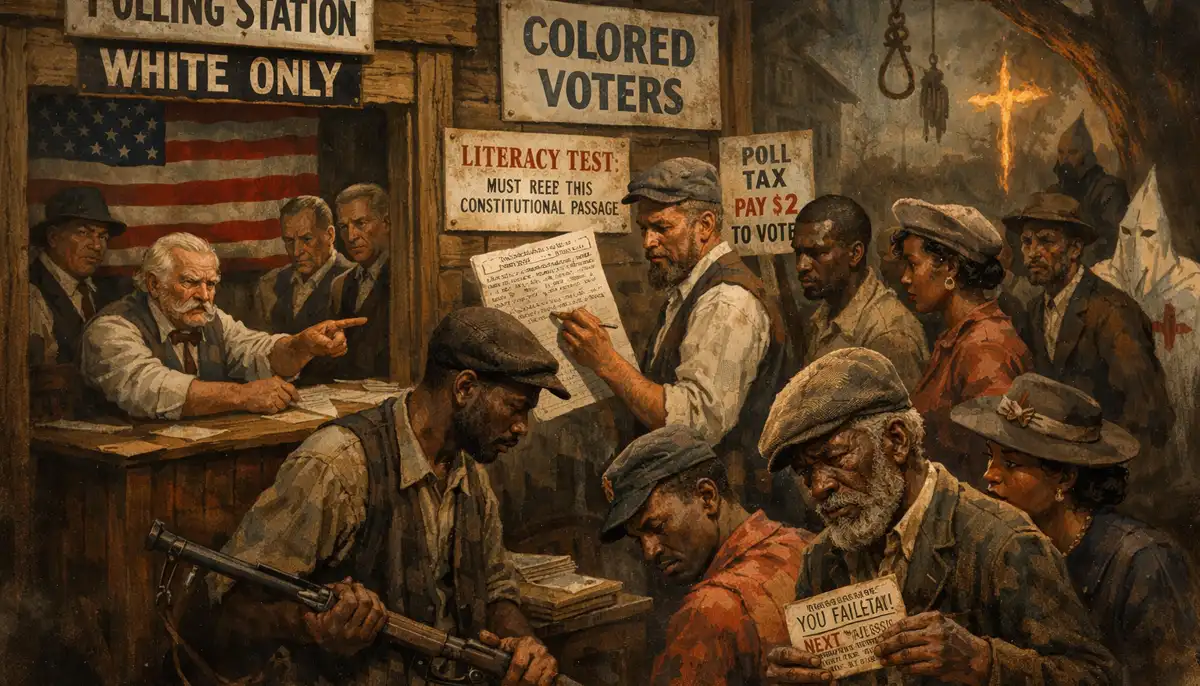
- Constitution of the State of Mississippi, adopted November 1, 1890 Jackson, 1891Section 207: "Separate schools shall be maintained for children of the white and colored races." Sections 241–244 on voters: a two-dollar poll tax, and from 1892 the requirement to read any section of the constitution, or understand it when read, "or give a reasonable interpretation thereof." The Supreme Court upheld these rules in Williams v. Mississippi (1898).
- Robert Smalls, Speeches at the Constitutional Convention Columbia, South Carolina, 1895; printed Charleston, 1896The former congressman and the other Black delegates speaking against the suffrage article of South Carolina's 1895 constitution; his daughter Sarah V. Smalls printed the speeches with the article itself.
- Ida B. Wells, Southern Horrors: Lynch Law in All Its Phases New York, 1892Most of it first appeared in the New York Age of 25 June 1892, after her Memphis paper, the Free Speech, was destroyed. She sets out the cases from the newspapers' own reports and names her sources.
Plessy v. Ferguson
- Plessy v. Ferguson: appellate record and briefs proceedings in the Louisiana courts, 1892–93; filed in the Supreme Court of the United StatesHomer Plessy's sworn petition against Act No. 111 of 1890, which required railways to provide "equal but separate accommodations for the white, and colored races", and the brief of his counsel, Albion W. Tourgée and James C. Walker.
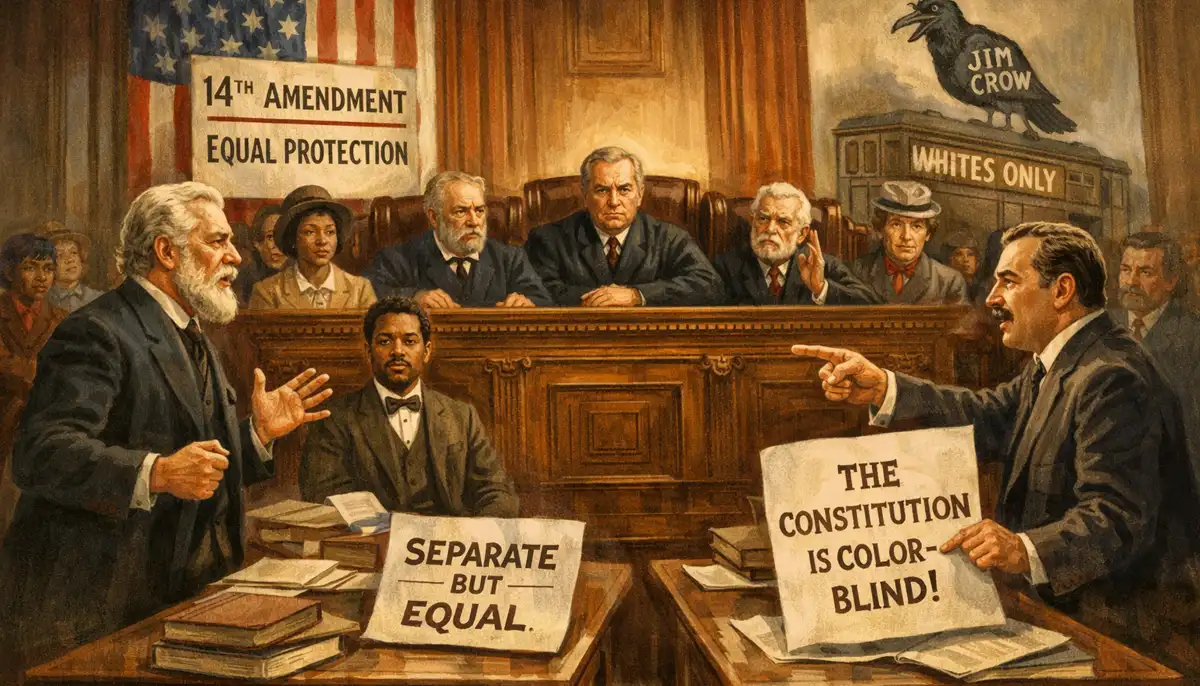
- Plessy v. Ferguson (with Justice Harlan's dissent) 163 U.S. 537, decided 18 May 1896Justice Brown for the Court rejected the argument "that the enforced separation of the two races stamps the colored race with a badge of inferiority." Justice Harlan, alone: "Our constitution is color-blind, and neither knows nor tolerates classes among citizens." Read both.
- Richmond Planet (Richmond, Virginia), 23 May 1896, page 2, "Another Decision" 23 May 1896A Black-owned weekly's answer five days after the decision: "This is another practical demonstration of the effect of public sentiment upon even the greatest judicial body in the world." Compare it with Booker T. Washington's Atlanta address of September 1895, printed in his Up from Slavery (1901).
What comes with the book
The Ultimate Guide
The textbook itself — the seventeen chapters these lessons are built from.
Living History
Heroes and Villains Series: Reconstruction Era — Told By Those Who Were There. The Heroes & Villains series, in the first person.
The Adventure Box
Cards, lesson plans, activities, coloring pages and the craft kit for this era.