History Curriculum/Book 10
Book ten of the curriculum
The History of Ancient Mesopotamia
The tenth book in the curriculum and the fifth of the Ancient Civilizations set. Fifteen chapters across four weeks — from the first farming villages between the Tigris and the Euphrates, through the invention of writing at Uruk, the city-state wars of Lagash and Umma, the first written laws, Sargon's empire and its collapse, Hammurabi's Babylon, the Assyrian war machine, Nineveh's library and Nineveh's fall, Nebuchadnezzar's walls and the exile of Judah, to the night Babylon changed hands and the long centuries in which Mesopotamia belonged to somebody else. TWO THINGS TO KNOW BEFORE YOU START. First, the first-person accounts in both printed editions are HISTORICAL FICTION — written to tell the story, built on archaeology and the surviving record, and not the words of the people named. Second, at the back of the Ultimate Guide, after the fifteen chapters, there are four Cross-Curricular sections — Science, Math, English and Social Studies — to use alongside this course. They are not a fifth week and there is nothing to hand in for them; they are there to be used while you work through the four weeks.
Read the book
Turn the pages of both editions right here. Ancient Mesopotamia is a members’ book: subscribers and Adventure Box Course families read every page.
🔒 A members’ book — Living History 297 pages, Standard Book 338 pages. Subscribe, or buy an Adventure Box, to read it.
4 Weeks, 15 Chapters, Choose 8+ to Read
Pick the chapters you want to read each week. The living books and the sources are one click away.
Pick two or more of these chapters to read. Finish two of the ones you choose to open Week 2.

K–5th Grade
6th–8th Grade
9th–12th Grade
The Oldest Writing, and What It Says
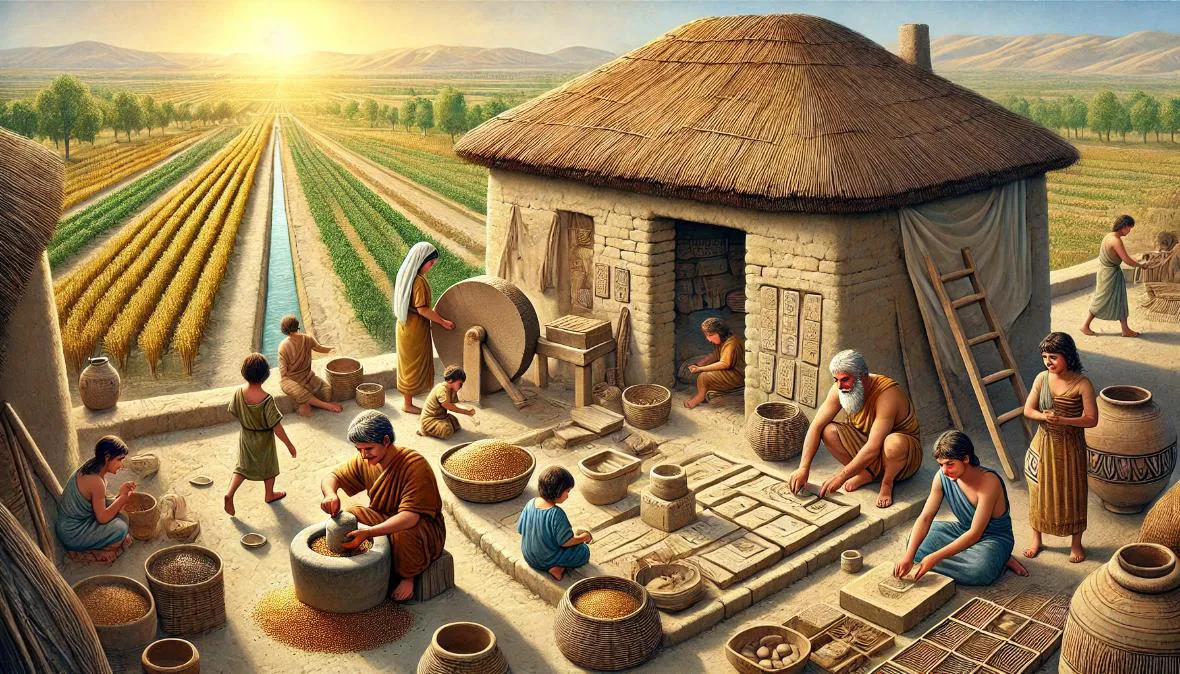
- The proto-cuneiform tablets of Uruk IV and IIIUruk (modern Warka), c. 3300–3000 BCThe earliest writing anybody has found. Almost all of it is accounts — barley, beer, sheep, workers, and the officials responsible. Nothing in it is literature, and that is the point: writing was invented to keep track of grain.
- The Cuneiform Digital Library Initiative UCLA and the Max Planck InstitutePhotographs, line drawings and transliterations of tens of thousands of tablets, including the Uruk material, free and searchable. This is where the evidence for this week actually is.
- The Electronic Text Corpus of Sumerian Literature the Oriental Institute, University of OxfordEvery surviving Sumerian literary composition in transliteration and English, with the manuscripts each one rests on listed. Read the Sumerian King List here and see for yourself how it is put together.
The Ground, and How It Is Dated
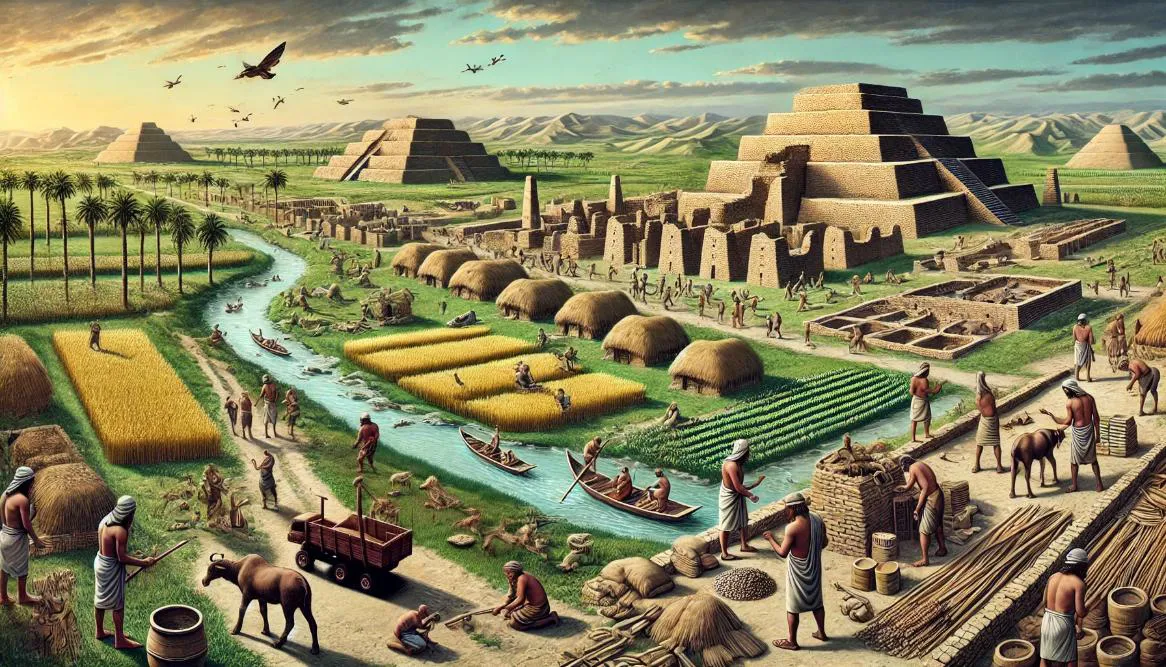
- Eridu (Tell Abu Shahrain)southern IraqEighteen superimposed temples on one spot, the earliest of them a single small room of the Ubaid period. It is the clearest physical demonstration anywhere that a temple came first and a city grew around it.
- The flood deposits at Ur, Shuruppak and Kishexcavated 1920s–1930sWoolley found a thick layer of water-laid silt at Ur and announced he had found the Flood. Later work showed the layers at the different sites are of different dates and different sizes. They are evidence of river floods, which everyone already knew about; they are not evidence of one flood.
- Göbekli TepeŞanlıurfa province, TurkeyCarved stone enclosures raised by people who were not yet farming, radiocarbon-dated to the tenth and ninth millennia BC. It sits at the top of the Fertile Crescent and it is why the old story — farming first, then religion, then monuments — had to be rewritten.
Archives to Search Yourself
- The British Museum collection online LondonHolds the largest cuneiform collection in the world, photographed and catalogued, including the Flood Tablet of the Gilgamesh epic.
- The Louvre collection online ParisHolds the Stele of the Vultures, the Code of Hammurabi and most of what de Sarzec dug out of Girsu.
- The Internet Archive a non-profit digital libraryThe early excavation reports — Woolley on Ur, Loftus on Warka, the Oriental Institute volumes — scanned in full and free, which is the only way most people will ever read them.
Pick two or more of these chapters to read. Finish two of the ones you choose to open Week 3.
K–5th Grade
6th–8th Grade
9th–12th Grade
The Lagash–Umma War, Written by Both Sides' Winner
- The Stele of the VulturesEannatum of Lagash, c. 2450 BC; LouvreA limestone monument carved on both faces to celebrate a victory over Umma: a phalanx of spearmen advancing over the enemy dead on one side, the god Ningirsu holding the men of Umma in a net on the other. It is the oldest depiction of an organised army that exists, and it is also a piece of royal advertising.
- The Enmetena coneEnmetena of Lagash, c. 2400 BC; LouvreThe fullest narrative of the border dispute, generation by generation, from the Lagash side. It names Mesilim of Kish as the outside arbitrator who first set the boundary stone, and then lists every time Umma moved it.
- The reform inscriptions of Uru-inim-gina (Urukagina)Lagash, c. 2370 BCA ruler listing, item by item, the abuses he says he ended — the officials taking a cut of every burial, the temple estates run as private property, the poor sold into debt. It is the earliest social-reform text anybody has, and it is also a new ruler explaining why the last lot had to go.
The Akkadian Empire, in Copies
- The royal inscriptions of Sargon and Naram-Sinoriginals c. 2334–2218 BC; surviving mainly as Old Babylonian school copies from NippurSargon's own claims — the 5,400 men who ate daily before him, the ships of Meluhha, Magan and Dilmun tied up at Akkad's quay, washing his weapons in the sea — survive because schoolboys copied them four hundred years later. That is worth telling a student before they read a word of them.
- The Victory Stele of Naram-Sinc. 2250 BC; LouvreThe king climbing a mountain over his dying enemies, wearing the horned helmet of a god. It was carried off to Susa as loot by an Elamite king a thousand years later, who carved his own inscription on it, which is how it survived and where it was found.
- The Disk of EnheduannaUr, c. 2300 BC; Penn MuseumAn alabaster disk found broken in the excavation of Ur, naming Enheduanna as priestess and daughter of Sargon and showing her at an altar. It is the physical evidence for the world's first author we can name — her hymns themselves survive only in copies made three centuries later.
- The Curse of Agade an Ur III literary composition, c. 2100 BCThe poem that blames the fall of Akkad on Naram-Sin for wrecking Enlil's temple at Nippur. Naram-Sin's own inscriptions say he rebuilt it. Read them side by side: this is the clearest lesson in the whole book about what a later story is worth.
The Drought, and the Archives of Ur
- Tell Leilannorth-eastern Syria, excavated from 1979An Akkadian provincial city abandoned around 2200 BC and covered by a layer of wind-blown dust. The sediment is the evidence for the drought; it is the reason "the 4.2-kiloyear event" is a measurement and not an opinion.
- The Ur III administrative archivesDrehem, Umma, Girsu and Ur, c. 2100–2000 BCSomething like 120,000 published tablets from one century — receipts for sheep, wages in barley, the movement of every animal through a royal redistribution centre. No other period of ancient history is documented this densely, and almost none of it is about kings.
- The Code of Ur-Nammu c. 2100 BC, surviving in Old Babylonian copies from Nippur and UrThe oldest law collection that survives. It fines rather than mutilates — ten shekels for a severed foot — which is the sharp contrast with Hammurabi three centuries later. Note that one Nippur copy credits it to Ur-Nammu's son Shulgi instead, and scholars are genuinely divided.
Pick two or more of these chapters to read. Finish two of the ones you choose to open Week 4.
K–5th Grade
6th–8th Grade
9th–12th Grade
Hammurabi's Babylon, in Its Own Paper
- The Code of Hammurabi c. 1754 BC; a diorite stele, LouvreA prologue, 282 numbered laws and an epilogue, carved on a pillar more than seven feet high, with the king standing before Shamash, the sun god and god of justice, at the top. An Elamite king carried it off to Susa as loot; a French expedition dug it up there in 1901–02.
- The Mari archiveTell Hariri, Syria; excavated by André Parrot from 1933More than twenty thousand tablets from the palace of Zimri-Lim, burned and therefore baked and therefore preserved. It includes his correspondence with Hammurabi, his queen Shibtu's letters, and the records of the household — the single richest window into how these kings actually talked to each other.
- The year-names of Hammurabi's reignBabylon, 1792–1750 BCBabylonians dated a year by what had happened in the one before, so the list of year-names is a dated, contemporary chronology of the reign: Elam in year 30, Larsa in 31, Eshnunna's army in 32, Mari in 32 and 33, Mari's walls razed in 35. It settles the order of the wars, which both books get wrong.
Assyria Before It Was an Empire
- The Kültepe (Kanesh) merchant archivecentral Anatolia, c. 1950–1750 BCAround 23,000 tablets from the houses of Assyrian traders living in a foreign town — donkey caravans, tin and textiles out, silver back, partnership contracts, and letters from wives in Assur complaining about money. Assyria was a trading city long before it was a military one, and this is the proof.
- The Mari letters of Shamshi-Adad Ic. 1800 BCDozens of letters from an Assyrian king to his two sons. The famous one tells the younger, Yasmah-Adad, that his brother is winning battles while he stays home with the women, and says "Be a man!" That phrase is genuinely in the archive; almost nothing else anybody puts in his mouth is.
- The Middle Assyrian Lawstablets copied in the reign of Tiglath-Pileser I, c. 1100 BCA long, detailed and very harsh collection, much of it about women, marriage, inheritance and veiling. The tablets are copies; when the laws were first framed is not known, which is why no king should be credited with writing them.
The Stolen God, and the Sky
- The Šitti-Marduk kudurruNebuchadnezzar I, c. 1110 BC; British MuseumA boundary stone granting tax exemption to a chariot officer, and in the process describing the campaign into Elam — the march in the heat of Tammuz, the battle at the river Ulaya. It is the contemporary source for the recovery of Marduk's statue, and it says nothing about Susa being taken.
- The Enuma Elishthe Babylonian creation epic; seven tablets, recovered from Ashurbanipal's library at NinevehMarduk kills Tiamat and builds the world out of her. Most scholars date its composition to roughly Nebuchadnezzar I's own reign — that is, it is a text about why Marduk outranks the older gods, written at the moment Babylon needed that argument.
- Plimpton 322an Old Babylonian tablet, c. 1800 BC; Columbia UniversityFour columns of numbers that amount to a table of Pythagorean triples, a thousand years before Pythagoras. What it was FOR is still argued about, which is a more honest thing to tell a student than a tidy answer.
- The Electronic Text Corpus of Sumerian Literature University of OxfordHymns, laments, proverbs, debates and the whole scribal-school curriculum, in transliteration and translation, free.
Pick two or more of these chapters to read.
K–5th Grade
6th–8th Grade
9th–12th Grade
The Assyrians on Themselves
- The palace reliefs of Nimrud and Nineveh 9th–7th centuries BC; British Museum and the LouvreCarved stone panels, room after room, of sieges, deportations, tribute and lion hunts, with the siege engines and the impaled prisoners shown in detail because they were meant to be. The Lachish reliefs show one siege from start to finish and can be matched to the ruins of Lachish itself.
- The royal annals of the Neo-Assyrian kingson clay prisms, cylinders and palace wallsYear by year, campaign by campaign, in the king's own voice, with numbers. They are the fullest military record from the ancient Near East and they never once record a defeat, which is the first thing to notice about them.
- The Library of Ashurbanipal Nineveh, assembled before 612 BC; British MuseumSomething over thirty thousand tablets and fragments, deliberately collected and catalogued — medicine, omens, astronomy, lexical lists, and the Standard Babylonian Gilgamesh. It survives because the palace burned when Nineveh fell, which baked it.
The Fall of Babylon, from Three Directions
- The Nabonidus Chroniclea Babylonian chronicle tablet; British MuseumThe contemporary account of 539 BC: the battle at Opis, Sippar taken without a fight, Ugbaru entering Babylon, Cyrus arriving seventeen days later. It is terse, it is dated, and it says nothing whatever about diverting the Euphrates.
- The Cyrus Cylinder Babylon, 539 BC; British MuseumA foundation deposit in the standard Mesopotamian form: the old king was impious, the god chose me, I restored the temples. It mentions returning gods and people to cities in Mesopotamia and Iran. It does not mention Judah, the Jews or Jerusalem, and it is not a declaration of human rights.
- Herodotus, The Histories, Book I written c. 430 BC, roughly ninety years after the eventThe source of the river-diversion story and of the festival that was going on while it happened. Read it beside the chronicle above. Both are evidence; they are evidence of different things.
- The Jehoiachin ration tabletsBabylon, c. 592 BC; Pergamon Museum, BerlinPalace store lists recording oil issued to "Ya'u-kinu, king of the land of Yahudu" and his sons. An administrative receipt, written by people with no interest in the story, naming a king the Bible also names. This is what independent corroboration actually looks like.
What Came After, and Where to Search
- The Babylonian astronomical diariesc. 650 BC – AD 75Night-by-night observations of the moon, the planets, the weather, the price of barley and, in passing, the news — including the day Alexander entered Babylon and the day he died. The longest continuous scientific record ever kept, and the last datable cuneiform tablet of any kind is one of them.
- Seleucia on the Tigris and Ctesiphoncentral IraqThe Greek city and then the Parthian and Sasanian capital that replaced Babylon. The Taq Kasra at Ctesiphon — the largest single-span brick vault in the ancient world — is still standing.
- The Cuneiform Digital Library Initiative UCLA and the Max Planck InstituteFree photographs and transliterations across the whole three thousand years, including the late material.
- The Internet Archive a non-profit digital libraryRawlinson, Layard, Smith, King and the nineteenth-century Assyriologists in full, plus the excavation reports for Babylon, Nineveh and Ur.
What comes with the book
The Ultimate Guide
The textbook itself — the fifteen chapters these lessons are built from.
Living History
Heroes and Villains: Ancient Mesopotamia — Told By Those Who Were There. The Heroes & Villains series, in the first person.
The Adventure Box
Cards, lesson plans, activities, coloring pages and the craft kit for this era.