History Curriculum/Book 18
Book eighteen of the curriculum
The History of Ancient Rome
The eighteenth book in the curriculum and the eighth of the Ancient Civilizations set. Sixteen chapters across four weeks — from the huts on the Palatine and the legends of Romulus and the kings, through the Republic's conquest of Italy, the wars with Carthage, the great estates and the Gracchi, Marius and Sulla, Caesar, the Ides of March and Augustus; then the two centuries of the Roman peace, life in the city and in Pompeii, the roads, aqueducts and domes, the gods of Rome and the first Christians; and last the crisis of the third century, Diocletian and Constantine, the Goths, Alaric and Attila, and the end of the western emperors in AD 476. TWO THINGS TO KNOW BEFORE YOU START. First, the first-person accounts in both printed editions are HISTORICAL FICTION — written to tell the story, informed by archaeology and the surviving record, and not the words of the people named. Most of the narrators are real Romans, but nearly all of them speak of things that happened after they died, and a few are invented. The Romans themselves left a great deal: Livy, Polybius, Sallust, Caesar's own war reports, Cicero's speeches and letters, Augustus' account of his deeds, Suetonius, Tacitus, Plutarch, Pliny's letters, Frontinus, Josephus, Ammianus — and the ground has added the rest: the Palatine huts, the Forum, Pompeii and Herculaneum, the forts of Hadrian's Wall and their letters. The stories of Rome's founding are legends that Livy and Plutarch wrote down seven centuries later, and this course says so. Second, at the back of the Ultimate Guide, after the sixteen chapters, there are Cross-Curricular sections — Math, Science, Social Studies and English — and a set of Cross-Curricular Testing questions with answer keys, to use alongside this course. They are not a fifth week and there is nothing to hand in for them.
Read the book
Turn the pages of both editions right here. Ancient Rome is a members’ book: subscribers and Adventure Box Course families read every page.
🔒 A members’ book — Living History 314 pages, Standard Book 379 pages. Subscribe, or buy an Adventure Box, to read it.
4 Weeks, 16 Chapters, Choose 8+ to Read
Pick the chapters you want to read each week. The living books and the sources are one click away.
Pick two or more of these chapters to read. Finish two of the ones you choose to open Week 2.
K–5th Grade
6th–8th Grade
9th–12th Grade
Legends of the Founding, as the Ancient Writers Tell Them
- Livy, History of Rome, preface 6–7: what Livy says about the oldest stories (tr. B. O. Foster) written c. 27–25 BC; Foster's translation 1919Before he tells the founding stories, Livy warns his reader about them. The traditions of the time before the city was founded, he says, "are rather adorned with poetic legends than based upon trustworthy historical proofs", and "I purpose neither to affirm nor to refute" them. Read this first: it is the historian's own statement that what follows in book 1 is tradition, written down some seven centuries after the date it describes.
- Livy, History of Rome 1.4: the twins and the she-wolf (tr. B. O. Foster) written c. 27–9 BC, of events Livy dates to the 8th century BC; Foster's translation 1919The story of Romulus and Remus as Livy reports it: the Vestal's twin sons set out by the Tiber, the she-wolf, the shepherd. "Tradition assigns to this man the name of Faustulus", Livy writes — and he adds that some explained the she-wolf as a nickname for the shepherd's wife Larentia. This is a legend reported about seven hundred years after the founding date the Romans gave (753 BC), and Livy gives two versions side by side.
- Plutarch, Life of Romulus 14: the seizure of the Sabine women (tr. Bernadotte Perrin) written c. AD 100, of events placed in the 8th century BC; Perrin's translation 1914"It was in the fourth month after the founding of the city, as Fabius writes, that the rape of the Sabine women was perpetrated." Plutarch, a Greek writing more than eight centuries after the date he gives, names his source (Fabius Pictor, Rome's first historian) and then sets out what "some say" about Romulus' reasons — and answers, "But this is not likely." A legend, with the writer weighing the reports he had.
- Livy, History of Rome 1.59: Lucretia and Brutus's oath against the kings (tr. B. O. Foster) written c. 27–9 BC, of events the Romans dated to 509 BC; Foster's translation 1919After Lucretia's death (1.58), Brutus draws the knife from her wound and swears that "I will suffer neither them nor any other to be king in Rome!" — the story the Romans told of how the Tarquin kings were driven out and the Republic began. Livy reports it nearly five centuries after the date given for it; it is the tradition, not an eyewitness account.
The Republic's Laws and Constitution
- The Lapis Niger and its inscribed stone: Platner and Ashby, A Topographical Dictionary of Ancient Rome, "Sepulcrum Romuli" (LacusCurtius) stone inscribed c. 500 BC; found 1899; dictionary published 1929WHAT THE GROUND SHOWS, not what a writer says. In 1899 a pavement of black marble was found in the Forum, and beneath it "an archaic inscribed four-sided cippus" with one of the oldest Latin inscriptions known. The dictionary reports the view that it is "a law or laws as to certain rites to be performed by the king", dated "about 500 B.C." — and that its text is too broken to say more. Later Romans called the spot the tomb of Romulus or of Faustulus; the entry quotes them too.
- The Twelve Tables (tr. A. C. Johnson, P. R. Coleman-Norton and F. C. Bourne; Yale Avalon Project) drawn up c. 451–450 BC; translation 1961Rome's first written laws, set up in the Forum. The original tablets are lost; what survives is the clauses later Roman writers quoted, so the text has gaps (marked "..."). Read Table I — "If the plaintiff summons the defendant to court the defendant shall go" — Table III on debt, and Table VIII: "If a patron defrauds a client he shall be accursed." Table XI forbids marriage between plebeians and patricians.
- Livy, History of Rome 3.26: Cincinnatus called from his farm (tr. B. O. Foster) written c. 27–9 BC, of events dated 458 BC; Foster's translation 1922With an army trapped, the Romans named Lucius Quinctius Cincinnatus dictator. Livy reports he farmed "a field of some four acres" across the Tiber, and the envoys found him — digging or ploughing, he does not know which — "as everybody agrees, intent upon some rustic task." A story Livy tells as a lesson for "those who despise all human qualities in comparison with riches", more than four centuries after the date given.
- Polybius, Histories 6.11: the three parts of the Roman constitution (tr. Evelyn S. Shuckburgh) written c. 150 BC; Shuckburgh's translation 1889Polybius, a Greek statesman held at Rome as a hostage from 167 BC, describes the Republic of his own day: the constitution "had three elements" — consuls, Senate and people — balanced so evenly "that no one could say for certain, not even a native, whether the constitution as a whole were an aristocracy or democracy or despotism." An outsider's description, written in the Republic's own time.
Rome and Carthage
- Polybius, Histories 1.22–23: the boarding "crows" and the sea battle off Mylae (tr. Evelyn S. Shuckburgh) written c. 150 BC, of 260 BC; Shuckburgh's translation 1889In the First Punic War the Romans, new to the sea, fitted their ships with a boarding bridge: "what were afterwards called 'crows'" — a pole with a gangway that dropped onto an enemy deck and held the ships together so soldiers could cross. Polybius describes the device and then (1.23) the Roman victory off Mylae. He wrote about a century after the battle, using earlier histories.
- Polybius, Histories 3.54: Hannibal shows his army Italy from the Alps (tr. Evelyn S. Shuckburgh) written c. 150 BC, of 218 BC; Shuckburgh's translation 1889At the top of the pass, with his men worn out, Hannibal pointed to "the view of Italy" below, "giving the Alps the appearance of a citadel to the whole of Italy", and to the plains of the Po and the Gauls who would welcome them. Polybius wrote about seventy years later; read on for the snow and the broken path on the way down.
- Livy, History of Rome 22.51: after Cannae (tr. Canon Roberts) written c. 27–9 BC, of 216 BC; Roberts's translation 1912The day after the battle of Cannae, Hannibal's cavalry commander Maharbal urged him to march on Rome at once. When Hannibal waited, Maharbal is reported to have said: "You know how to win victory, Hannibal" — but not how to use it. Livy adds that "That day's delay is believed to have saved the City and the empire." Written about two centuries later; the speech is what Livy reports, not a record.
- Polybius, Histories 38.21–22 (Shuckburgh's numbering 39.5): Scipio weeps at the burning of Carthage (tr. Evelyn S. Shuckburgh) written c. 146–120 BC, of 146 BC; Shuckburgh's translation 1889AN EYEWITNESS. Polybius stood beside the Roman commander as Carthage burned: "At the sight of the city utterly perishing amidst the flames Scipio burst into tears", thinking of Troy and the empires that had fallen, and quoted Homer. Polybius says he asked him what he meant — "for I had been his tutor" — and that Scipio was fearing for Rome. Only fragments of this book survive.
Wealth, Land and Slaves
- Cato the Elder, On Agriculture 2: the owner's duties on his farm (tr. W. D. Hooper and H. B. Ash, LacusCurtius) written c. 160 BC; Loeb translation 1934A Roman senator's handbook for running an estate worked by slaves, the oldest complete Latin prose book that survives. In chapter 2 he tells the owner to hold a sale and "Sell worn-out oxen, blemished cattle, blemished sheep, wool, hides, an old wagon, old tools, an old slave, a sickly slave, and whatever else is superfluous." Note where the slaves come in his list.
- Diodorus of Sicily, Library of History 34/35.2: the first Sicilian slave war (Fordham Ancient History Sourcebook) written c. 60–30 BC, of 136–132 BC; translator not named on the pageDiodorus, himself from Sicily, explains the revolt led by the Syrian slave Eunus: the Sicilians "began to purchase a vast number of slaves, to whose bodies, as they were brought in droves from the slave markets, they at once applied marks and brands." Written about seventy-five years after the war; these books survive only in later Byzantine excerpts. The same page gives sources for the second Sicilian revolt and for Spartacus.
- Plutarch, Life of Tiberius Gracchus 8: the empty countryside (tr. Bernadotte Perrin) written c. AD 100, of 137–133 BC; Perrin's translation 1921How the rich took over the public land, and why Tiberius Gracchus proposed his land law. Plutarch gives several reasons other writers offered, and then what Tiberius's own brother Gaius wrote in a pamphlet: "passing through Tuscany" on his way to Numantia, Tiberius saw that "those who tilled its soil or tended its flocks there were imported barbarian slaves". Written more than two centuries after the events.
- Sallust, The War with Jugurtha 35: "A city for sale" (tr. J. C. Rolfe, LacusCurtius) written c. 41–40 BC, of 110 BC; Loeb translation 1921Sallust, a senator under Caesar, wrote the history of Rome's war with the Numidian king Jugurtha as a story of bribery among the nobles. Ordered out of Italy, Jugurtha, "it is said", looked back at Rome and said: "A city for sale and doomed to speedy destruction if it finds a purchaser!" Note "it is said": Sallust reports the saying, written some seventy years later.
Pick two or more of these chapters to read. Finish two of the ones you choose to open Week 3.
K–5th Grade
6th–8th Grade
9th–12th Grade
Reformers, Generals and Dictators
- Appian, The Civil Wars 1.7: how the rich took the public land (tr. Horace White, LacusCurtius) written c. AD 160, of the 2nd century BC; Loeb translation 1913Appian, a Greek of Alexandria, begins his history of Rome's civil wars with the land: the rich absorbed "their poor neighbours' allotments, partly by purchase under persuasion and partly by force" and came to farm vast estates "using slaves as labourers and herdsmen", while the Italian peasants who served in the army grew fewer. Read on (1.9–17) for Tiberius Gracchus's law and his death. Written nearly three centuries after the events.
- Sallust, The War with Jugurtha 86: Marius enrols the poor (tr. J. C. Rolfe, LacusCurtius) written c. 41–40 BC, of 107 BC; Loeb translation 1921As consul, Marius raised troops "not according to the classes in the manner of our forefathers, but allowing anyone to volunteer, for the most part the proletariat" — men with no property. Sallust gives the two explanations people offered ("Some say … others") and his own view of why a man seeking power would want soldiers who had nothing. Written about sixty-five years later.
- Plutarch, Life of Sulla 31: the proscriptions (tr. Bernadotte Perrin) written c. AD 100, of 82 BC; Perrin's translation 1916After winning the civil war, Sulla posted lists of men who could be killed for a reward: he "proscribed eighty persons, without communicating with any magistrate", then 220 more, then as many again. Plutarch records the reward of two talents, "even though a slave should slay his master", and the loss of rights for the sons and grandsons of the proscribed. Written nearly two centuries later.
- Plutarch, Life of Crassus 8: the revolt of Spartacus (tr. Bernadotte Perrin) written c. AD 100, of 73 BC; Perrin's translation 1916How "the war of Spartacus" began: gladiators at Capua, "most of whom were Gauls and Thracians", broke out of their school. Plutarch describes Spartacus as "a Thracian of Nomadic stock" of great courage and strength, and reports ("It is said") the omen of a serpent seen coiled about his face. Read 8–11 for the war and Crassus's victory. Written about 170 years later.
Caesar, Pompey and Crassus
- Cicero, First Oration against Catiline 1 (tr. C. D. Yonge) delivered in the Senate, 8 November 63 BC; Yonge's translation 1856CICERO'S OWN SPEECH, as consul, with Catiline sitting in the Senate: "When, O Catiline, do you mean to cease abusing our patience? How long is that madness of yours still to mock us?" Cicero later published it himself. It is one side's speech in a political crisis — the accuser's words, not a neutral report of what Catiline planned.
- Julius Caesar, The Gallic War 1.1: "All Gaul is divided into three parts" (tr. W. A. McDevitte and W. S. Bohn) written c. 58–50 BC, by the commander himself; translation 1869Caesar's own account of his campaigns, written in the third person about himself. It opens: "All Gaul is divided into three parts, one of which the Belgae inhabit, the Aquitani another" — and the third, "those who in their own language are called Celts, in our Gauls". Read it as the general's report to Rome: it is the only full account of the war, and it is his.
- Suetonius, Life of the Deified Julius 31–33: the Rubicon (tr. J. C. Rolfe, LacusCurtius) written c. AD 120, of January 49 BC; Loeb translation 1913At the river Rubicon, the boundary of his province, Caesar is reported to have said: "Even yet we may draw back; but once cross yon little bridge, and the whole issue is with the sword." Suetonius then tells of an apparition sounding a trumpet, and Caesar's words: "The die is cast." Written some 170 years later. In chapter 37 Suetonius reports the three-word placard of the Pontic triumph, "I came, I saw, I conquered".
- Plutarch, Life of Crassus 31: the death of Crassus after Carrhae (tr. Bernadotte Perrin) written c. AD 100, of 53 BC; Perrin's translation 1916The end of the Parthian campaign: Crassus goes down to parley and is killed. Plutarch gives more than one version of who killed him and then says plainly: "These details, however, are matters of conjecture rather than of knowledge." His total for the campaign: "twenty thousand are said to have been killed, and ten thousand to have been taken alive." Written about 150 years later.
The Ides of March and After
- Suetonius, Life of the Deified Julius 82: the murder of Caesar (tr. J. C. Rolfe, LacusCurtius) written c. AD 120, of 15 March 44 BC; Loeb translation 1913Suetonius reports that Caesar was "stabbed with three and twenty wounds, uttering not a word, but merely a groan at the first stroke, though some have written that when Marcus Brutus rushed at him, he said in Greek, 'You too, my child?'" Note how he gives it: as what some wrote. The words "Et tu, Brute" come from Shakespeare, not from any ancient writer.
- Plutarch, Life of Caesar 66: the murder in Pompey's hall (tr. Bernadotte Perrin) written c. AD 100, of 44 BC; Perrin's translation 1919A second account of the same scene, by a Greek writer of the same generation as Suetonius. The Senate met in a hall that "contained a statue of Pompey"; Caesar fell against its pedestal, "so that one might have thought that Pompey himself was presiding over this vengeance upon his enemy". Plutarch, too, gives twenty-three wounds, with "it is said". Set it beside Suetonius 82 and compare.
- Plutarch, Life of Cicero 48: the death of Cicero in the proscriptions (tr. Bernadotte Perrin) written c. AD 100, of 7 December 43 BC; Perrin's translation 1919Proscribed by the Second Triumvirate, Cicero was overtaken on the road to the sea. Plutarch reports that he "looked steadfastly at his slayers", and that "Herennius cut off his head, by Antony's command, and his hands—the hands with which he wrote the Philippics", the speeches Cicero had made against Antony. Written about 140 years later.
- Plutarch, Life of Antony 86: the death of Cleopatra (tr. Bernadotte Perrin) written c. AD 100, of 30 BC; Perrin's translation 1920After Actium and Antony's death, Cleopatra died in Alexandria. Plutarch gives the story of the asp hidden among figs, then the other accounts — a water jar, a poisoned comb — and says: "But the truth of the matter no one knows". He adds that Octavian carried an image of her with the asp in his triumph. A model of how to report what cannot be known, written about 130 years later.
Augustus in His Own Words and Others'
- Res Gestae Divi Augusti 34: the settlement of 27 BC (Loeb text of F. W. Shipley, LacusCurtius) written by Augustus, finished AD 14, of 28–27 BC; Shipley's translation 1924AUGUSTUS'S OWN WORDS, set up in bronze at his tomb and copied in Latin and Greek at Ancyra. "In my sixth and seventh consulships, when I had extinguished the flames of civil war", he writes, "I transferred the republic from my own control to the will of the senate and the Roman people", and for this he was named Augustus. He closes: "of power I possessed no more than those who were my colleagues in any magistracy." This is how he wished to be remembered.
- Suetonius, Life of the Deified Augustus 28: "brick … marble" (tr. J. C. Rolfe, LacusCurtius) written c. AD 120, of 27 BC–AD 14; Loeb translation 1913"He twice thought of restoring the republic", Suetonius reports, but kept power in his own hands; he quotes an edict in which Augustus hoped to "be called the author of the best possible government". Then the famous line: he so beautified Rome "that he could justly boast that he had found it built of brick and left it in marble." Written about a century after his death, by an imperial secretary who could use the palace archives.
- Cassius Dio, Roman History 53.11–12: the division of the provinces (tr. Earnest Cary, LacusCurtius) written c. AD 200–230, of January 27 BC; Loeb translation 1917Dio, a Greek senator, gives the fullest account of the January meeting of the Senate in 27 BC. Because "he wished even so to be thought democratic", Dio says, Augustus declared he would not govern all the provinces: "he did, in fact, restore to the senate the weaker provinces, on the ground that they were peaceful", keeping those with armies. Dio says what he thought the motive was; he wrote about two and a half centuries later.
- Tacitus, Annals 1.2: how Augustus drew power to himself (tr. A. J. Church and W. J. Brodribb) written c. AD 115–120, of 31 BC–AD 14; translation 1876A senator's account a century later. After Actium Augustus, "dropping the title of triumvir, and giving out that he was a Consul", won over "the soldiers with gifts, the populace with cheap corn, and all men with the sweets of repose", and "concentrated in himself the functions of the Senate, the magistrates, and the laws." Read it beside Res Gestae 34: the same years, told by the ruler himself and by a historian writing a century after him.
Pick two or more of these chapters to read. Finish two of the ones you choose to open Week 4.
K–5th Grade
6th–8th Grade
9th–12th Grade
Peace and the Frontiers
- Tacitus, Agricola 30: the speech of Calgacus (tr. Alfred John Church and William Jackson Brodribb) written AD 98, of AD 83 or 84; Church and Brodribb's translation 1876Tacitus' life of his father-in-law Agricola, governor of Britain, written some fourteen years after the battle of Mons Graupius. Before the battle Tacitus gives a speech to the British chieftain Calgacus, ending: "they make a solitude and call it peace." The words are Tacitus' own composition, put in an enemy's mouth by a Roman senator; no one wrote down what Calgacus actually said.
- Historia Augusta, Life of Hadrian 10–11: Hadrian in Britain and the Wall (tr. David Magie, LacusCurtius) written probably in the late 4th century AD, of AD 122; Magie's Loeb translation 1921Hadrian tours the provinces, drills the army and sets out for Britain, where he "was the first to construct a wall, eighty miles in length, which was to separate the barbarians from the Romans". The Historia Augusta was written some two and a half centuries later and its authorship is disputed. The Wall itself still runs from the Tyne to the Solway; eighty Roman miles is about seventy-three English miles.
- Vindolanda Tablet 291: Claudia Severa's birthday invitation to Sulpicia Lepidina (Roman Inscriptions of Britain online) written c. AD 100 at a fort near Hadrian's later Wall; found 1985A wooden writing tablet from the fort of Vindolanda in northern Britain, found by excavators in 1985. Claudia Severa, wife of Aelius Brocchus, writes to Sulpicia Lepidina, wife of Cerialis, the commander at Vindolanda: "On 11 September, sister, for the day of the celebration of my birthday, I give you a warm invitation". The editors note that the closing lines, "I shall expect you, sister", are in a second hand, which they take to be Severa's own.
- Marcus Aurelius, Meditations (Thoughts) Book 1: what he learned from others (tr. George Long, Project Gutenberg) written c. AD 170–180; Long's translation 1862The private notebook of the emperor, written in Greek during his wars on the Danube frontier and not meant for publication. Book 1 lists what he owed to each person in his life, beginning "From my grandfather Verus [I learned] good morals and the government of my temper", and ends with the place it was written: "Among the Quadi at the Granua." An emperor's own words from a camp on the frontier.
Life in the City
- Pliny the Younger, Letters 6.16 and 6.20: the eruption of Vesuvius (tr. William Melmoth, rev. F. C. T. Bosanquet, Project Gutenberg) written c. AD 106–107, of AD 79; Melmoth's translation 1746, revised by BosanquetTwo letters to the historian Tacitus (numbered LXV and LXVI in this edition), written some twenty-seven years after the eruption by a man who watched it from Misenum — "I was at that time but eighteen years of age". The first tells how his uncle, the elder Pliny, sailed toward the mountain and died; the cloud rose like "a pine tree". The second tells of his own escape with his mother through "a dense dark mist". An eyewitness account, written down a generation later.
- Juvenal, Satire 10.77–81: "Bread and Games" (tr. G. G. Ramsay) written c. AD 120–130; Ramsay's Loeb translation 1918A satire, so written to mock. Juvenal says the people of Rome, who once handed out commands, consulships and legions, now "longs eagerly for just two things----Bread and Games!" — the line usually given as "bread and circuses". He means the free grain dole and the shows in the circus. It is a poet's complaint about his own city, not a count of what the poor ate or did.
- Seneca, Moral Letters 56: living over a bath-house (tr. Richard M. Gummere, Loeb vol. 1, Internet Archive) written c. AD 63–64; Gummere's translation 1917The philosopher Seneca writes to his friend Lucilius: "I have lodgings right over a bathing establishment", and lists the noise — the man lifting lead weights and grunting, the slap of the masseur, a player "shouting out the score", the man who likes to hear his own voice in the bathroom, the hair-plucker, and "the cake-seller with his varied cries, the sausageman". A letter written at the time about an ordinary Roman bath.
- Pompeii Archaeological Park, the House of the Faun house built in the 2nd century BC; buried AD 79; excavated 1829–1833, 1900, 1960–1962The Park's own page for one of the largest houses in Pompeii, covering a whole block of about 3,000 square metres. It describes what was found: "the pavement bears the Latin welcome inscription (HAVE)", two atriums and two peristyles, and copies of the dancing faun statue and of the mosaic of Alexander and Darius; the originals are in the National Archaeological Museum of Naples. This is what excavation shows, not what any writer reported.
Builders and Engineers
- Cassius Dio, Roman History 68.13: Trajan's bridge over the Danube (tr. Earnest Cary, LacusCurtius) written c. AD 200–230, of AD 104–105; Cary's Loeb translation 1925Dio, a Greek senator writing about a century later, describes the stone bridge Trajan built across the Danube for his second Dacian war: "Trajan constructed over the Ister a stone bridge for which I cannot sufficiently admire him". He says it had "twenty piers of squared stone" joined by arches, built in a deep, eddying river that could not be turned aside. Stumps of its piers still stand at Drobeta-Turnu Severin in Romania, and Trajan's Column shows the bridge.
- Vitruvius, On Architecture 2.6: the sand of Baiae and Vesuvius (tr. Joseph Gwilt, LacusCurtius) written c. 30–15 BC; Gwilt's translation 1826A Roman architect's handbook, dedicated to Augustus. "There is a species of sand which, naturally, possesses extraordinary qualities. It is found about Baiae and the territory in the neighbourhood of Mount Vesuvius; if mixed with lime and rubble, it hardens as well under water as in ordinary buildings." This volcanic ash — pozzolana — is what made Roman concrete set, even in harbours.
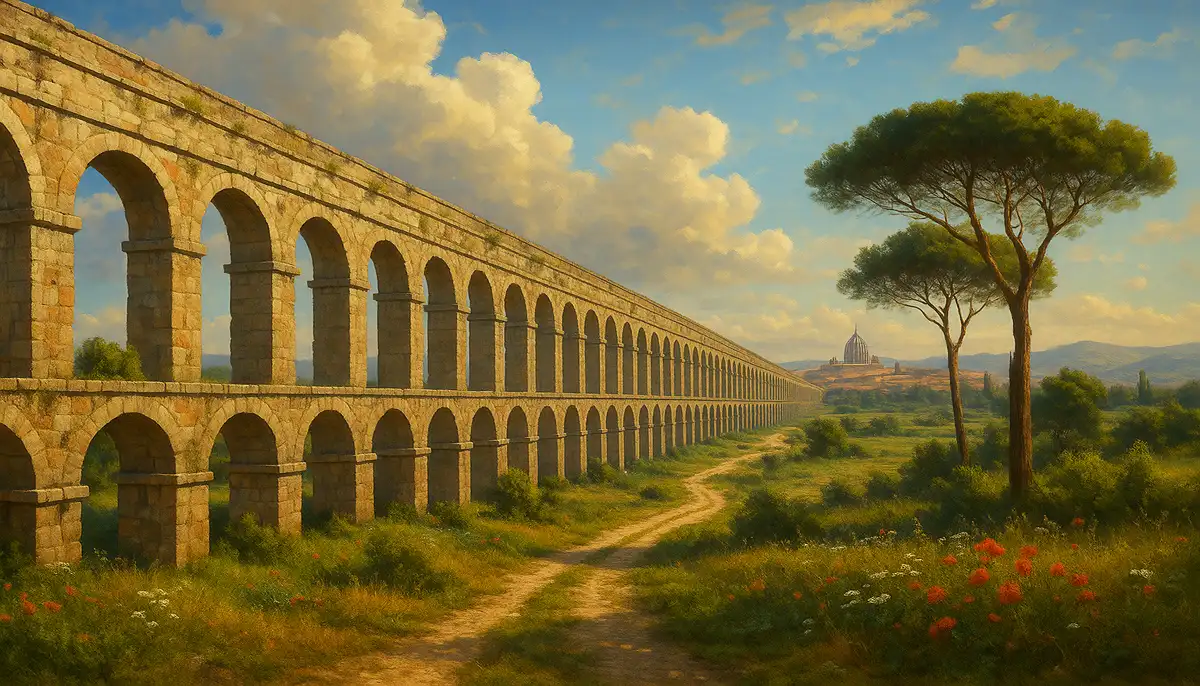
- Frontinus, The Aqueducts of Rome 1.16 (tr. Charles E. Bennett, LacusCurtius) written c. AD 97–98; Bennett's Loeb translation 1925Frontinus was put in charge of Rome's water supply in AD 97 and wrote this report on it. After listing the aqueducts, their sources and their lengths, he writes: "With such an array of indispensable structures carrying so many waters, compare, if you will, the idle Pyramids or the useless, though famous, works of the Greeks!" The man who ran the system, describing it.
- Pliny the Elder, Natural History 36.24: the wonders of Rome — sewers and aqueducts (tr. John Bostock and H. T. Riley) completed AD 77–79; Bostock and Riley's translation 1855–1857Pliny, who died in the eruption of Vesuvius, lists the great works of Rome: the Circus, the Forum of Augustus, and "the public sewers, too, a work more stupendous than any", with seven rivers channelled beneath the city, and the water brought in by the aqueducts. He also reports a story that the labourers of Tarquinius Priscus, set to dig the first sewers, killed themselves to escape the work — a tradition six centuries old by his time.
Gods, Emperors and Christians
- Pliny the Younger, Letters 10.96–97: Pliny asks Trajan what to do about the Christians, and Trajan's reply (Fordham Ancient History Sourcebook) written c. AD 111–113, while Pliny governed Bithynia-Pontus; translator not named on the pageA provincial governor writes to the emperor: he has never been at a trial of Christians and does not know what to punish. Those he questioned said they met "on a fixed day before dawn and sing responsively a hymn to Christ as to a god". Trajan answers that they "are not to be sought out", but punished if accused and proved guilty. Both letters are official correspondence written at the time.
- Tacitus, Annals 15.44: Nero and the Christians after the fire of AD 64 (tr. Alfred John Church and William Jackson Brodribb) written c. AD 115–120, of AD 64; Church and Brodribb's translation 1876Tacitus, writing about fifty years after the Great Fire, says that to end the rumour that he had ordered it, Nero put the blame on "a class hated for their abominations, called Christians by the populace", and names "Christus", executed under Tiberius by "Pontius Pilatus". It is the oldest surviving Roman report of the persecution, by a senator who calls the Christians' belief "a most mischievous superstition".
- Josephus, The Jewish War 7.5.5: the triumph of Vespasian and Titus (tr. William Whiston) written c. AD 75–79, of AD 71; Whiston's translation 1737Josephus, a Jewish commander who surrendered to the Romans and then lived in Rome under Vespasian's patronage, describes the triumph after the fall of Jerusalem: the spoils of the Temple, "the golden table", the candlestick of gold, and "the last of all the spoils, was carried the Law of the Jews". The Arch of Titus, still standing in the Forum, shows the candlestick carried in the procession.
- Suetonius, Life of Claudius 25.4: the Jews expelled from Rome (tr. J. C. Rolfe, LacusCurtius) written c. AD 121, of c. AD 49; Rolfe's Loeb translation 1914In a list of Claudius' acts Suetonius writes one sentence: "Since the Jews constantly made disturbances at the instigation of Chrestus, he expelled them from Rome." He was writing some seventy years later and does not say who Chrestus was; whether he meant Christ is a question the sentence alone cannot answer. Compare Acts 18:2, which mentions Jews ordered by Claudius to leave Rome.
Pick two or more of these chapters to read.
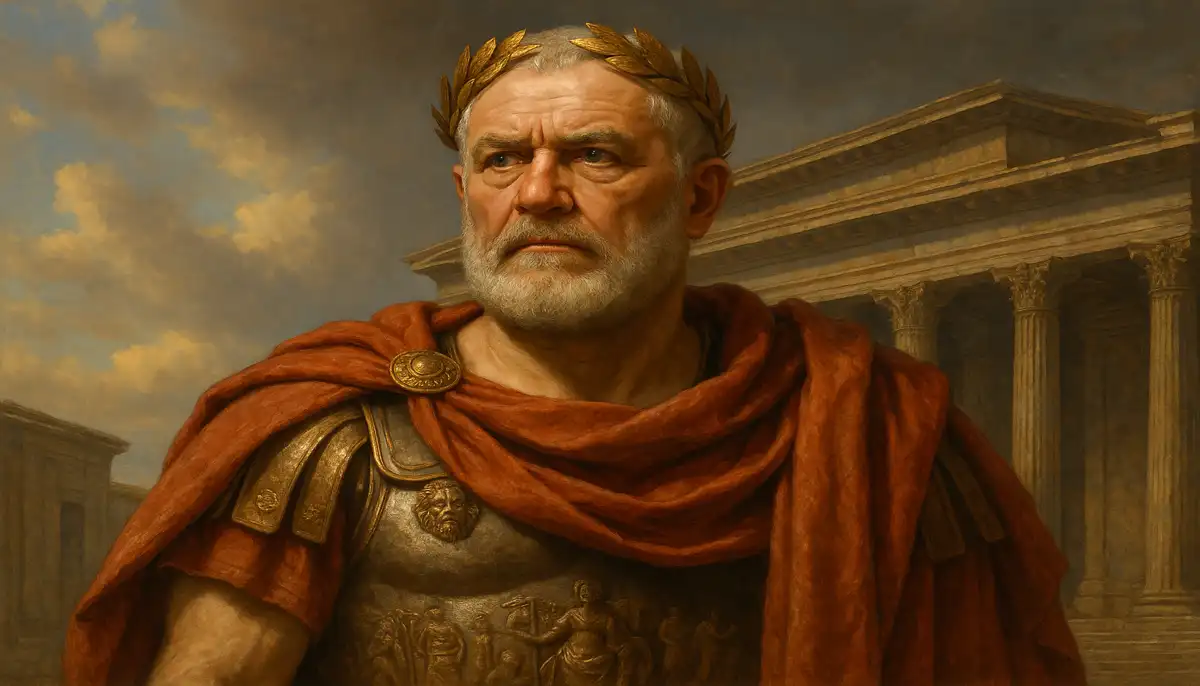
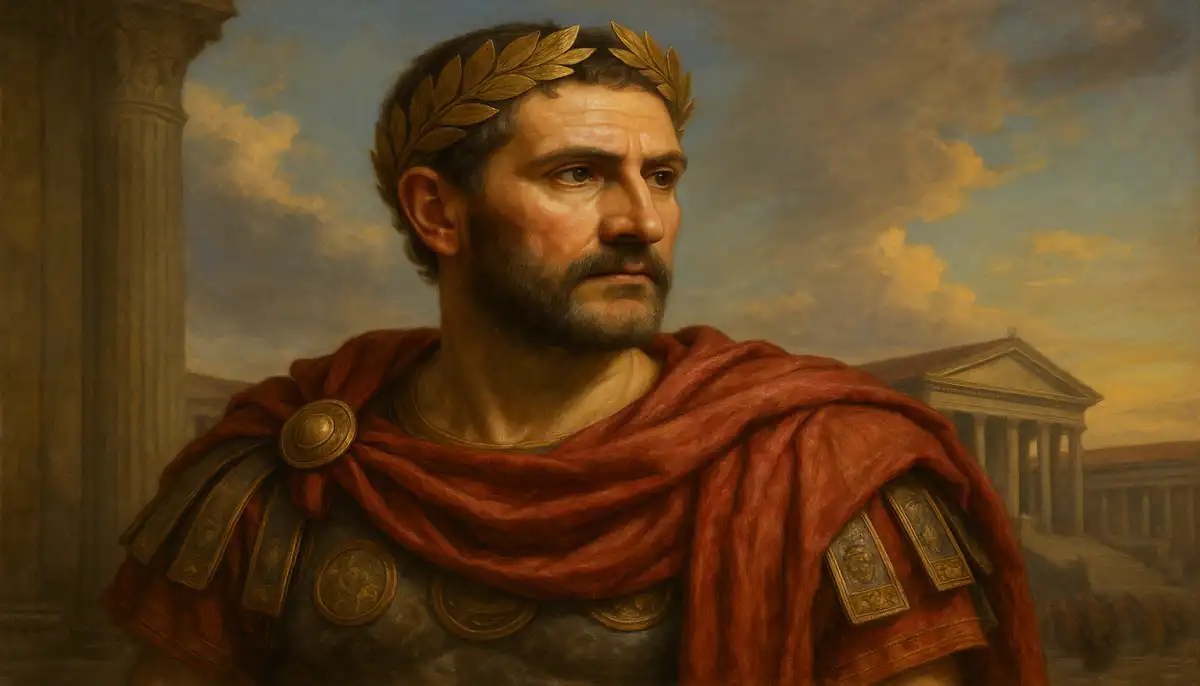
K–5th Grade
6th–8th Grade
9th–12th Grade
Emperors, Plague and Persecution in the Third Century
- A Decian libellus: certificate of sacrifice of Aurelius Diogenes, AD 250 (tr. Robert H. Beattie, The Biblical World 8, Internet Archive) papyrus dated 26 June AD 250; Beattie's article and translation 1896THE DOCUMENT ITSELF: a papyrus from the Fayum in Egypt, now in Berlin. Under Decius' order that everyone sacrifice to the gods, a man of seventy-two with "a scar over the right eye-brow" declares that "according to the edict" he has "offered sacrifices, poured libations, and eaten of the consecrated food" before the village commissioners, who sign as witnesses. Written on the day; Beattie gives the text and his translation.
- Cyprian of Carthage, On the Mortality (Treatise 7) (tr. Robert Ernest Wallis) written c. AD 252, during the plague; Wallis's translation 1868The bishop of Carthage writes to his own congregation while the plague is killing them. He describes the sickness as he saw it — "the bowels, relaxed into a constant flux", fever, vomiting, and "the eyes are on fire with the injected blood" — and tells Christians not to fear death. An eyewitness, writing at the time, as a preacher; the sickness he describes is called the Plague of Cyprian after him.
- Historia Augusta, The Thirty Pretenders 15 and 30: Odaenathus and Zenobia of Palmyra (tr. David Magie, LacusCurtius) written probably in the late 4th century AD, of the AD 260s–270s; Magie's Loeb translation 1932Odaenathus of Palmyra marches against the Persians "having with him his wife Zenobia", who was, the writer says, "the noblest of all the women of the East". After his death she ruled the East in her son's name until Aurelian took Palmyra in AD 272. The Historia Augusta was written about a century later and mixes fact with invention; read it alongside the coins and inscriptions of Zenobia's reign.
- Historia Augusta, Life of Aurelian 39: the wall of Rome and the giving up of Dacia (tr. David Magie, LacusCurtius) written probably in the late 4th century AD, of AD 271–275; Magie's Loeb translation 1932Aurelian founds the Temple of the Sun and "so extended the wall of the city of Rome that its circuit was nearly fifty miles long". He also gives up Trajan's province of Dacia across the Danube and moves its people into Moesia. The Aurelian Wall still stands for most of its length; its circuit is about nineteen kilometres (twelve miles), far less than the figure the writer gives.
Diocletian and Constantine
- Diocletian's Edict on Maximum Prices, AD 301 (tr. Roland G. Kent, University of Pennsylvania Law Review 69, Internet Archive) issued AD 301; Kent's article and translation 1920The emperors' own preamble, known from inscribed copies found in many cities, and a selection of the price lists. They blame "the raging and boundless avarice" of traders, set the highest price for goods and wages throughout the empire, and make breaking the law punishable by death. Kent translates the preamble and gives prices — wheat, wine, wool, raw silk — in the denarius of the time.
- Lactantius, On the Deaths of the Persecutors 7, 44 and 48 (tr. William Fletcher) written c. AD 314–315; Fletcher's translation 1871A Christian teacher at the court in Nicomedia, writing within three years of the battle. Chapter 7: Diocletian "made choice of three persons to share the government with him". Chapter 44: before the Milvian Bridge (AD 312) "Constantine was directed in a dream to cause the heavenly sign to be delineated on the shields of his soldiers". Chapter 48: the letter of 313 beginning "When we, Constantine and Licinius, emperors, had an interview at Milan".
- Eusebius of Caesarea, Life of Constantine 1.28–29: the vision of the cross (tr. Ernest Cushing Richardson) written c. AD 337–339, of AD 312; Richardson's translation 1890Eusebius says Constantine told him this himself "long afterwards" and "confirmed his statement by an oath": about noon he saw "the trophy of a cross of light in the heavens, above the sun, and bearing the inscription, Conquer by this", and that night Christ appeared to him in a dream. Written some twenty-five years after the battle; compare Lactantius' account, which speaks only of a dream.
- Socrates Scholasticus, Church History 1.8: the Council of Nicaea and its creed, AD 325 (tr. A. C. Zenos) written c. AD 439–443, of AD 325; Zenos's translation 1890Socrates, a Christian layman of Constantinople writing over a century later, gives "the agreement of faith, assented to with loud acclamation at the great council": "We believe in one God, the Father Almighty, Maker of all things visible and invisible", the Son "begotten, not made, consubstantial with the Father". He reports that five bishops at first objected to the word homoousios.
Goths, Huns and the Sack of Rome
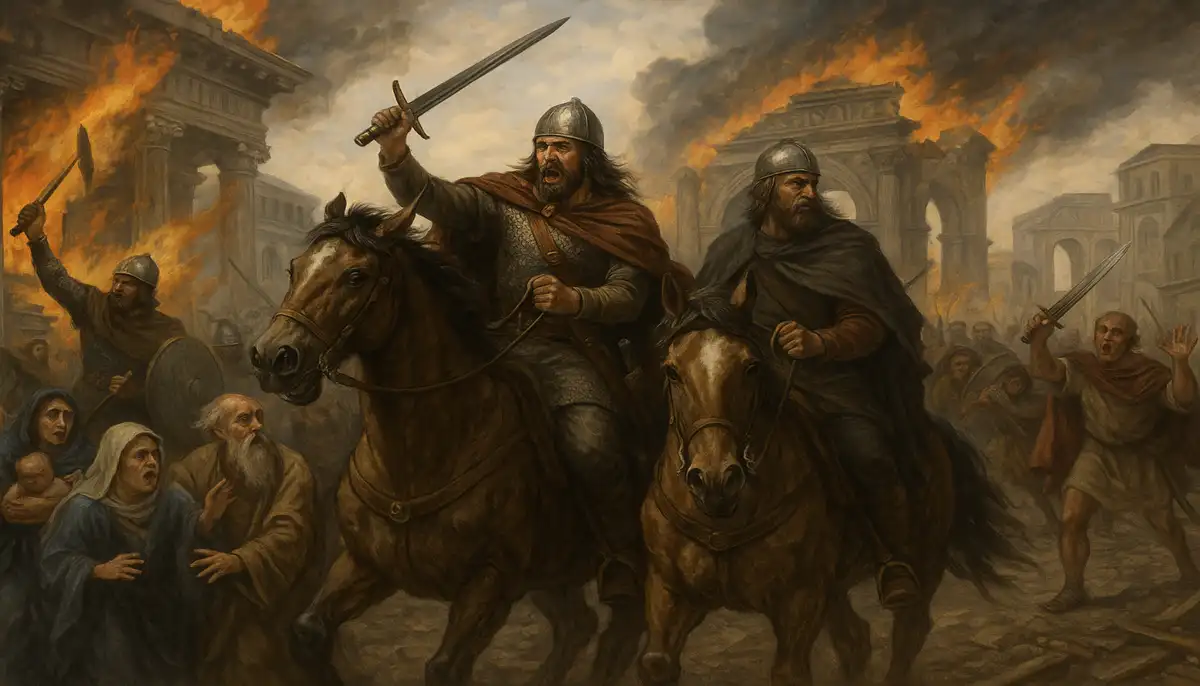
- Ammianus Marcellinus, History 31.2–13: the Huns, the Goths and the battle of Adrianople (tr. J. C. Rolfe, LacusCurtius) written c. AD 390, of AD 376–378; Rolfe's Loeb translation 1939Ammianus, "a former soldier and a Greek" as he calls himself, closes his history with the disaster of his own day. 31.2: "The people of the Huns, but little known from ancient records". 31.13, Adrianople, where the emperor Valens was killed: "barely a third part of our army escaped", and "The annals record no such massacre of a battle except the one at Cannae". Written about twelve years after.
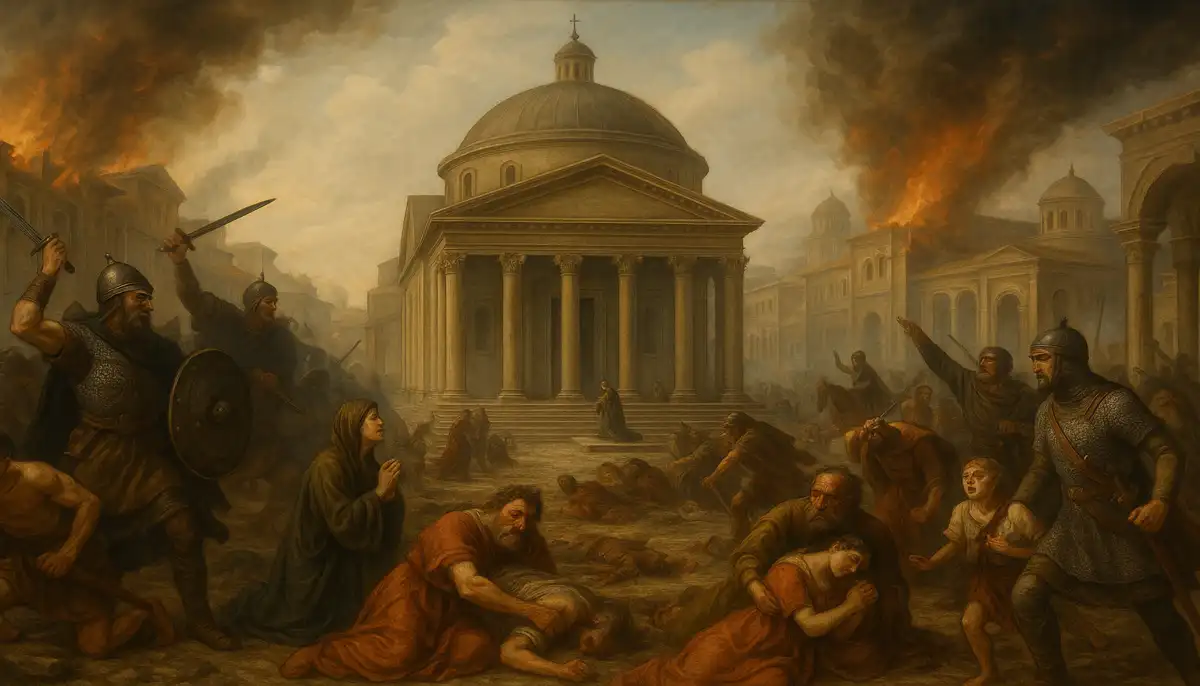
- Jerome, Letter 127.12, to Principia: the news of Rome's fall (tr. W. H. Fremantle, G. Lewis and W. G. Martley) written AD 412 at Bethlehem, of AD 410; translation 1893Jerome, a priest living in Bethlehem, writes two years after Alaric's Goths took Rome, in a letter in memory of Marcella, a Roman widow who died a few days after the sack. "My voice sticks in my throat; and, as I dictate, sobs choke my utterance. The City which had taken the whole world was itself taken". He was not in Rome; he writes what refugees and letters told him.
- Augustine, The City of God 1.1–7: the sack of Rome and the churches as sanctuaries (tr. Marcus Dods) begun AD 413, of AD 410; Dods's translation 1871The bishop of Hippo in Africa began his great book to answer pagans who blamed the sack on the abandoning of the old gods. He points out that the Goths spared those who fled into the churches: "The reliquaries of the martyrs and the churches of the apostles bear witness to this; for in the sack of the city they were open sanctuary". An argument written three years after the event, by a man who was not there.
- Priscus, At the court of Attila (fragment 8) (tr. J. B. Bury, Fordham Medieval Sourcebook) embassy of AD 449, written soon after; Bury's translationPriscus, a Greek writer, went with an embassy from Constantinople to Attila and described what he saw: the journey past Naissus, "full of the bones of men slain in war", Attila's wooden palace, and the feast, where "a cup-bearer came and handed Attila a wooden cup of wine". The only eyewitness account of Attila to survive, and only in fragments copied by later writers.
The Last Emperor in the West
- Anonymus Valesianus, part 2, 8.36–38: Odoacer deposes Romulus Augustulus (tr. J. C. Rolfe, LacusCurtius) compiled in Italy in the 6th century AD, of AD 475–476; Rolfe's Loeb translation 1939An anonymous chronicle of Theoderic's Italy, written within about two generations of the events. Odoacer kills the patrician Orestes, "then he entered Ravenna, deposed Augustulus from his throne, but in pity for his tender years, granted him his life", gave him an income of six thousand gold pieces and sent him to live in Campania. Note that it tells the change of ruler without calling it the end of an empire.
- Marcellinus Comes, Chronicle, the year AD 476 (Latin text, ed. Theodor Mommsen, Chronica Minora 2, Internet Archive) written at Constantinople c. AD 518–534; Mommsen's edition 1894THE LATIN ORIGINAL. A court official at Constantinople, writing about forty years later, makes 476 the end: "Hesperium Romanae gentis imperium … cum hoc Augustulo periit" — the western empire of the Roman people, which Octavian Augustus began to rule, perished with this Augustulus. Under AD 454 he had already written that with Aetius' murder the western realm fell. Edition only; no translation on the page.
- Jordanes, Getica 46: "the Western Empire of the Roman race" (tr. Charles C. Mierow, Internet Archive) written AD 551; Mierow's translation 1915A Goth in the service of the eastern empire, writing seventy-five years after the event. Odoacer "drove his son Augustulus from the throne" and exiled him to the Castle of Lucullus in Campania. "Thus the Western Empire of the Roman race … perished with this Augustulus". Set this beside Marcellinus' chronicle: Jordanes repeats his sentence almost word for word.
- Procopius, History of the Wars 5.1: the Gothic War begins with Odoacer (tr. H. B. Dewing, Project Gutenberg) written c. AD 545–553, of AD 476; Dewing's Loeb translation 1919Procopius, secretary to Justinian's general Belisarius in Italy, opens his account of the Gothic War with the western emperor "whom the Romans used to call by the diminutive name Augustulus". He explains Odoacer's rise by the barbarian allies' demand for a third of the land of Italy; Odoacer "did the emperor no further harm, but allowed him to live thenceforth as a private citizen".
What comes with the book
The Ultimate Guide
The textbook itself — the sixteen chapters these lessons are built from.
Living History
The Ultimate Guide to Ancient Rome — Told By Those Who Were There. The Heroes & Villains series, in the first person.
The Adventure Box
Cards, lesson plans, activities, coloring pages and the craft kit for this era.