History Curriculum/Book 7
Book seven of the curriculum
The History of Ancient Israel
The seventh book in the curriculum. Twenty chapters across five weeks — from the question of where the records of a people called the Hebrews come from, through the patriarchs, Egypt and the Exodus, the tribes in Canaan and the kings in Jerusalem, to the Assyrian and Babylonian conquests, the exile and return, the Maccabees, and the Roman province of Judea.
Read the book
Turn the pages of both editions right here. Ancient Israel is a members’ book: subscribers and Adventure Box Course families read every page.

🔒 A members’ book — Living History 378 pages, Standard Book 434 pages. Subscribe, or buy an Adventure Box, to read it.
5 Weeks, 20 Chapters, Choose 10+ to Read
Pick the chapters you want to read each week. The living books and the sources are one click away.
Pick two or more of these chapters to read. Finish two of the ones you choose to open Week 2.
K–5th Grade
6th–8th Grade
9th–12th Grade
The Books These Chapters Are Told From
- Genesis the first book of the Torah, and of the Hebrew BibleEvery event in these four chapters — Ur, Haran, the covenant, the birth of Ishmael and of Isaac, the binding of Isaac, Rebekah at the well, the birthright, the ladder at Bethel, the twelve sons, Joseph sold into Egypt — is recorded here and, for the patriarchs themselves, here alone. The Guide names the chapters it uses: Genesis 11, 12, 13, 15, 16, 17, 21, 22, 24, 25, 28, 29, 30, 35 and 37. Read the passage before reading anyone's account of it.
- The Quran, where it speaks of Ibrahim and Isma'ilthe scripture of IslamThe Guide devotes several pages of chapters 02 and 03 to the Quranic account beside the biblical one — the promise to Ishmael, the building of the Kaaba at Mecca (Quran 2:125–127), Ibrahim as a hanif or pure monotheist (Quran 3:67), and the near-sacrifice in which the son is not named (Quran 37:100–107). Both accounts are given here as each tradition records them, and neither is weighed against the other.
- Antiquities of the Jews, Books I and II Flavius Josephus, c. AD 93–94A Jewish priest and general writing in Greek for a Roman readership, who retells the patriarchal narratives and the descent into Egypt for people who had never read Genesis. The Living edition puts him on the page in his own voice (Living page 19). He is a first-century witness to what the story was in the first century — not a witness to the second millennium BC.
What Has Been Dug Up From This World
- The excavations at UrSir Leonard Woolley, 1922–1934The Sumerian city Genesis 11:28 calls Ur of the Chaldees: a planned city with the Great Ziggurat of Nanna at its centre, royal tombs, cuneiform archives and a trade reach that ran to the Persian Gulf. The Guide uses it for the world Abram is said to have left, and says in the same breath that nothing found there names him.
- The Nuzi Tabletsclay tablets from Yorgan Tepe in northern Mesopotamia, Middle Bronze AgeLegal records of adoption, inheritance and marriage. The Guide points to the practice of a childless wife giving her maidservant to her husband to bear an heir — what Genesis 16 records of Sarai and Hagar — as something the Nuzi texts also describe, and says that this shows the customs of the period, not the people of the story.
- The Mari Archivessome 25,000 cuneiform tablets from Mari on the Euphrates, eighteenth century BCThe correspondence of Zimri-Lim's court with Babylon, Assyria and the cities of Syria and Canaan: treaties, tribal movements, caravans and pasture rights. The Guide uses them for the political geography a family of herders would have crossed.
- The Cave of Machpelah at Hebron, the Tomb of the Patriarchsa standing Herodian-period enclosure over a caveGenesis 23 records Abraham buying the field and the cave as a burial place, and Genesis 25, 35 and 49 record who was buried there. The building above it is Herodian and later; the Guide describes the site as one revered for millennia and does not claim the excavation has identified anyone in it.
Archives to Search Yourself
- Internet History Sourcebooks Fordham UniversityFree, full-text translations of Mesopotamian, Egyptian and Israelite documents, and of the Greek and Roman writers who described the region.
- Mechon Mamre the Hebrew Bible in Hebrew and in English, side by sideThe Masoretic text with the 1917 Jewish Publication Society translation beside it, chapter by chapter, free. The plainest way to read the verses the Guide cites in the form it cites them.
- Project Gutenberg volunteer-transcribed public-domain textsJosephus complete, Herodotus, and the older translation series that the modern books still quote.
- The Institute for the Study of Ancient Cultures University of ChicagoExcavation reports and publications for Mesopotamia, the Levant and Egypt, most of them free to download in full.
Pick two or more of these chapters to read. Finish two of the ones you choose to open Week 3.
K–5th Grade
6th–8th Grade
9th–12th Grade
The Two Records, Each Named
- Exodus, Leviticus, Numbers, Deuteronomy and Joshua the Hebrew BibleWhere the bondage in Egypt, Moses, the plagues, the crossing of the sea, the law at Sinai, the Tabernacle, the forty years and the entry into Canaan are recorded, and — for the events themselves — where they are recorded alone. The Guide quotes Exodus 1:8–14 and 12:37 at length and names Exodus 20, 24 and 34 for the commandments and the tablets.
- The Merneptah Steleset up by Merneptah, son of Ramesses II, about 1208 BC; found at Thebes in 1896A victory inscription that names Israel — the earliest mention of that name yet found anywhere. The Guide introduces it in chapter 01 as the earliest reference to the Israelites outside the Bible; the Living edition gives the stele to Merneptah himself to describe (Living pages 102–106). What it shows is that a people called Israel was in Canaan at the end of the thirteenth century BC, and the Guide is careful to say that is what it shows.
- Egyptian records of foreign labourtomb paintings, temple reliefs and administrative texts of the New KingdomThe Guide names the tomb of the vizier Rekhmire under Thutmose III, which shows foreign captives at work, and inscriptions of Ramesses II that record 'Asiatics' and 'Shasu' from the Levant building temples and royal buildings. None of them names the Hebrews. The Guide states both halves of that plainly.
- Avaris and Pi-Ramesses, in the eastern Deltathe excavation record at Tell el-Dab'a and QantirThe Hyksos capital and the city Ramesses II built. Exodus 1:11 names Pithom and Raamses as the store cities; the Guide says Pi-Ramesses 'may be' the city meant — the hedge is the Guide's own — and describes the siege destruction at Avaris that it attributes to Ahmose I.
The Land They Entered
- Tell es-Sultan (Jericho)excavated by John Garstang in the 1930s and by Kathleen Kenyon in the 1950sOne of the oldest continuously occupied sites on earth, with Neolithic, Bronze Age and Iron Age levels. The Guide reports that Garstang found a collapsed wall and a burnt layer, that dating that destruction to the biblical account 'remains one of the biggest challenges for archaeologists', and that the site 'has yet to provide definitive answers'. All three statements are the Guide's.
- Hazor, Megiddo and Lachishthe excavated Canaanite city-statesFortified cities with palaces, gates and archives, trading with Egypt, Mesopotamia and Hatti. Egyptian scarabs, jewellery and pottery turn up in all of them. The Guide uses them for what Canaan was before and during the settlement, and names Jabin of Hazor as the king Joshua 11 says led the northern coalition.
- The highland villagesthe settlement survey of the central hill countrySmall, unfortified, four-room-house settlements that appear in the highlands around the time the Israelites are said to have arrived, unlike the walled Canaanite cities below them. The Guide reports that some scholars connect them with the Israelites and leaves the connection where it found it.
- The Amarna Lettersclay tablets in Akkadian, found at Amarna in 1887The Egyptian court's correspondence with its vassals in Canaan in the fourteenth century BC, full of city kings asking for troops and accusing one another. The Guide notes that they record unrest in Canaan that 'may have involved early Hebrew groups' — and the Living edition makes one of those correspondents, Labaya of Shechem, a narrator (Living page 125).
Archives to Search Yourself
- Internet History Sourcebooks: Ancient Near East Fordham UniversityThe Amarna Letters, the Egyptian annals and the Israelite texts in translation.
- Mechon Mamre the Hebrew Bible in Hebrew and EnglishExodus, Numbers, Deuteronomy, Joshua and Judges in the text the Guide quotes.
- The Internet Archive Internet ArchiveGarstang's and Kenyon's own excavation reports for Jericho, the Palestine Exploration Quarterly, and the nineteenth- and twentieth-century translation series.
Pick two or more of these chapters to read. Finish two of the ones you choose to open Week 4.
K–5th Grade
6th–8th Grade
9th–12th Grade
The Books of Samuel and Kings
- 1 and 2 Samuel the Hebrew BibleThe demand for a king and Samuel's warning (1 Samuel 8), Saul's anointing and his reign (1 Samuel 9–15), David at Saul's court and in the wilderness (1 Samuel 16–31), and David's reign, Jerusalem, Bathsheba, Nathan and Absalom (2 Samuel). The Guide cites these chapter and verse throughout chapters 10 and 11.
- 1 Kings 1–11, with 2 Chronicles the Hebrew BibleSolomon's accession, the judgement between the two mothers (1 Kings 3:16–28), the building of the Temple, the Queen of Sheba, the alliance with Hiram of Tyre, the foreign marriages and the end of the reign. Chronicles tells the same reign again with a different emphasis, and reading both is the point.
The Stones of This Century
- The Tel Dan Inscriptiona basalt victory stele in Aramaic, found at Tel Dan in 1993–94; ninth century BCSet up by an Aramean king who claims to have killed a king of Israel and a king of the 'House of David' — bytdwd. The Guide calls it the first extra-biblical reference to David and says that what it attests is a dynasty known by his name. It does not narrate anything David did.
- The Mesha Stele, the Moabite Stoneset up by King Mesha of Moab, c. 840 BC; found at Dhiban in 1868Mesha's own account, in Moabite, of throwing off the rule of Omri of Israel. It names Israel, Omri, the god Chemosh and the god of Israel. The Guide raises it in chapter 11 as evidence of Israel's territorial reach and of the House of David, and flags that the David reading rests on a damaged line.
- The six-chambered gates at Hazor, Megiddo and Gezerthe excavation recordLarge fortified gates of near-identical design, long called 'Solomonic' because 1 Kings 9:15 names those three cities as Solomon's building projects. The Guide reports the identification AND reports the objection in the same section: that some argue the same gates belong to the ninth century and the Omrides, and that dating them is genuinely difficult.
- The Khirbet Qeiyafa ostracon and fortificationsexcavated from 2007; late eleventh to early tenth century BCA heavily fortified town with two gates in the Shephelah, facing Philistine territory, and a pottery sherd carrying what may be the earliest Hebrew inscription yet found. The Guide uses it for the possibility of organised central authority at about the time it places Saul, and notes that its date is argued over.
- The Gezer Calendara small inscribed limestone tablet, tenth century BCA schoolboy's or farmer's list of the agricultural year in early Hebrew script. The Guide uses it, with Khirbet Qeiyafa, for the simple point that people in Israel were writing things down by the tenth century — which is what an administration needs.
- The copper mines of the Timna Valleythe excavation record in the southern ArabahLarge-scale copper smelting with organised camps and food supply, some of it dated to the tenth century BC. The Guide sets it beside the biblical picture of a kingdom rich in metal and does not assert that the mines were Solomon's.
Archives to Search Yourself
- Internet History Sourcebooks Fordham UniversityThe Israelite and Near Eastern royal inscriptions in translation, including the Mesha Stele.
- Livius Jona Lendering's source archiveTranslated Near Eastern inscriptions, chronicles and king lists, each with a note on where the object is and how it is dated.
- The Internet Archive Internet ArchiveExcavation reports for Megiddo, Hazor, Gezer, Samaria and the City of David, many of them long out of print.
Pick two or more of these chapters to read. Finish two of the ones you choose to open Week 5.
K–5th Grade
6th–8th Grade
9th–12th Grade
What Assyria and Babylon Wrote About Israel and Judah
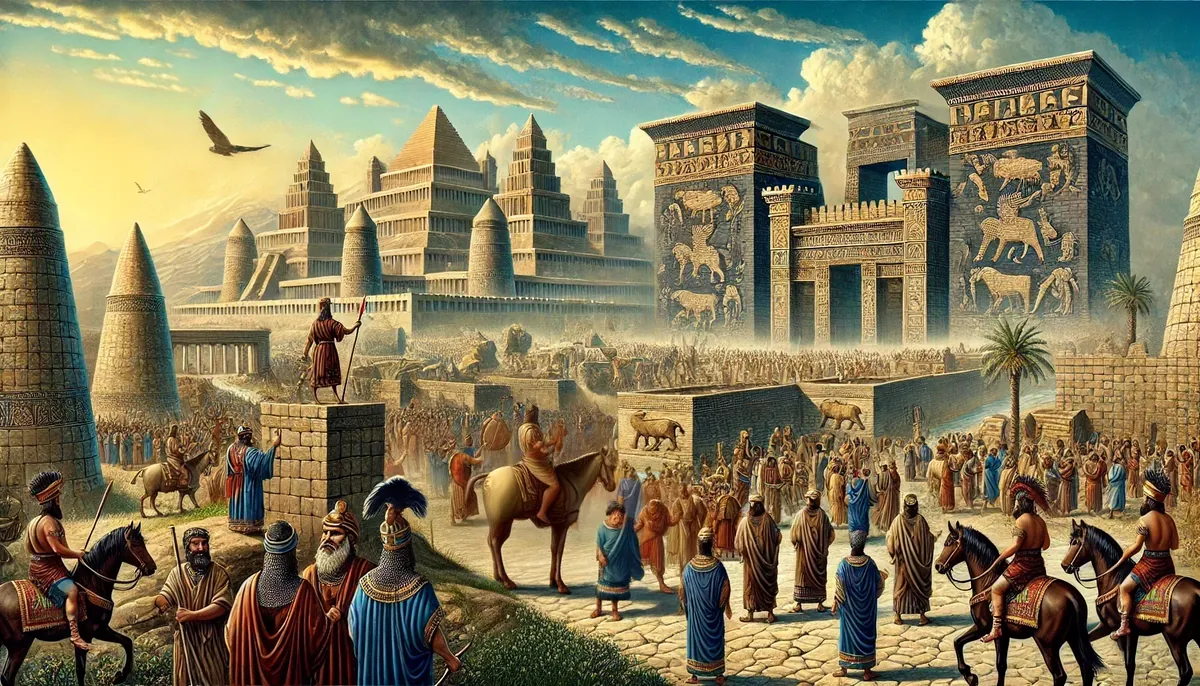
- The annals of Tiglath-Pileser IIIAssyrian royal inscriptions, 745–727 BCThe king's own record of his campaigns of 733–732 BC into Syria and Israel, including the taking of Damascus and of the land of Naphtali and the deportation of its people. The Guide quotes the claim directly.
- The inscriptions of Sargon IIAssyrian royal inscriptions, 722–705 BCSargon's record that he captured Samaria and carried off 27,290 of its people and settled them elsewhere in the empire. The Guide sets this beside 2 Kings 17 and points out where the two accounts agree. The Living edition gives Sargon II a chapter of his own to say it in (Living page 267).
- Sennacherib's Prisma six-sided clay prism, 691 BCSennacherib's account of his 701 BC campaign in Judah, in which he says he shut Hezekiah up in Jerusalem 'like a caged bird' — and does not say he took the city. The Guide quotes the phrase. Read it beside 2 Kings 18–19 and Isaiah 36–37 and the two records are both on the table.
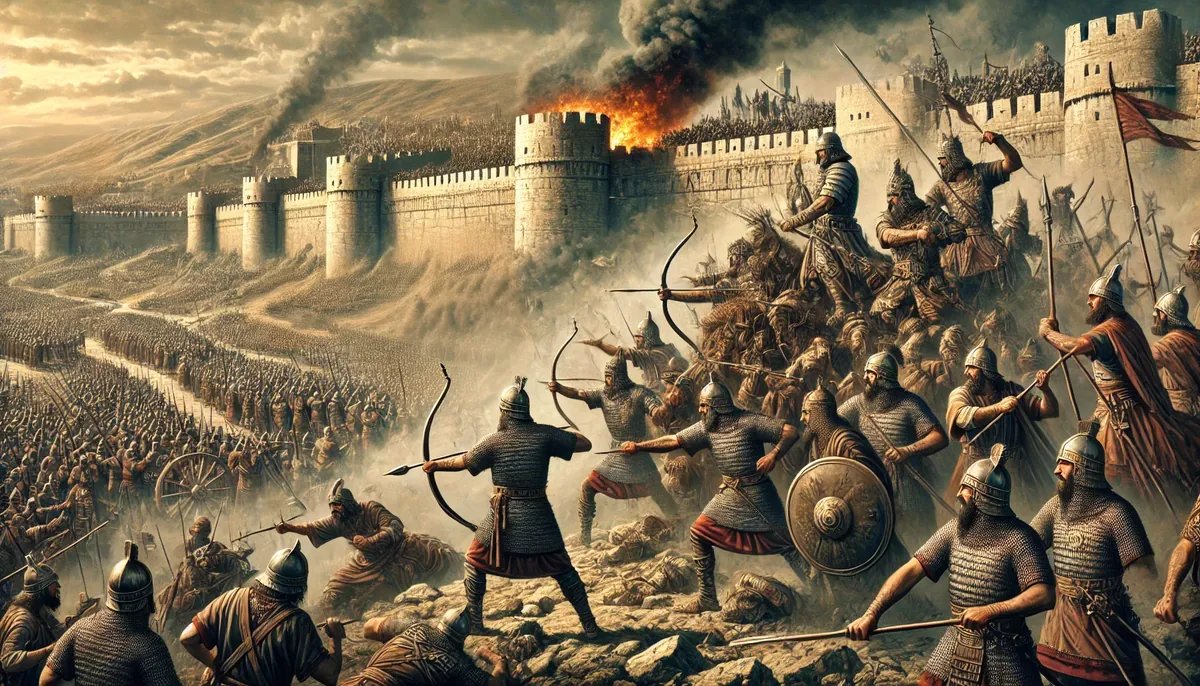
- The Lachish Reliefscarved panels from Sennacherib's palace at NinevehA long, detailed picture of the Assyrian siege of Lachish — the ramp, the battering rams, the archers, the captives leaving the gate. It is the fullest image of an Assyrian siege that survives, and it is of a Judean city.
- The Black Obelisk of Shalmaneser IIIa limestone obelisk, c. 825 BCCarved panels showing tribute brought to the Assyrian king, one register of which is captioned as tribute from Jehu of Israel. The Guide names it in chapter 01 among the records that mention the Hebrew kingdoms from outside.
- The Babylonian Chronicles cuneiform tablets recording the Neo-Babylonian kings year by yearTerse, dated entries that include the capture of Jerusalem and the removal of its king. The Guide names them in chapter 01 as the record of the fall of Jerusalem and the exile.
What Judah Itself Left
- The Lachish Lettersostraca — inked pottery sherds — found in the gate of LachishMilitary dispatches written during the Babylonian advance, one of them reporting that the signal fires of a neighbouring town can no longer be seen. They are the last words of Judah's own army, written as the campaign that ended the kingdom was happening.
- Hezekiah's Tunnel and the Siloam Inscriptiona rock-cut water tunnel under the City of DavidA tunnel driven from both ends through the ridge to bring the Gihon spring inside the walls, with an inscription cut where the two teams met describing the moment they heard each other's picks. The Guide names it among Hezekiah's preparations for Sennacherib's siege.
- The LMLK seal impressionsstamped jar handles reading lmlk, 'belonging to the king'Hundreds of storage jars stamped with a royal mark and one of four city names, found across Judah and concentrated in the years around 701 BC. The Guide puts them in its vocabulary list for chapter 16. They are what a kingdom organising its food supply for a siege looks like in the ground.
- The Al-Yahudu Tabletscuneiform tablets from a Judean settlement near Babylon, sixth to fifth century BCOrdinary business documents — land leases, loans, tax receipts, contracts — from a place whose name means 'the town of Judah'. They carry Judean personal names, many of them built on the name of the God of Israel, alongside Babylonian ones. The Guide uses them for chapter 17 and names a man, Shalem-Yama, leasing farmland.
- The Jehoiachin ration tabletsadministrative tablets from Nebuchadnezzar's palace at BabylonLists of oil and barley issued from the royal stores to named recipients, among them the king of Judah and his sons. The Guide sets them beside 2 Kings 25:27–30, which records the same allowance from the other side.
Archives to Search Yourself
- Internet History Sourcebooks: Ancient Near East Fordham UniversityThe Assyrian and Babylonian royal annals, the Lachish Letters and the Siloam inscription in translation.
- Livius Jona Lendering's source archiveThe Mesopotamian chronicles, the Assyrian campaign accounts and the Achaemenid inscriptions, with the text and a note on the object.
- Mechon Mamre the Hebrew Bible in Hebrew and EnglishKings, Chronicles, Isaiah, Jeremiah, Ezekiel and Lamentations — the Judean half of this week's record.
- The Internet Archive Internet ArchiveThe excavation reports for Samaria, Lachish and the City of David, and the older Assyriological volumes the modern books cite.
Pick two or more of these chapters to read.
K–5th Grade
6th–8th Grade
9th–12th Grade
Persia, Greece and Rome in Their Own Words
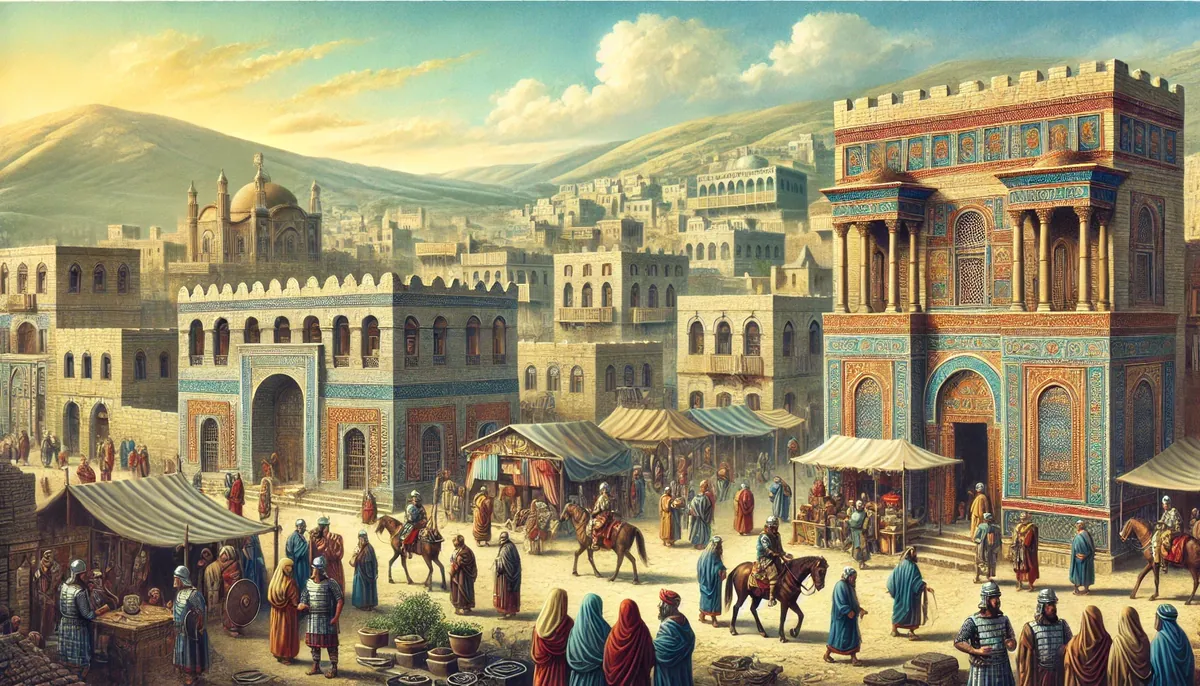
- The Cyrus Cylinder a clay barrel inscription of Cyrus II, 539 BC; found at Babylon in 1879Cyrus's own account, in Akkadian, of entering Babylon and of returning gods and displaced peoples to their own places. It does not mention Judah or the Jews. The Guide names it as the record of the policy that Ezra 1 says let the exiles go home, and the two documents are best read one after the other.
- Ezra, Nehemiah and Esther the Hebrew BibleThe decree of Cyrus and the first return under Sheshbazzar and Zerubbabel, the opposition and the halt, Darius finding Cyrus's decree in the archive, the Temple finished in 516 BC, and Ezra's and Nehemiah's later missions. Esther is set at Susa under a king the book calls Ahasuerus. The Guide follows all three closely.
- The Elephantine PapyriAramaic documents from a Judean garrison on an island in the Nile, fifth century BCLetters, contracts and petitions from a Judean military colony far up the Nile that had a temple of its own. The Guide describes the destruction of that temple in 410 BC and the community's appeal for permission to rebuild. They are ordinary people's paperwork, and they are the best surviving picture of Judean life under Persian rule.
- 1 and 2 Maccabeessecond-century BC histories, preserved in GreekWhere the decrees of Antiochus IV, the rising under Mattathias, the campaigns of Judah Maccabee and the rededication of the Temple are recorded. The Guide's account of the revolt follows them.
- The Jewish War and Antiquities of the Jews Flavius Josephus, c. AD 75 and c. AD 93–94A Judean commander who surrendered to Vespasian and then wrote the war up for a Roman audience: Pompey in 63 BC, Herod, the procurators, the revolt of AD 66, the siege of Jerusalem, the Temple, and Masada. He was present for part of it and says where he was. The Living edition closes the whole book with him (Living page 372).
- Against Apion Flavius JosephusHis defence of the antiquity of the Jewish people, and the book in which the lost Egyptian history of Manetho chiefly survives, because Josephus quotes it in order to argue with it.
The Objects of These Centuries
- The Dead Sea Scrolls manuscripts from caves near Qumran, c. third century BC to first century ADCopies of nearly every book of the Hebrew Bible except Esther, a thousand years older than the medieval manuscripts that had been the oldest known, together with the community's own writings. The Guide reports that they agree closely with the later Masoretic text, and it names the Community Rule and the War Scroll among the non-biblical ones.
- The Nash Papyrusa Hebrew fragment from Egypt, bought in 1902A few lines carrying the Ten Commandments and the Shema. Before Qumran it was the oldest known Hebrew biblical manuscript, and the Guide names it for that.
- The Septuagintthe Hebrew Bible translated into Greek, from the third century BCMade for the Greek-speaking Jewish community of Egypt. It is why the Hellenistic world could read these books at all, and why the early church quoted them in Greek. The Living edition gives its making to Ptolemy I's Alexandria (Living page 344).
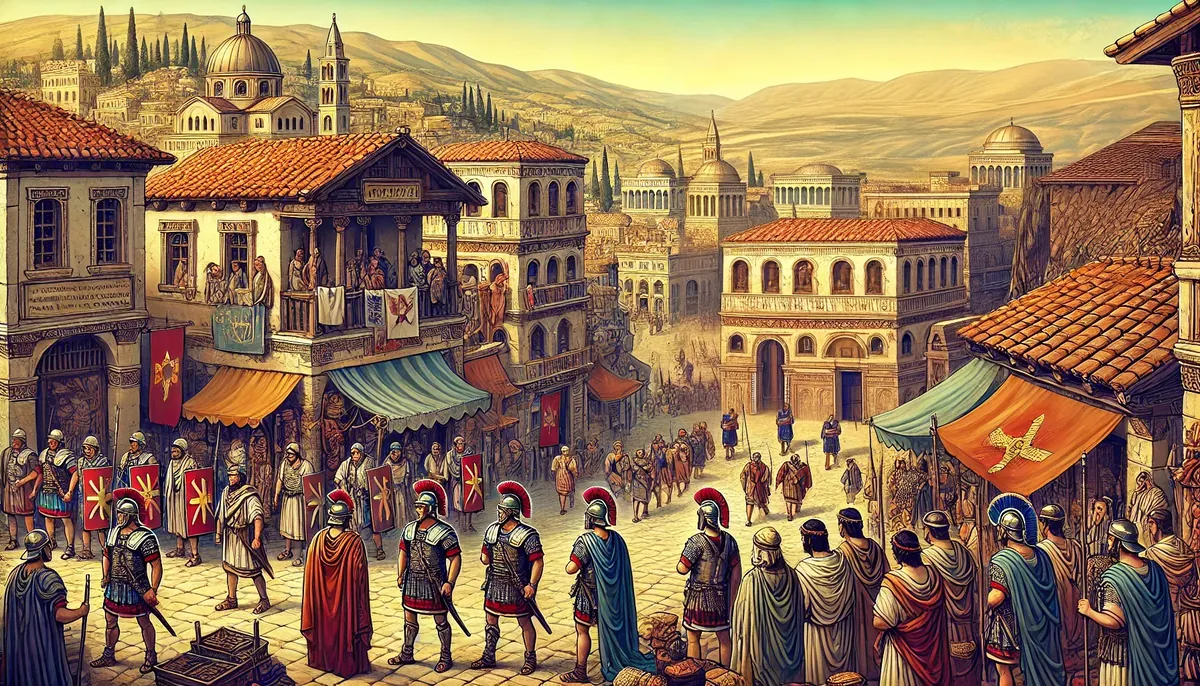
- The Pilate Stonean inscribed limestone block found at Caesarea Maritima in 1961A dedication naming Pontius Pilatus, prefect of Judaea. The Guide names it among the finds that give the Roman administration of Judea a documented officer.
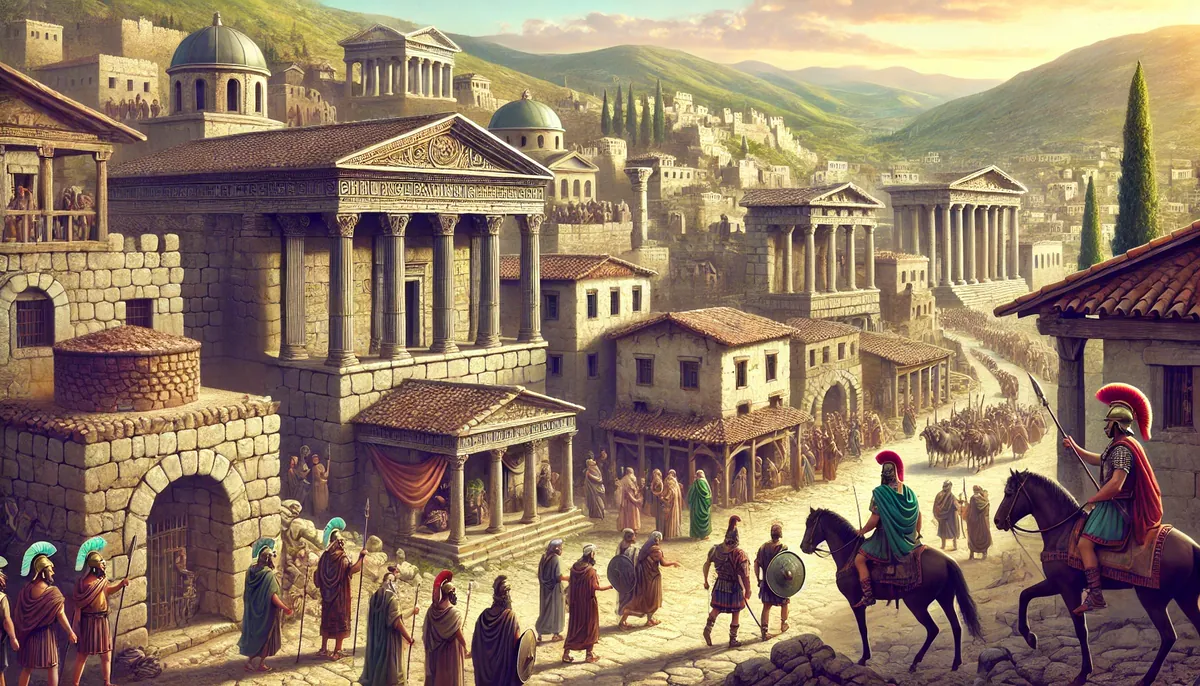
- Caesarea Maritima, Herodium and MasadaHerod's building works, excavatedA deep-water harbour built on the open coast, a fortress palace near Bethlehem that became its builder's tomb, and a desert plateau with storerooms, cisterns and a Roman siege ramp still standing round it. The Guide uses all three for what Roman-period Judea looked like, and follows Josephus for what happened at Masada.
Archives to Search Yourself
- Project Gutenberg: the works of Josephus volunteer-transcribed public-domain textsAntiquities of the Jews, The Wars of the Jews and Against Apion, complete and free, in William Whiston's translation — the one almost every English quotation of Josephus comes from.
- The Leon Levy Dead Sea Scrolls Digital Library the Israel Antiquities AuthorityHigh-resolution photographs of the scrolls themselves, searchable, with the plate and cave each fragment came from.
- The Shrine of the Book The Israel Museum, JerusalemWhere the Great Isaiah Scroll is kept, with its own online presentation of the scroll column by column.
- LacusCurtius University of ChicagoPlutarch, Cassius Dio, Appian, Strabo and the other Greek and Roman writers of the last two centuries BC in full translation, with the originals alongside.
- The Christian Classics Ethereal Library Calvin UniversityEusebius's Ecclesiastical History and the other early church historians in full English translation — the Living edition makes Eusebius one of chapter 01's four narrators.
What comes with the book
The Ultimate Guide
The textbook itself — the twenty chapters these lessons are built from.
Living History
Heroes and Villains: Ancient Israel — Told By Those Who Were There. The Heroes & Villains series, in the first person.
The Adventure Box
Cards, lesson plans, activities, coloring pages and the craft kit for this era.