History Curriculum/Book 6
Book six of the curriculum
The History of Ancient Egypt
The sixth book in the curriculum. Twenty chapters across four weeks — from the farming villages of the Nile before there were kings, through the pyramids of the Old Kingdom, the chariots of the New, the Kushite pharaohs who ruled from Napata and the Greek kings who ruled from Alexandria, to the Christian Egypt that fell to the armies of the Caliphate.
Read the book
Turn the pages of both editions right here. Ancient Egypt is a members’ book: subscribers and Adventure Box Course families read every page.
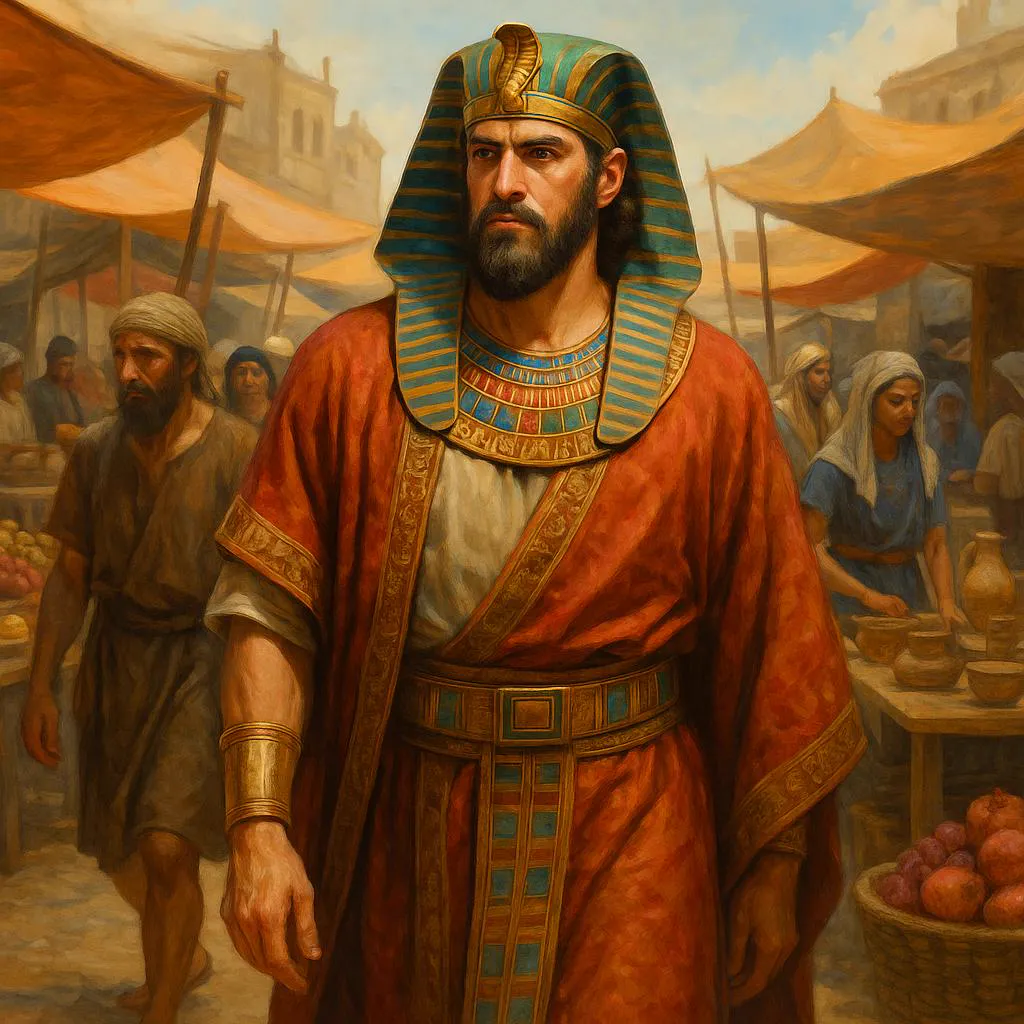
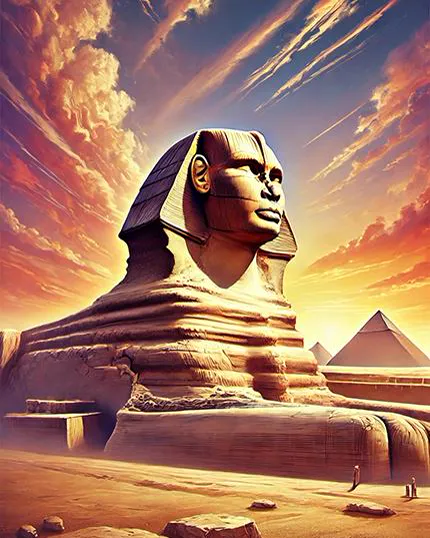
🔒 A members’ book — Living History 329 pages, Standard Book 411 pages. Subscribe, or buy an Adventure Box, to read it.
4 Weeks, 20 Chapters, Choose 8+ to Read
Pick the chapters you want to read each week. The living books and the sources are one click away.
Pick two or more of these chapters to read. Finish two of the ones you choose to open Week 2.
K–5th Grade
6th–8th Grade
9th–12th Grade
Objects That Carry the Story
- The Narmer Palettecarved slate, found at Hierakonpolis in 1898 by James Quibell and Frederick GreenA shield-shaped siltstone palette about 64 centimetres high, carved on both faces. One side shows a king in the White Crown of Upper Egypt striking a kneeling enemy; the other shows the same name wearing the Red Crown of Lower Egypt. It is the single object on which the Guide's account of unification rests, and the Guide says plainly that the palette is a monument, not a chronicle.
- The Scorpion Maceheadfound at HierakonpolisA limestone macehead showing a king wearing the White Crown cutting an irrigation ditch with a hoe. The Guide uses it for the ruler it calls Scorpion II and for the claim that kings were already organising public water works before unification.
- The Palermo Stonea fragment of a Fifth-Dynasty royal annalA broken slab of black basalt carved with year-by-year entries: the king's name, the height of that year's Nile flood, and what was built or celebrated. It is the earliest surviving Egyptian attempt to write its own history in order.
- The Pyramid Textscarved in the burial chamber of Pharaoh Unas at Saqqara, end of the Fifth DynastyThe oldest religious writing yet found in Egypt: spells cut into the walls to carry the king through the afterlife. Everything the chapter on religion says about the Old Kingdom afterlife can be traced to them.
People Who Wrote Egypt Down
- The Histories, Book II Herodotus of Halicarnassus, c. 484 – c. 425 BCA Greek traveller who went to Egypt roughly two thousand five hundred years after the events in these chapters and wrote down what the priests told him, what he saw, and what he doubted. Read him for the questions he asks and for how carefully he separates what he was told from what he watched.
- The AegyptiacaManetho, an Egyptian priest at Sebennytos, third century BCThe history of Egypt written in Greek for the first Ptolemies, which is where the division of Egyptian kings into thirty dynasties comes from. THE BOOK ITSELF IS LOST: every word of it that survives is a quotation in a later writer, chiefly Josephus, Africanus and Eusebius. The Living book puts Manetho on the page in his own voice.
- The Turin King Lista Nineteenth-Dynasty papyrus, now in TurinA list of Egypt's kings with the length of each reign, written in hieratic on the back of a tax document. It is fragmentary, and the gaps in it are one reason dates before the New Kingdom are given as ranges.
Archives to Search Yourself
- Internet History Sourcebooks: Ancient Egypt Fordham UniversityFree, full-text translations of Egyptian inscriptions, hymns and tales, and of the Greek writers who described Egypt.
- Project Gutenberg volunteer-transcribed public-domain textsHerodotus, Diodorus, Strabo and the older translations of the Egyptian literature, complete and free.
- The British Museum collection online The British MuseumSearchable photographs of Egyptian and Nubian objects with their find-spots where known.
Pick two or more of these chapters to read. Finish two of the ones you choose to open Week 3.
K–5th Grade
6th–8th Grade
9th–12th Grade
Inscriptions Cut by the People in These Chapters
- The Kamose Stelaeset up at Karnak by Kamose, last king of the Seventeenth DynastyThe Theban king's own account of sailing north against the Hyksos ruler Apophis, in the first person and in his own lifetime. One of the very few Egyptian texts that describes a war while the war is still going on.
- The Annals of Thutmose IIIcarved on the walls of the Temple of Amun at KarnakThe campaign-by-campaign record of seventeen expeditions, compiled from the day-books the army kept in the field, including the march through the Aruna pass to Megiddo. It is the closest thing Egypt left to a military archive.
- The Restoration Stela of Tutankhamunset up at KarnakThe young king's public statement that the temples had been left in ruin, the gods had turned away from the land, and that he had reopened and refurnished them. It is the chief document for what the reign after Akhenaten was for.
- The Great Hymn to the Atencarved in the tomb of Ay at AmarnaThe fullest surviving statement of the religion Akhenaten built, addressed to the sun disc as the only maker of the world. Read it beside the Restoration Stela and the whole quarrel is on two pieces of stone.
- The Amarna Lettersclay tablets in Akkadian cuneiform, found at Amarna in 1887The diplomatic post of the Egyptian court — letters to and from the kings of Babylon, Mitanni, Assyria and Hatti and from Egypt's own vassals in Canaan. They are the correspondence of a great power, preserved because clay does not burn.
The Hebrews in Egypt: the two records, each named
- The Book of Exodus, with Numbers and Deuteronomythe Hebrew BibleWhere the account of the Hebrews' bondage in Egypt, of Moses, of the plagues, of the crossing of the sea and of the journey to Canaan is recorded. The Guide names these books as the source of the narrative and treats them as such.
- The Merneptah Stelaset up by Merneptah, son of Ramesses II, about 1208 BC; found at Thebes by Flinders Petrie in 1896A victory inscription that names Israel — the earliest mention of that name yet found in any Egyptian text. What it shows is that a people called Israel was in Canaan by the end of the thirteenth century BC; the Guide is careful to say that is what it shows and no more.
- Against ApionFlavius Josephus, AD 37 – c. 100Where Manetho's account of the Hyksos and of a departure of foreigners from Egypt survives, because Josephus quotes it and argues with it. The Aegyptiaca itself is lost, so this is the text scholars actually read.
- Pi-Ramesses and Avaris (Tell el-Dab'a and Qantir, in the eastern Delta)the excavation recordThe two Delta cities the argument keeps returning to — the Hyksos capital and the city Ramesses II built. Exodus names Pithom and Raamses as the cities the Hebrews built, and the Guide says the excavated Delta sites are what the proposals about dating are measured against.
Archives to Search Yourself
- Internet History Sourcebooks: Ancient Near East Fordham UniversityTranslations of the Amarna Letters, the Egyptian annals, the hymns and the Hyksos material.
- The Metropolitan Museum of Art collection online The Metropolitan Museum of ArtIts Egyptian Art department excavated Deir el-Bahari and Malkata; the objects, the excavation photographs and the field records are all searchable.
- The Griffith Institute Tutankhamun archive University of OxfordHoward Carter's own excavation diaries, object cards and Harry Burton's photographs of KV62, page by page and card by card.
Pick two or more of these chapters to read. Finish two of the ones you choose to open Week 4.
K–5th Grade
6th–8th Grade
9th–12th Grade
What the Kings of These Centuries Left in Writing
- The Victory Stela of Piyeset up by Piye of Kush at Gebel Barkal, c. 727 BCThe longest royal narrative inscription surviving from ancient Egypt: the Kushite king's own account of coming north, of every town that submitted and every town that did not, and of how he treated the defeated. It is the central document of the Twenty-fifth Dynasty.
- The Bubastite Portal at Karnakset up by Sheshonq IA relief listing the towns of Canaan that Sheshonq I claims to have taken. The Guide notes that the Hebrew Bible records a campaign against Jerusalem by a king it calls Shishak in the fifth year of Rehoboam, and gives both records side by side without deciding they are the same list.
- The royal tombs at Tanisexcavated by Pierre Montet from 1939Intact burials of the Twenty-first and Twenty-second Dynasties, including the solid silver coffin of Psusennes I. Found in the same years as the Second World War, which is why almost nobody has heard of them.
Greek Writers Who Described Egypt
- The Histories, Book II Herodotus, c. 484 – c. 425 BCHe visited Egypt under Persian rule, in the century between the Saite kings and Alexander, and describes the country as he found it — the embalmers' trade, the labyrinth at Hawara, the priests' king list.
- The Anabasis of AlexanderArrian of Nicomedia, second century ADThe most sober surviving account of Alexander's campaign, written from the lost memoirs of Ptolemy son of Lagos — who was there and who later ruled Egypt himself. Arrian says at the start which of his sources he trusts and why.
- Life of AlexanderPlutarch, c. AD 46 – after AD 119The other main account, written for what it says about a man's character rather than as a campaign history. Plutarch says himself that he is writing lives, not histories.
- The Library of History, Book XVIIDiodorus Siculus, first century BCA third account of the conquest and of the founding of Alexandria, useful chiefly where it differs from Arrian.
Archives to Search Yourself
- LacusCurtius University of ChicagoDiodorus, Strabo, Arrian, Plutarch and Appian in full English translation, with the Greek and Latin alongside.
- Internet History Sourcebooks Fordham UniversityThe Piye stela, the Assyrian royal annals and the Persian inscriptions in translation.
- The Internet Archive Internet ArchiveScanned excavation reports for Tanis, Napata, Meroë and Saqqara, and the nineteenth-century translation series the modern books still quote.
Pick two or more of these chapters to read.
K–5th Grade
6th–8th Grade
9th–12th Grade
Rome, Egypt and Cleopatra
- Life of AntonyPlutarch, c. AD 46 – after AD 119The fullest ancient account of Antony and Cleopatra, written a century and a half after their deaths. Plutarch names his own informants, including a physician of Alexandria whose grandson told him what the palace was like, and he says where he is repeating a story he cannot check.
- The Res Gestae Divi AugustiAugustus, inscribed after AD 14Augustus's own account of his career, cut into bronze and copied onto temple walls. It records the annexation of Egypt in his own words — which is the victor's record, and reads like one.
- The Roman History, books 50–51Cassius Dio, c. AD 155 – c. 235The other surviving narrative of Actium and of the last days in Alexandria, from a Roman senator writing two centuries later.
- The Rosetta Stonea decree of Ptolemy V, 196 BC; found at Rashid in 1799One decree in three scripts — hieroglyphic, demotic and Greek — which is how the hieroglyphs were read again. Without it none of the inscriptions in this book could be quoted.
The Christian and Islamic Centuries
- The Ecclesiastical HistoryEusebius of Caesarea, c. AD 260 – c. 339The earliest continuous history of the church, and the source for the tradition that St Mark brought Christianity to Alexandria and for the succession of its bishops.
- The Life of AntonyAthanasius of Alexandria, written c. AD 360The biography of the hermit of the Egyptian desert, written by the bishop who knew him. It is the book that carried Egyptian monasticism to the rest of the Christian world, and it was translated into Latin within a generation.
- The works of Philo of Alexandria and of Origen of AlexandriaPhilo, c. 20 BC – c. AD 50; Origen, c. AD 184 – 253Two Alexandrians the Living book puts on the page in their own voices — a Jewish philosopher writing under the early Roman empire and a Christian teacher writing a century and a half later. Both wrote a great deal and both survive.
- The ChronicleJohn of Nikiu, a Coptic bishop of the seventh centuryThe one near-contemporary Egyptian narrative of the Arab conquest, written by a man in Egypt not long after it. It survives only in an Ethiopic translation of an Arabic translation of the lost Coptic or Greek original, and its editors say so.
Archives to Search Yourself
- LacusCurtius University of ChicagoPlutarch, Cassius Dio, Strabo and Appian in full translation, with the originals alongside.
- Internet History Sourcebooks: Medieval and Byzantine Fordham UniversityEusebius, Athanasius, the acts of the church councils and the early Islamic conquest narratives in translation.
- The Internet Archive Internet ArchiveR. H. Charles's 1916 translation of John of Nikiu, the Coptic texts and the excavation reports for Bawit and the desert monasteries.
What comes with the book
The Ultimate Guide
The textbook itself — the twenty chapters these lessons are built from.
Living History
Heroes and Villains: Ancient Egypt — Told By Those Who Were There. The Heroes & Villains series, in the first person.
The Adventure Box
Cards, lesson plans, activities, coloring pages and the craft kit for this era.