History Curriculum/Book 5
Book five of the curriculum
The History of Ancient Africa
The fifth book in the curriculum. Twenty chapters across four weeks — from the first sharpened flint and the first tended fire, through a Sahara green with lakes and cattle, to the gold courts of Ghana, Mali and Songhai, the coral cities of the Swahili coast, the mortarless stone walls of Great Zimbabwe, and the Christian kingdoms of the Nile.
Read the book
Turn the pages of both editions right here. Ancient Africa is a members’ book: subscribers and Adventure Box Course families read every page.
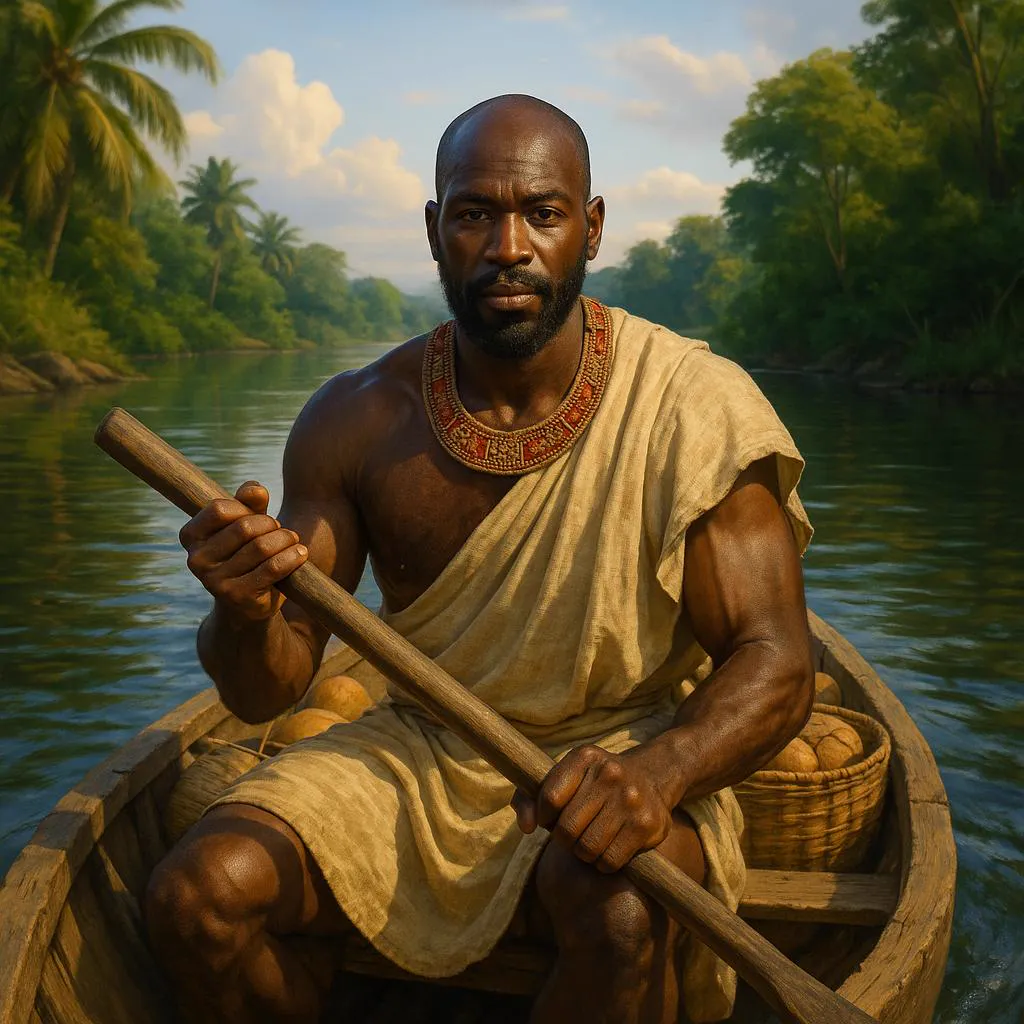
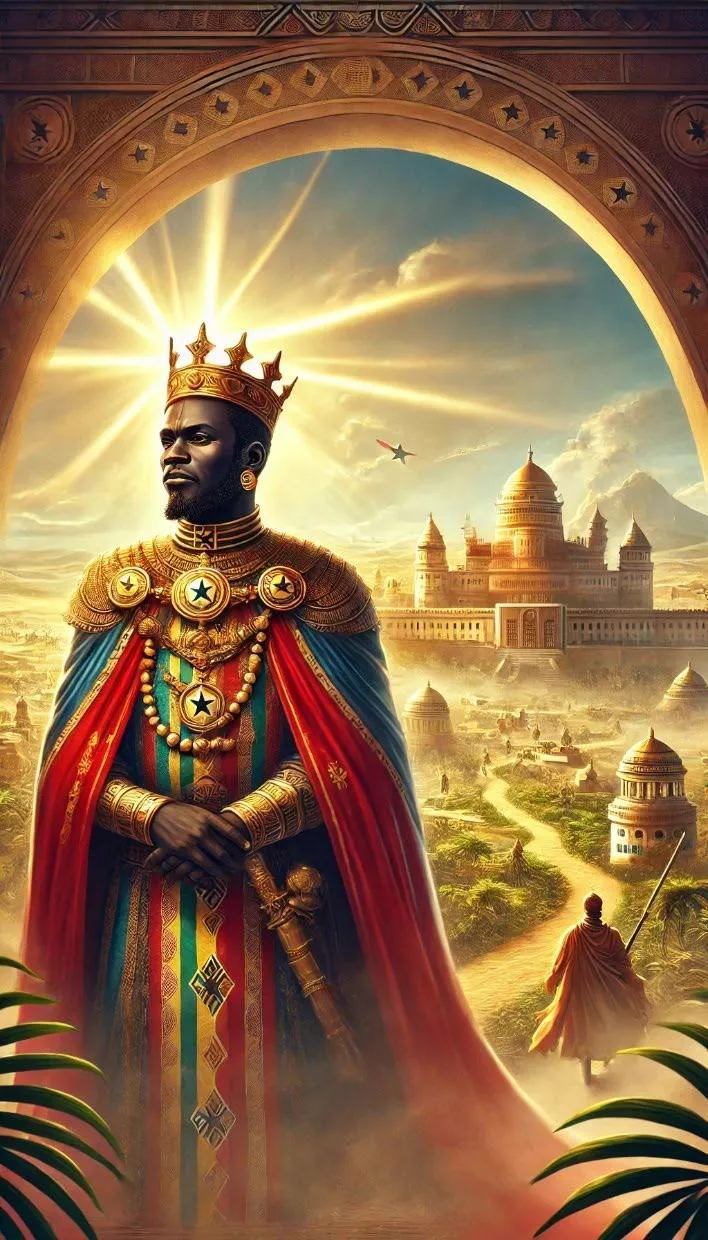
🔒 A members’ book — Living History 316 pages, Standard Book 415 pages. Subscribe, or buy an Adventure Box, to read it.
4 Weeks, 20 Chapters, Choose 8+ to Read
Pick the chapters you want to read each week. The living books and the sources are one click away.
Pick two or more of these chapters to read. Finish two of the ones you choose to open Week 2.

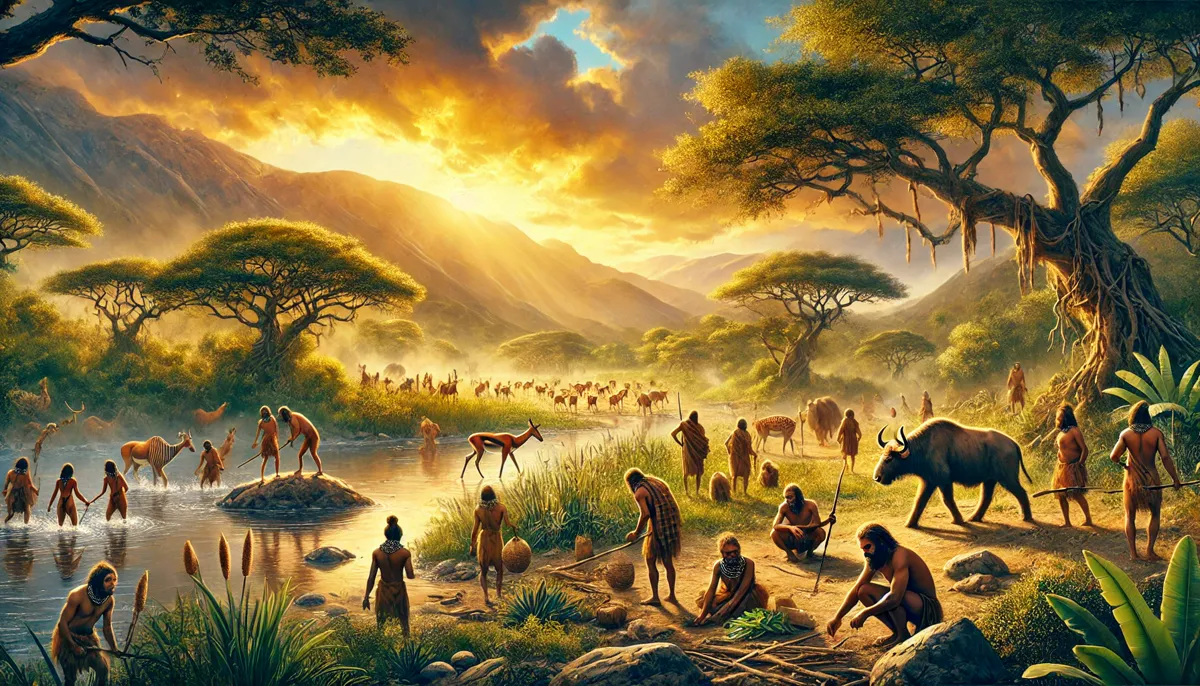
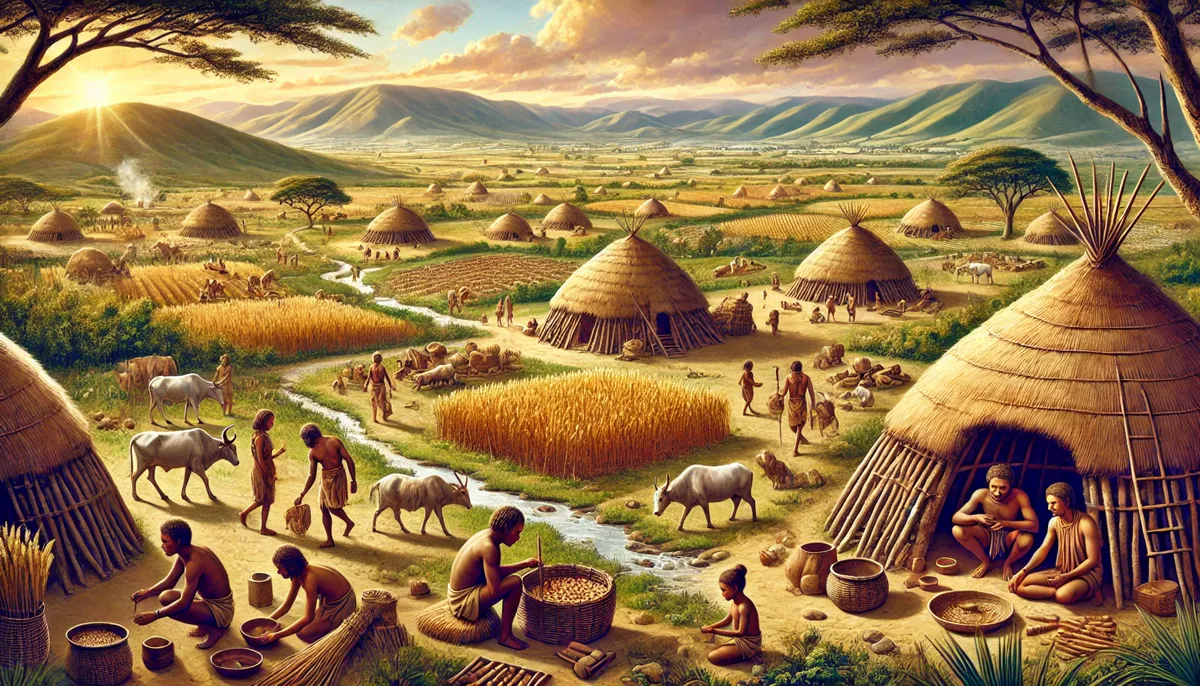
K–5th Grade
 A Story, A Story
6th–8th Grade
 African Kingdoms
9th–12th Grade
The Sites Themselves
- Olduvai Gorge, Tanzaniathe excavation reports of Louis and Mary LeakeyA ravine cut through layered lake beds in the eastern Serengeti, so that the deeper you dig the older the layer. The Leakeys worked it from the 1930s; the tools in its lowest beds are the oldest the Guide names.
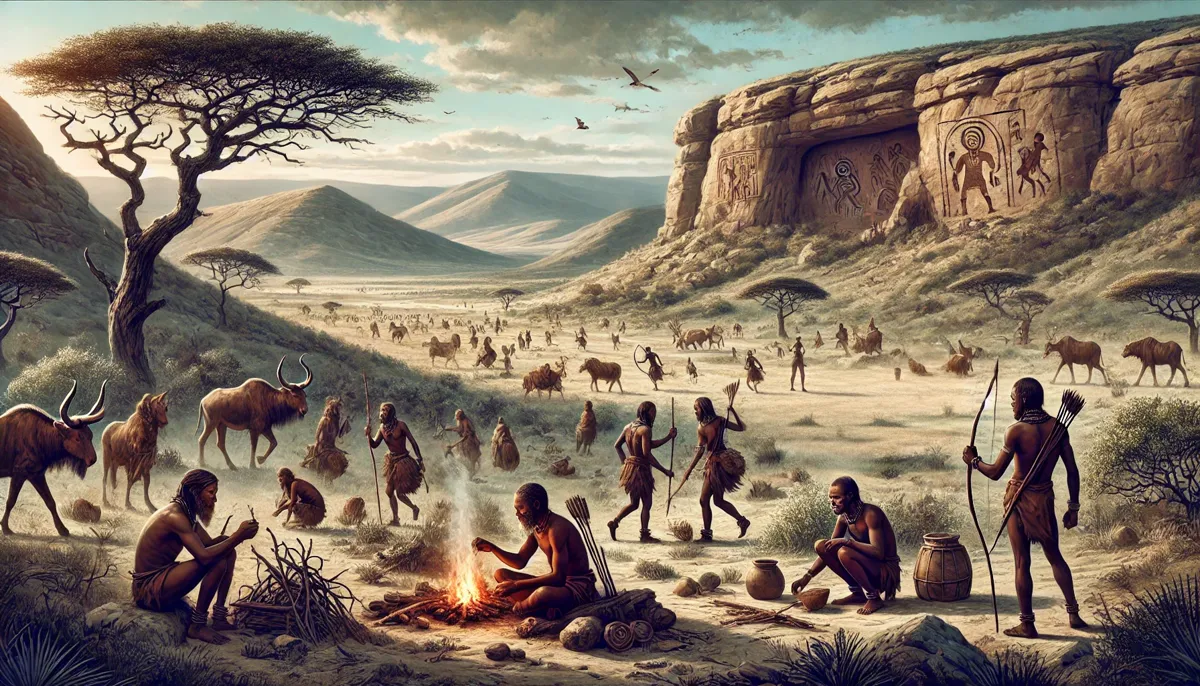
- Blombos Cave, South Africathe excavation reports of Christopher Henshilwood and his teamA cave on the southern Cape coast. Its levels held pieces of ochre cut with cross-hatched lines and shell beads pierced for stringing — the Guide dates them to about 75,000 BC and calls them some of the earliest art found in Africa.
- Jebel Irhoud, Morocco, and Omo Kibish, Ethiopiathe published fossil descriptionsThe two places the Guide names for the earliest Homo sapiens remains — Omo Kibish dated in the report to about 195,000 years ago.
Where the Middle and New Stone Ages Were Read
- Wadi Kubbaniya, Egyptthe excavation recordA Nile-side site whose grinding stones, fish bones and microliths gave the Guide its picture of a Mesolithic diet along the river.
- Taforalt Cave, Moroccothe excavation recordIn the eastern Rif mountains; its graves, with shell beads and ochre laid beside the dead, are among the oldest burials found in North Africa.
- Nabta Playa, Egyptthe survey of the stone circle and alignmentsA seasonal lake bed in the Nubian Desert with standing stones set in a circle and in lines, cattle bones, and pottery. The Guide calls the megaliths among the oldest known in Africa.
- Gobero, Nigerthe excavation recordA graveyard and settlement in the Ténéré, dated in the Guide to about 6,200 BC, left by people who fished and hunted in a Sahara that still had water.
Archives to Search Yourself
- Internet History Sourcebooks Fordham UniversityFree, full-text ancient and African source collections — the place to start when you want to read a traveller's own words rather than a summary.
- Project Gutenberg volunteer-transcribed public-domain textsHerodotus, Polybius, Livy and the older translations of the Arabic geographers, complete and free.
- The Internet Archive Internet ArchiveScanned excavation reports and the nineteenth-century Hakluyt Society translations that the modern books quote.
Pick two or more of these chapters to read. Finish two of the ones you choose to open Week 3.
K–5th Grade
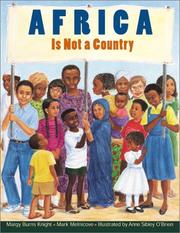 Africa Is Not a Country
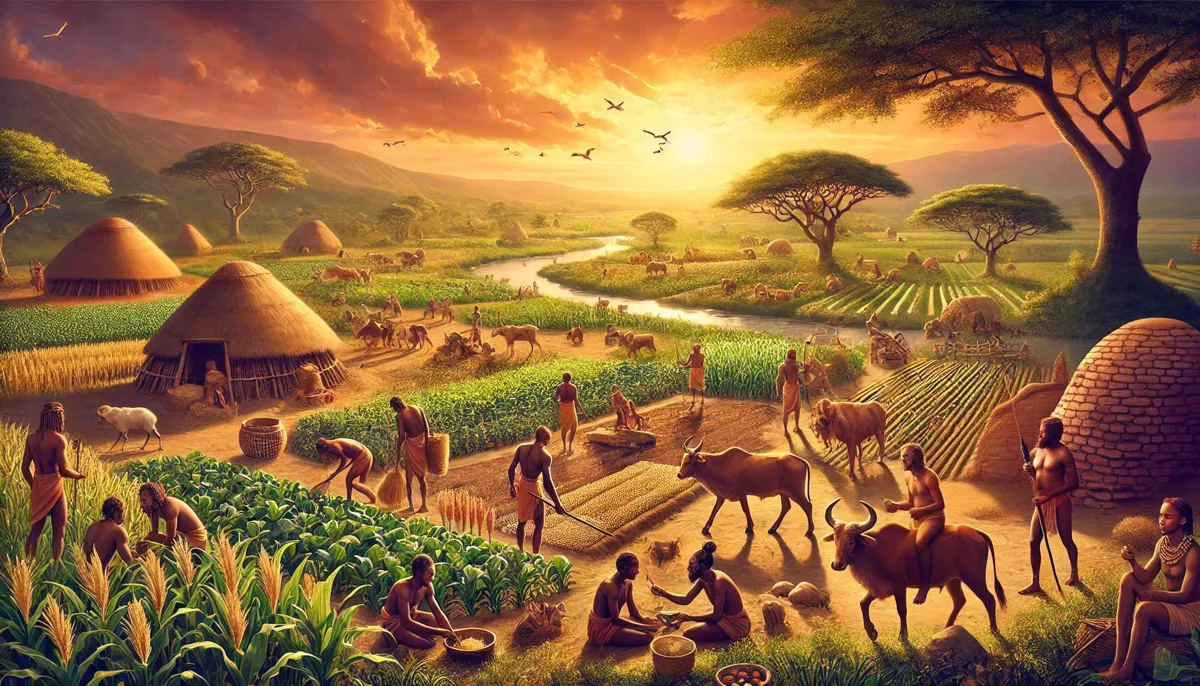
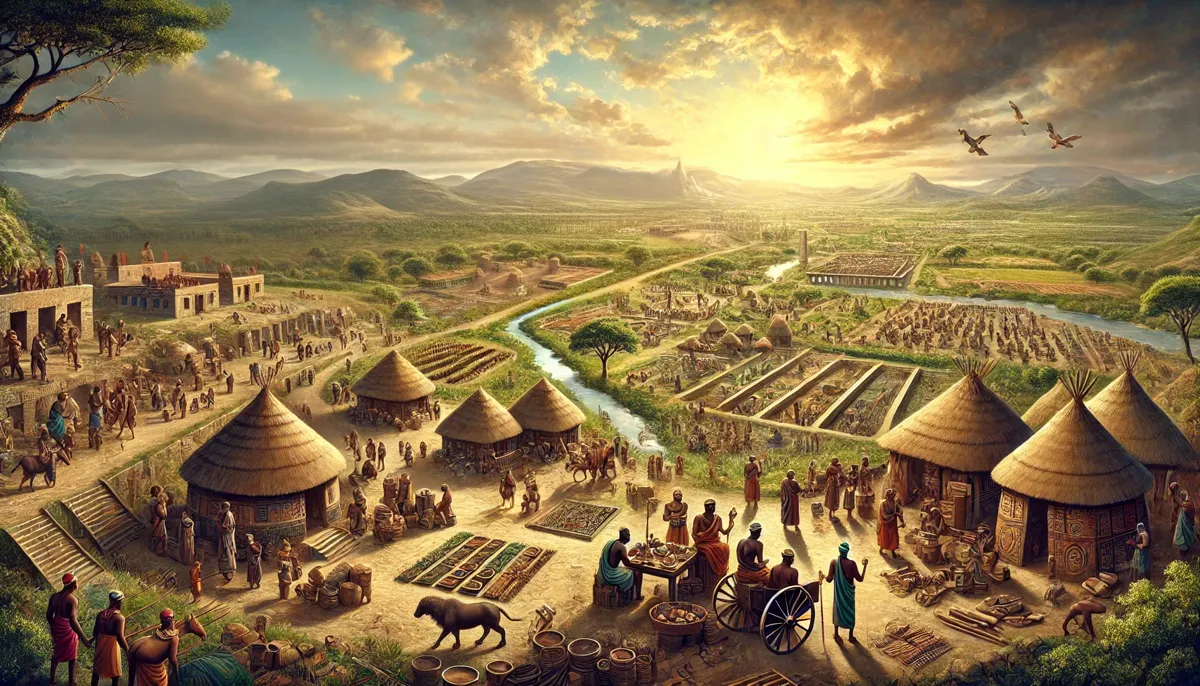
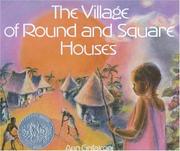 The Village of Round and Square Houses
6th–8th Grade
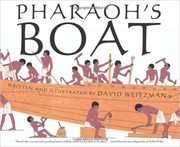 Pharaoh's Boat
9th–12th Grade
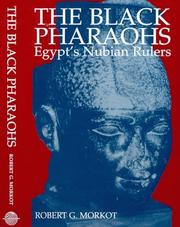 The Black Pharaohs: Egypt's Nubian Rulers
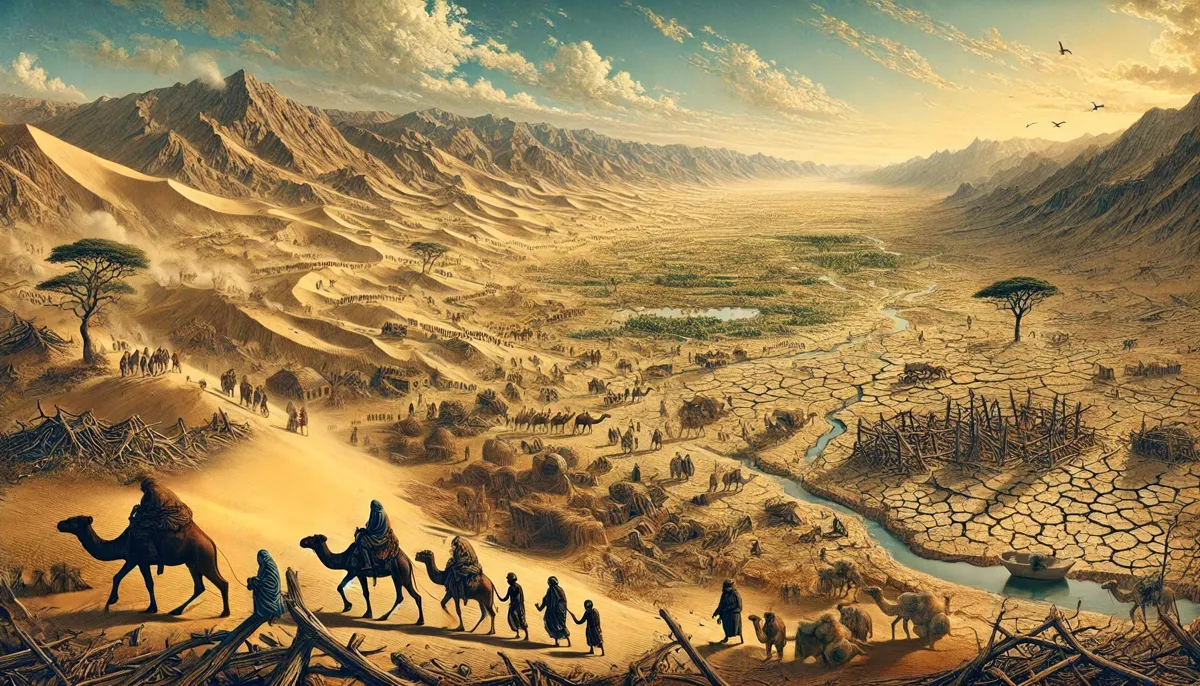
The Green Sahara, in the Evidence
- Rock art of the Tassili n'Ajjer and the Tadrart Acacusthe painters themselvesPanels of giraffes, elephants, hippos, cattle and dancing people, painted and pecked on rock in what is now some of the driest ground on earth. The Guide treats them as the clearest single proof that the Sahara was once green.
- Sediment and pollen cores from Saharan lake bedsthe published core analysesLayers of mud taken from dry lake floors. The pollen in them names the plants that grew; the oxygen isotopes in them measure how much it rained.
- Speleothems — cave stalactites and stalagmitesthe published isotope studiesA stalagmite grows in bands, like a tree ring. Its growth rate and its chemistry record wet centuries and dry ones.
- The bones of crocodiles, hippos and fish in the Saharathe faunal reportsAnimals that cannot live without standing water, found where no standing water has existed for thousands of years.
The First Farms and the First Towns
- Faiyum Oasis, Egyptthe excavation recordWheat and barley, sheep and goats, and pottery, in a settlement the Guide dates from about 5,200 BC.
- Merimde, in the Nile Deltathe excavation recordMud-brick houses and cultivated grain in one of the earliest large settled communities found in Egypt.
- Maadi, near Cairo, and Bir Kiseiba, in the Western Desertthe excavation recordsTwo of the three Chalcolithic sites the Guide names for the first African copper: tools, weapons, ornaments, and at Bir Kiseiba the traces of smelting itself.
- Termit, Niger, and the Lake Victoria regionthe published iron-smelting datesFurnaces and slag heaps; the Guide gives smelting at these sites from around 1,200 BC.
Archives to Search Yourself
- UNESCO World Heritage List UNESCOTassili n'Ajjer, the Tadrart Acacus, and the other African sites in this unit each have a file here with the official description and maps.
- The British Museum collection online The British MuseumSearchable photographs of African objects, including Nok terracottas and Benin and Nubian material, with their find-spots where known.
- The Internet Archive Internet ArchiveScanned site reports and journals for the Sahara, the Nile Valley and the Sahel.
Pick two or more of these chapters to read. Finish two of the ones you choose to open Week 4.
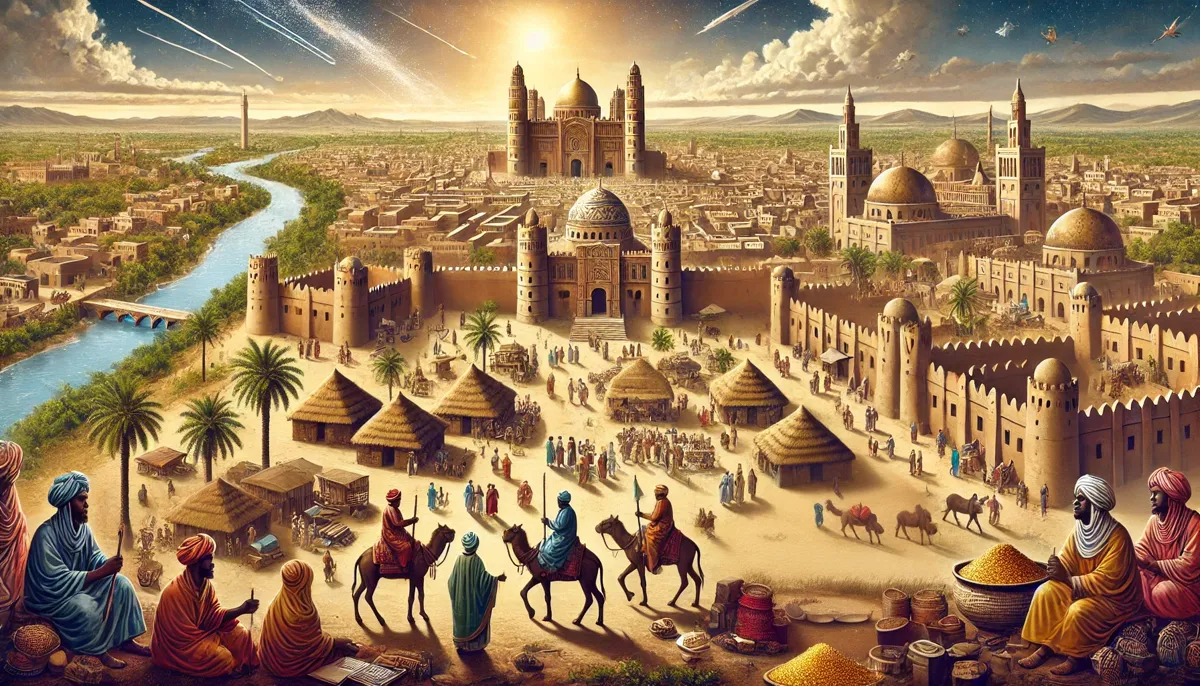
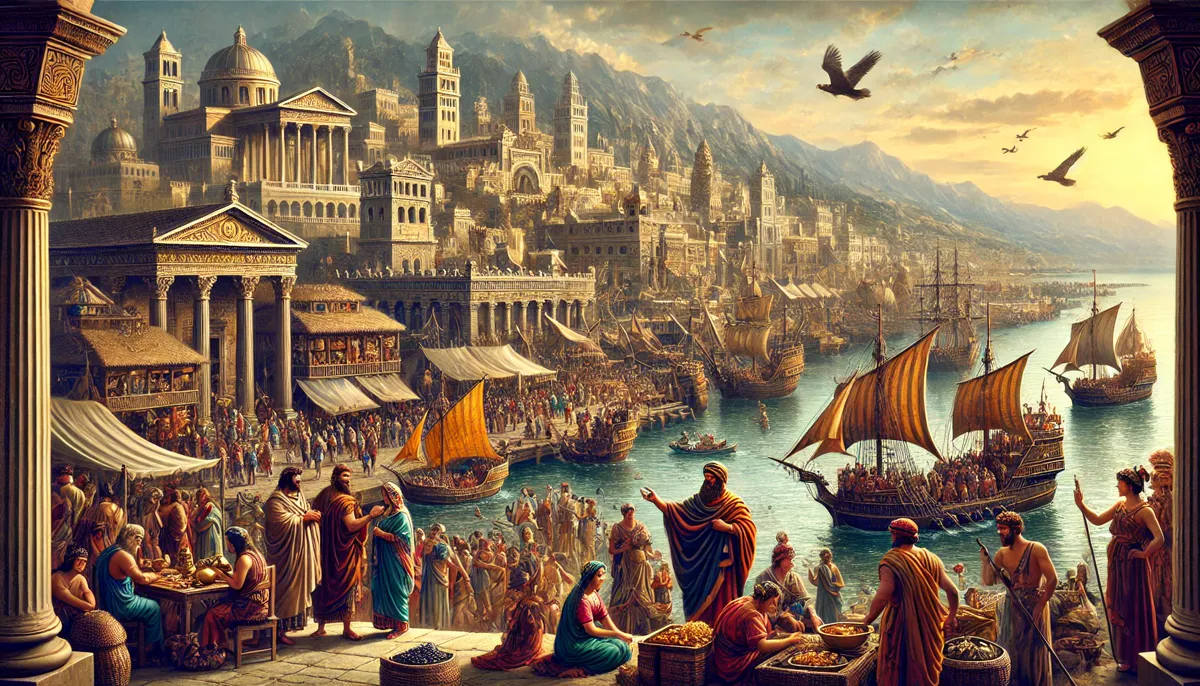
K–5th Grade
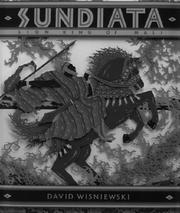 Sundiata: Lion King of Mali
6th–8th Grade
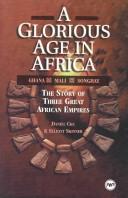 A Glorious Age in Africa
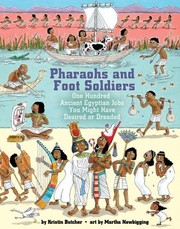 Pharaohs and Foot Soldiers: One Hundred Ancient Egyptian Jobs You Might Have Desired or Dreaded
9th–12th Grade
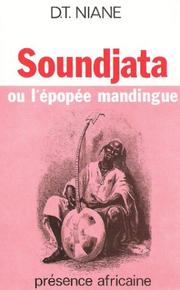 Sundiata: An Epic of Old Mali
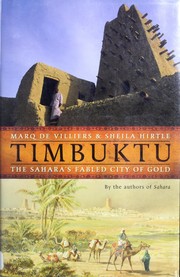 Timbuktu: The Sahara's Fabled City of Gold
People Who Wrote Down What They Saw
- Kitab al-Masalik wa'l-Mamalik — the Book of Roads and Kingdoms, 1068Al-Bakri of Córdoba, 1014 – 1094The fullest surviving description of the Ghana Empire, and almost everything anyone knows about Koumbi Saleh. Al-Bakri says himself that he never went: he wrote down what merchants, pilgrims and envoys told him in al-Andalus.
- The Rihla — the Travels, dictated 1355Ibn Battuta of Tangier, 1304 – c. 1369He crossed the Sahara to Mali in 1352 and wrote what he ate, what the court did, how justice was kept and what he thought of it. He is one of the very few eyewitnesses to the Mali Empire.
- The History and Description of Africa, 1526Leo Africanus, born Granada c. 1494Written after he had travelled Songhai; his account of the markets, scholars and libraries of Timbuktu and Gao is the fullest from anyone who saw them.
- The Epic of Sundiatathe griots of the Kouyaté line and othersNot a document but a memorised text, recited and handed on for seven centuries. The Living book puts a griot on the page precisely so a student can see what an oral archive is.
Carthage, in Roman and Greek Hands
- The HistoriesPolybius, c. 200 – c. 118 BCA Greek writer who knew Scipio Aemilianus personally and was present at the destruction of Carthage in 146 BC. The closest thing to an eyewitness for the Punic Wars.
- The History of Rome, books 21–30Livy, 59 BC – AD 17The long Roman account of Hannibal's march, the Alps, Cannae and Zama — written more than a century and a half after the events, from Roman sources.
- The Periplus of HannoHanno the Navigator, Carthaginian admiralA short Greek text presented as the record Carthage set up of Hanno's voyage out past the Pillars of Heracles down the Atlantic coast of Africa, with the colonies he planted.
- The Histories, book IV Herodotus, c. 484 – c. 425 BCThe Garamantes of the Sahara, the Nasamones, and the Phoenician sailors who told Pharaoh Necho they had rounded Africa with the sun on their right — a detail Herodotus repeats and says he does not believe.
Archives to Search Yourself
- Internet History Sourcebooks: Africa Fordham UniversityTranslated extracts from Al-Bakri, Ibn Battuta, Leo Africanus and the Arabic geographers, free.
- LacusCurtius University of ChicagoPolybius, Livy, Appian and Diodorus Siculus in full English translation, with the Latin and Greek alongside.
- The Internet Archive Internet ArchiveThe Hakluyt Society's translation of Leo Africanus and the older editions of the West African chronicles.
Pick two or more of these chapters to read.
K–5th Grade
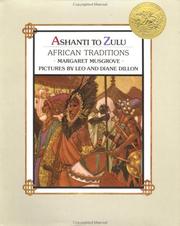 Ashanti to Zulu: African Traditions
6th–8th Grade
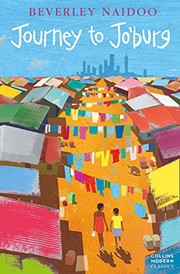 Journey to Jo'burg
9th–12th Grade
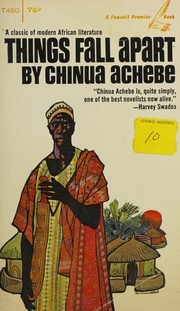 Things Fall Apart
The Indian Ocean, in Writing
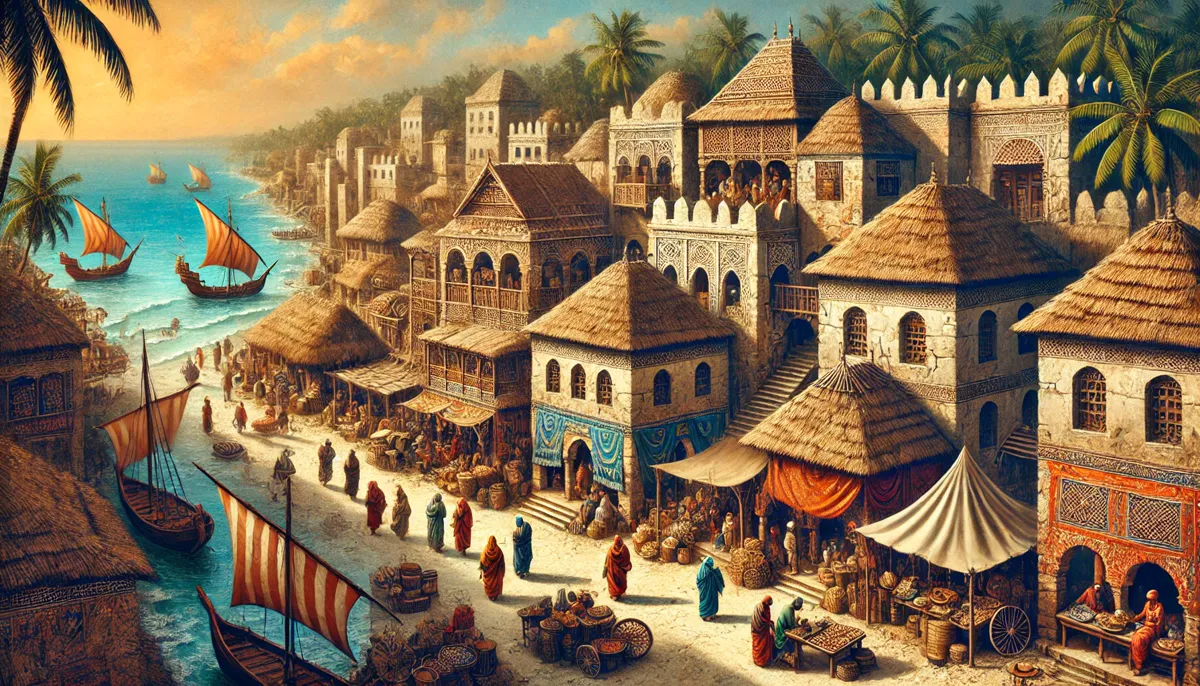
- Muruj adh-Dhahab — the Meadows of Gold, c. 947Abu al-Hasan al-Masudi of BaghdadHe sailed to the coast of the Zanj himself and wrote down what the ports traded, how the winds worked, and how the people there governed themselves. One of the earliest outside accounts of the East African coast.
- The Rihla — the TravelsIbn Battuta of TangierHe reached Kilwa in 1331 and called it one of the finest cities he had seen. His description of its mosques, its sultan and its stone houses is the fullest eyewitness account of a Swahili city at its height.
- Décadas da ÁsiaJoão de Barros, Portuguese royal chronicler, 1496 – 1570Barros never left Portugal. He wrote down what Portuguese captains reported of the inland stone city they had heard of and of the coast they had just taken, and his is the first European notice of Great Zimbabwe.
- The Periplus of the Erythraean Seaan anonymous Greek-speaking merchant of Egypt, first century ADA working sailing handbook: which ports on the African coast bought what, and which sold ivory and tortoiseshell. It shows the Indian Ocean trade already running centuries before the Swahili towns were built.
The Stone, the Gold and the Cross
- The excavations at Kilwa KisiwaniNeville Chittick, 1924 – 1984, British Institute in Eastern AfricaHe dug the coral-stone city and the great palace of Husuni Kubwa, and published the layers, the coins and the Chinese porcelain that dated the town. The Living book gives him a chapter in his own voice.
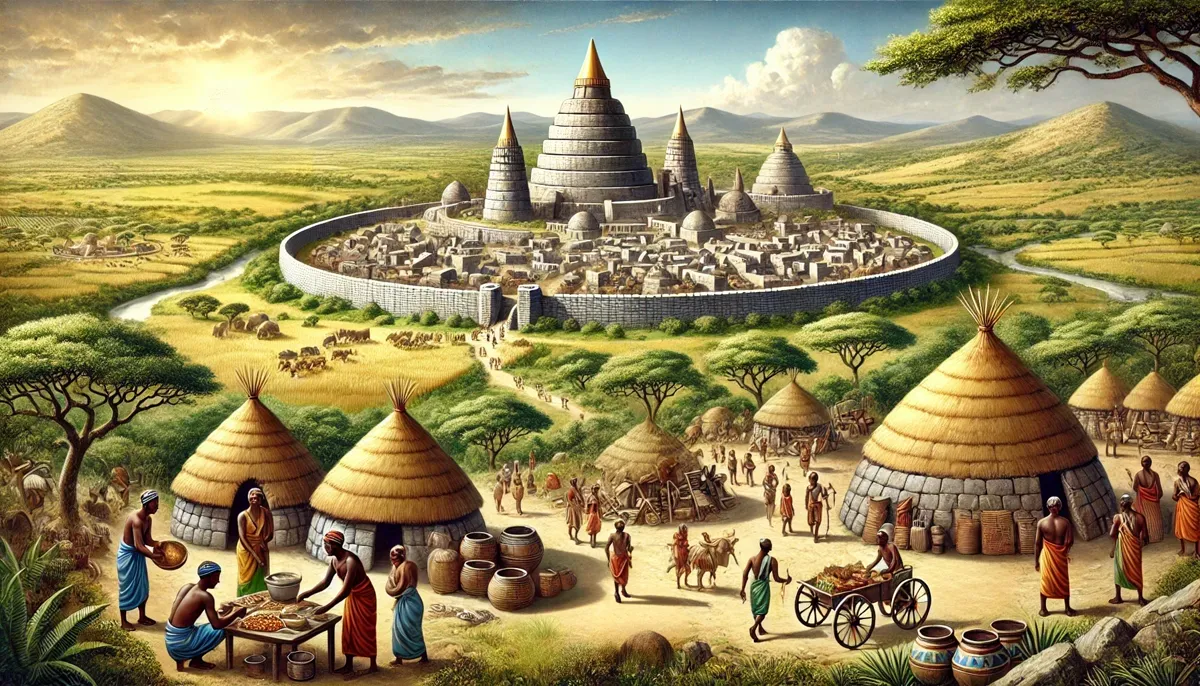
- The excavations at Great Zimbabwethe published site reportsMortarless granite walls up to eleven metres high and over 250 metres around, with imported Chinese ceramics, Persian pottery and Indian cloth, gold-working tools, and cattle, sheep, millet and sorghum in the middens.
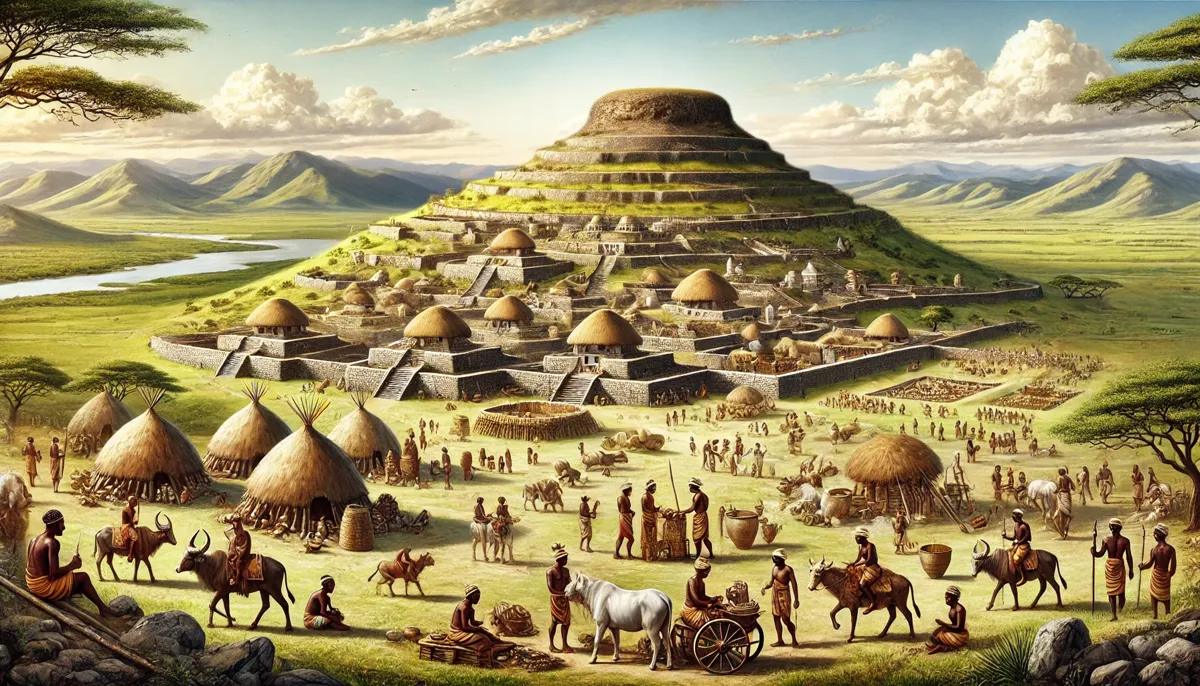
- Mapungubwe: Ancient Bantu Civilization on the Limpopoedited by Leo Fouché, University of Pretoria, 1937The first excavation report, covering the work of February 1933 to June 1935 on Mapungubwe Hill — the hilltop graves, the gold foil, the terraces. Captain Guy Gardner's second volume, on Mapungubwe and Bambandyanalo, followed in 1963, and Andrie Meyer's account of all the Greefswald sites in 1998.
- The Lottering connection: revisiting the 'discovery' of Mapungubwe Justine Wintjes and Sian Tiley-Nel, South African Archaeological Bulletin 74(210), 2019The peer-reviewed, archive-based account of 1 January 1933: the van Graan party, the guide who was Mowena's son, the letter of 6 February to Professor Leo Fouché, and the Lotrie/Lottering family who had been taking visitors up the hill since the nineteenth century. Its conclusion is worth quoting to a student: this was "less a question of 'discovering' for the first time than one of tapping into existing networks of knowledge".
- The Mapungubwe gold graves revisited Maryna Steyn, South African Archaeological Bulletin 62(186), 2007The archive-based account of the cemetery on the summit: twenty-seven human burials, three of which contained gold, together with trade glass beads, iron and copper.
- Mapungubwe: interpretation of the gold content of the Original Gold Burial M1, A620 Alex Duffey, Journal of African Archaeology 10(2), 2012The argument that the gold rhinoceros, bovine and feline were all once tacked to one carved wooden divining bowl rather than standing as separate figures — a worked example of an excavated object being re-read seventy years later. Free PDF.
- Repatriating more than Mapungubwe human remains University of Pretoria repositoryHow the remains excavated in the 1930s were returned to descendant communities — the Vhangona, Lemba, Tshivula, Ga-Machete, Leshiba and San — and reburied on 20 November 2007.
- Zimbabwe Culture before Mapungubwe: New Evidence from Mapela Hill Shadreck Chirikure, Munyaradzi Manyanga, Mark Pollard, Foreman Bandama, Godfrey Mahachi and Innocent Pikirayi, PLOS ONE, 2014The peer-reviewed paper that challenges the "Mapungubwe came first" model, with dates from Mapela Hill in south-western Zimbabwe. Free to read in full.
- Mapungubwe and Great Zimbabwe: the origin and spread of social complexity in southern Africa Thomas N. Huffman, Journal of Anthropological Archaeology, 2009Huffman's own statement of the chronology and of the K2-to-hilltop argument that most textbook accounts of Mapungubwe now repeat.
- Climate change during the Iron Age in the Shashe-Limpopo Basin Thomas N. Huffman, Journal of Archaeological Science, 2008The climate case for the end of Mapungubwe, argued from the Makapansgat stalagmite record — the paper other archaeologists have argued against in print.
- The inscriptions and coins of King Ezana of AksumKing Ezana, fourth century ADEzana's own stone inscriptions and his coinage: the cross replaces the disc and crescent part-way through his reign, which is the hard dating evidence for Aksum's conversion.
Archives to Search Yourself
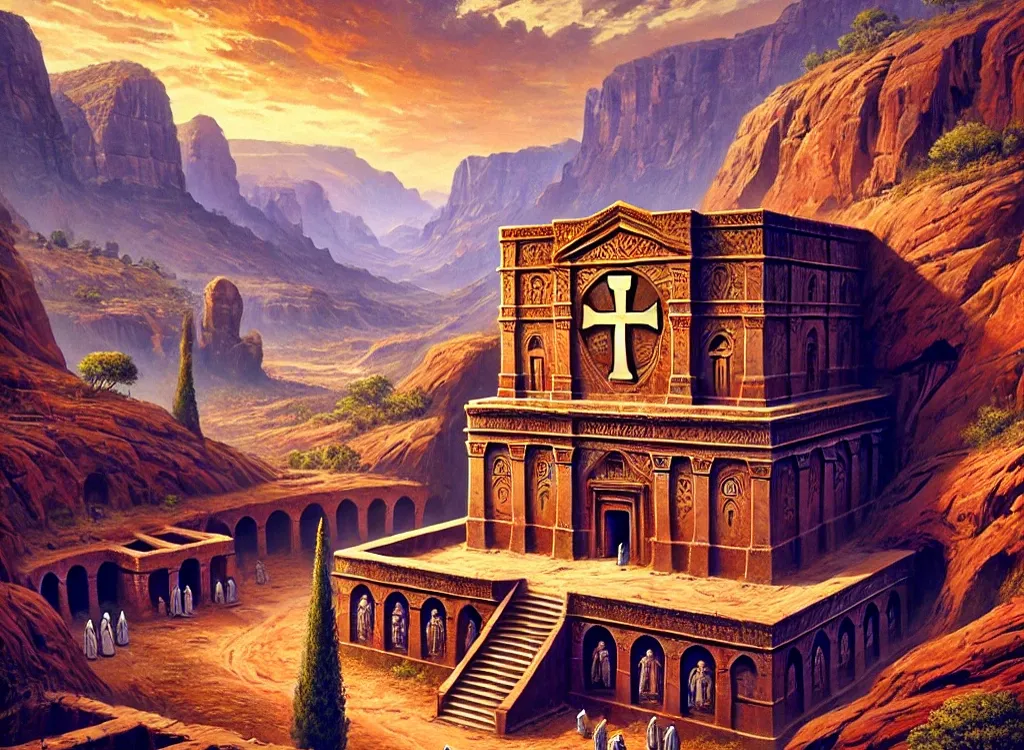
- UNESCO World Heritage List UNESCOKilwa Kisiwani and Songo Mnara, Great Zimbabwe, the Mapungubwe Cultural Landscape, Aksum and the rock-hewn churches of Lalibela all have official files here.
- Mapungubwe Cultural Landscape — the official UNESCO file UNESCO World Heritage Centre, site 1099Inscribed in 2003 under criteria (ii), (iii), (iv) and (v). UNESCO dates the landscape 900 to 1300 AD, counts more than 400 archaeological sites and a population above 9,000, and names the trade goods: gold, glass beads, cotton cloth, Chinese ceramics, ivory, copper and hides.
- The Mapungubwe Collection and Museum University of PretoriaWhere the gold rhinoceros, the sceptre, the bowl, the gold bovine and feline, the headdress and more than twenty-six thousand gold beads are held — declared a national heritage collection in 1997, on display in the Old Arts Building since 2000. The catalogue records give the measured dimensions used in this chapter.
- Internet History Sourcebooks Fordham UniversityAl-Masudi, the Periplus, the Baqt treaty and the early Ethiopian and Nubian material in translation.
- The Internet Archive Internet ArchiveChittick's Kilwa volumes, the Great Zimbabwe reports, and the Nubian excavation series.
When you have finished the book
The last episode of the Adventure Box Podcast for Ancient Africa looks back over the whole book — the ten things worth carrying away from twenty chapters. Watch it when the weeks are done.
What comes with the book
The Ultimate Guide
The textbook itself — the twenty chapters these lessons are built from.
Living History
Heroes and Villains: Ancient Africa — Told By Those Who Were There. The Heroes & Villains series, in the first person.
The Adventure Box
Cards, lesson plans, activities, coloring pages and the craft kit for this era.