History Curriculum/Book 9
Book nine of the curriculum
The History of the American Revolution
The ninth book in the curriculum and the fifth of the Early American History set. Twenty-two chapters across five weeks — from the Proclamation line of 1763 and the acts of Parliament that followed it, through the Boston Massacre, the tea, the two Continental Congresses, Lexington Green and the siege of Boston, Common Sense and the Declaration, Saratoga, Valley Forge and the French alliance, the spy rings, the Sullivan expedition and the war in the Carolinas, to Yorktown, the Treaty of Paris and the army that went home unpaid.
Read the book
Turn the pages of both editions right here. American Revolution is a members’ book: subscribers and Adventure Box Course families read every page.
🔒 A members’ book — Living History 393 pages, Standard Book 421 pages. Subscribe, or buy an Adventure Box, to read it.
5 Weeks, 22 Chapters, Choose 9+ to Read
Pick the chapters you want to read each week. The living books and the sources are one click away.
Pick two or more of these chapters to read. Finish two of the ones you choose to open Week 2.
K–5th Grade
6th–8th Grade
9th–12th Grade
The Acts Themselves, Complete and Free
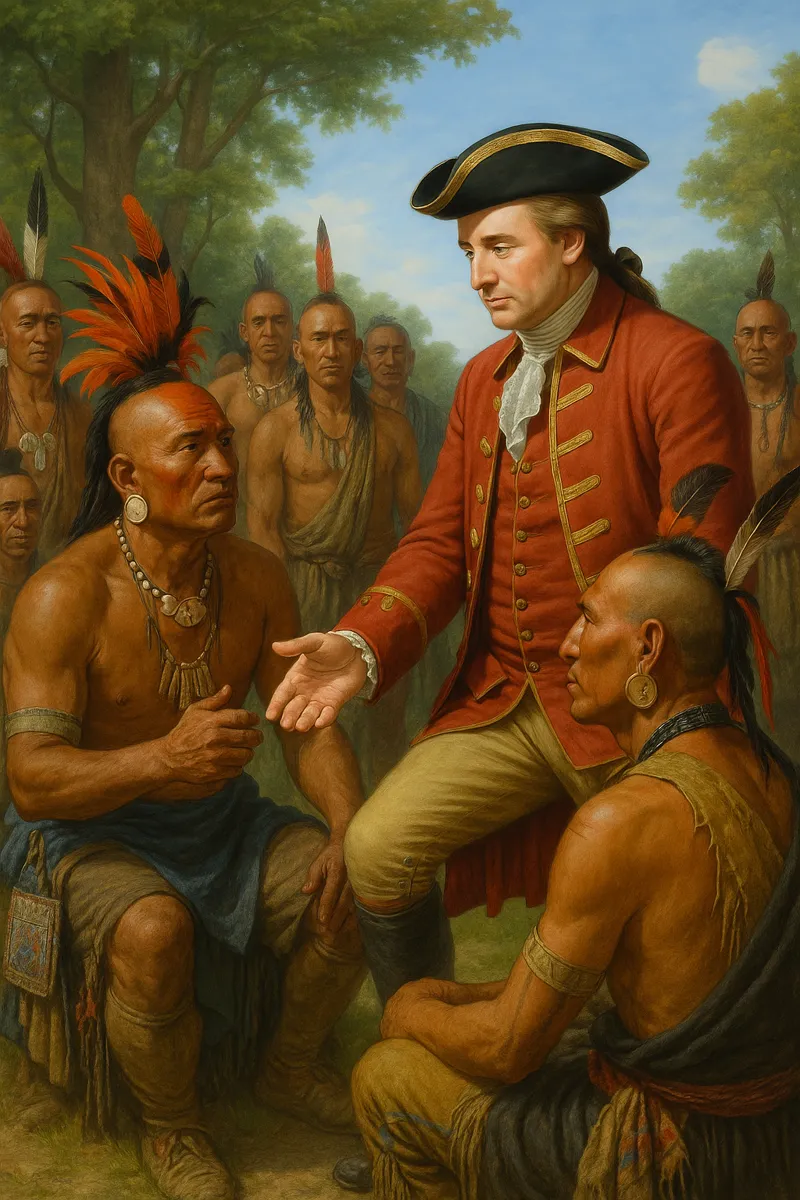
- The Royal Proclamation of 1763 King George III, 7 October 1763The whole document, which is shorter than most people expect. It reserves the land west of the Appalachian watershed to the Indian nations, forbids private purchase of it, and sets out how trade with those nations is to be licensed. Everything this week says about western land runs back to this text.
- The Sugar Act (the American Revenue Act), 1764 5 George III c. 15The duties, the goods they fall on, and — the part the colonists argued about most — the clauses moving smuggling cases into the vice-admiralty courts, which sat without juries.
- The Stamp Act, 1765 5 George III c. 12Every class of paper taxed and the amount on each, in the statute's own words. It is worth reading simply to see how ordinary the taxed items were.
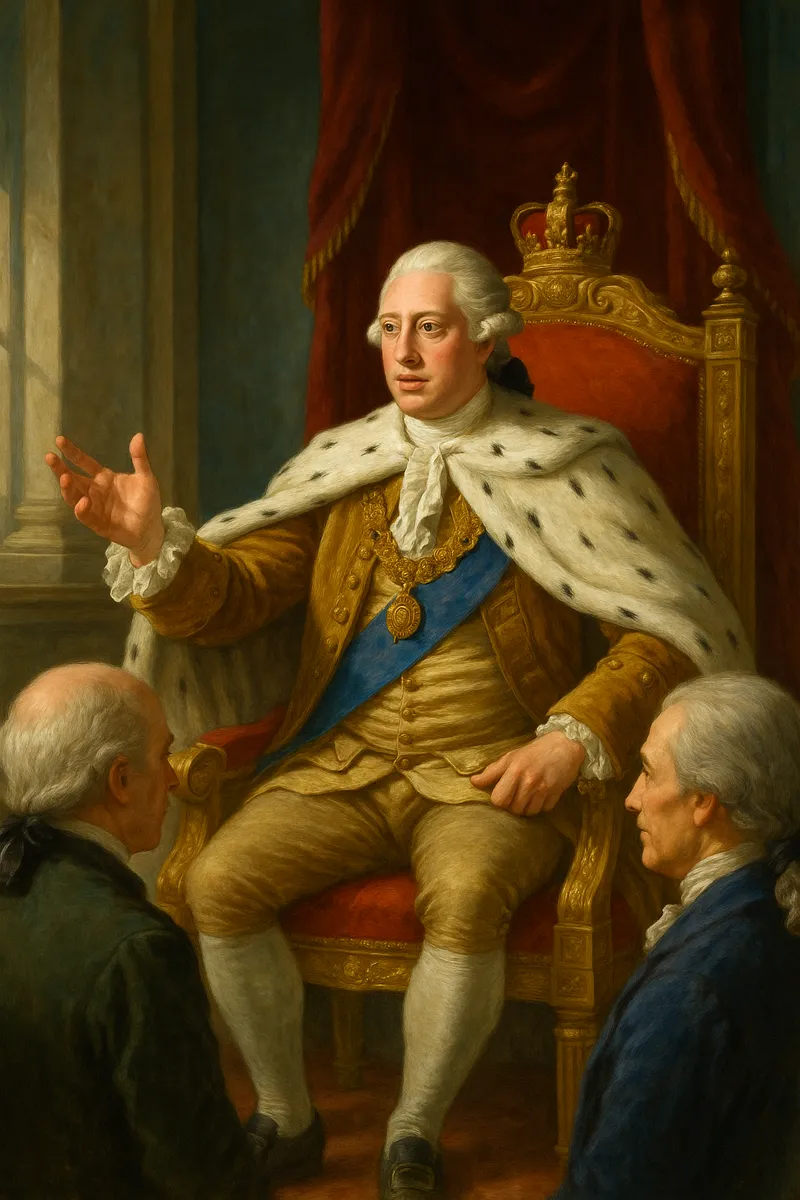
- The Declaratory Act, 1766 6 George III c. 12The act passed alongside the repeal of the Stamp Act, claiming the power to bind the colonies "in all cases whatsoever". It is four paragraphs long and it is the reason the repeal settled nothing.
- The Townshend Revenue Act, 1767 7 George III c. 46The duties on glass, lead, paint, paper and tea, and the clause directing the money to the salaries of governors and judges — which is what colonial assemblies objected to most.
The Colonial Record of the Same Years
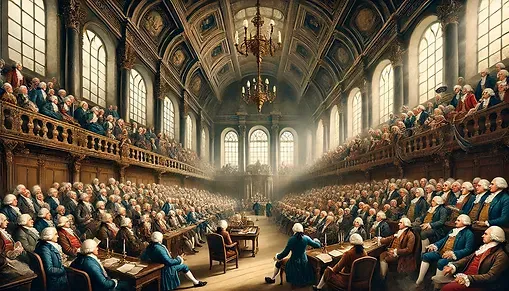
- The Declaration and Resolves of the First Continental Congress Philadelphia, 14 October 1774What the twelve colonies actually agreed to say. Read it beside the acts above and match each resolve to the statute it answers.
- The Continental Association Philadelphia, 20 October 1774The boycott as a signed agreement: what may not be imported, what may not be exported, from what date, and how local committees were to enforce it.
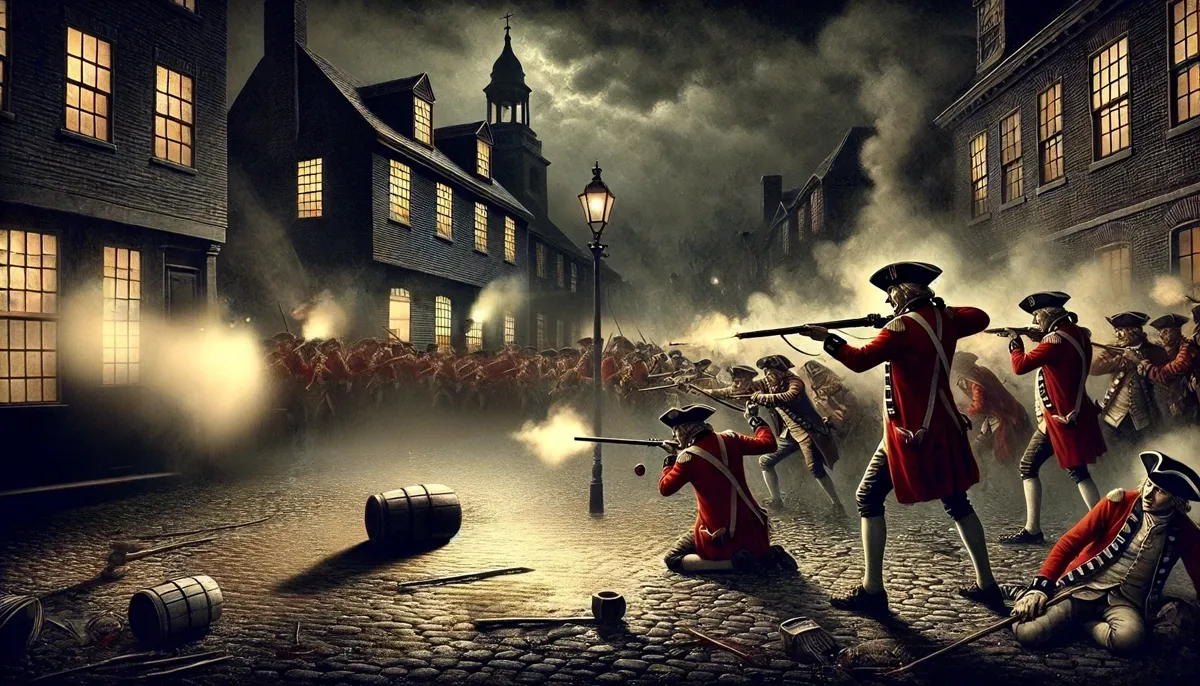
- The Boston Massacre trial recordRex v. Preston and Rex v. Wemms, Boston, October and November 1770The witness testimony survives in the lawyers' notes and the published account, and it does not agree with itself — which is the point. Two juries heard it and reached two different results.
- Paul Revere's engraving, "The Bloody Massacre perpetrated in King-Street"Boston, March 1770A print made within three weeks of the event by a man who was not there, showing a volley fired on command into an unarmed crowd. It is evidence of what Boston was being told, not of what happened.
Archives to Search Yourself
- The Avalon Project Yale Law SchoolFree full transcriptions of the statutes, treaties, petitions and declarations of the eighteenth century, arranged by date. Almost every document named in this week is here in full.
- Founders Online the U.S. National ArchivesThe complete papers of Washington, Franklin, Adams, Jefferson, Madison and Hamilton, searchable, with every letter dated and annotated. The single most useful archive for this whole book.
- The Massachusetts Historical Society BostonHolds the Adams family papers, Boston town records and a great deal of the paper this week is made of, much of it digitised with transcripts.
- Project Gutenberg volunteer-transcribed public-domain textsThe pamphlets, letters and memoirs of the period, complete and free.
Pick two or more of these chapters to read. Finish two of the ones you choose to open Week 3.

K–5th Grade
6th–8th Grade
9th–12th Grade
What Was Written Down Within Days
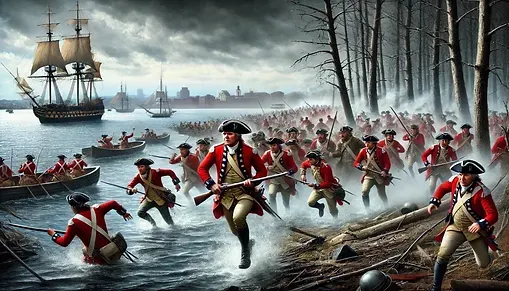
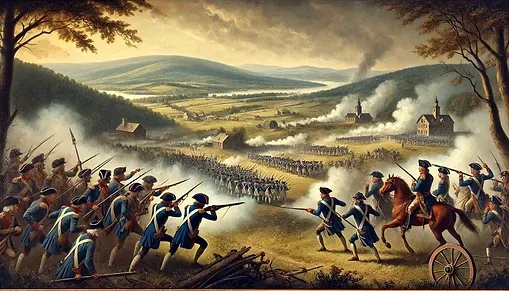
- The Lexington and Concord depositionstaken by the Massachusetts Provincial Congress, 23–25 April 1775Sworn statements from militiamen, townspeople and captured British soldiers, collected within a week and rushed to England by fast ship so that the colonial account would arrive first. They were taken as propaganda and they are still the closest thing to eyewitness evidence that exists.
- Paul Revere's own three accounts of his ridea 1775 deposition and two later letters, one to Jeremy BelknapRevere wrote the night down himself, more than once, and the versions differ in small ways. They are also nothing like Longfellow's poem: he was stopped and captured, and he never reached Concord.
- Lieutenant Colonel Francis Smith's report to General Gage22 April 1775The British commander's own account of the march, written three days after it. Read it beside the depositions: the two sides do not agree on who fired first, and neither could say.
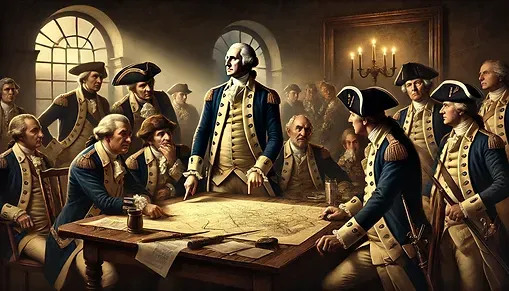
- The Journals of the Continental CongressPhiladelphia, from 10 May 1775The day-by-day record of what the Second Continental Congress did — the resolutions, the votes, the appointment of a commander-in-chief on 15 June 1775, and the money it printed.
The Two Petitions of 1775, Both in Full
- The Declaration of the Causes and Necessity of Taking Up Arms Congress, 6 July 1775Drafted by John Dickinson and Thomas Jefferson together. It explains why the colonies are fighting and states plainly that they are not seeking independence.
- The Olive Branch Petition Congress, 8 July 1775The last direct appeal to the king, adopted two days after the declaration above. The two documents were sent by the same Congress in the same week, and reading them together is the clearest way to see how divided it was.
The Ground Itself, and Where to Search
- Minute Man National Historical Park Lexington, Concord and the Battle Road, MassachusettsThe road the column marched out and back along is preserved for most of its length, with the North Bridge, Meriam's Corner and the stone walls the militia fired from.
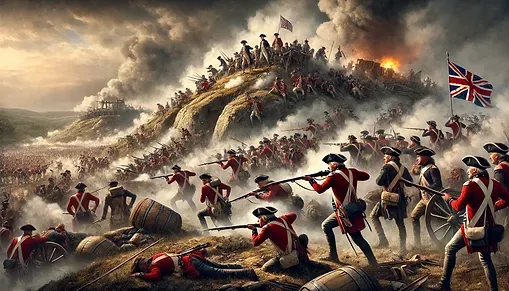
- Boston National Historical Park Boston and Charlestown, MassachusettsThe Old South Meeting House, Faneuil Hall, the Old State House outside which the shooting of 5 March 1770 happened, and the Bunker Hill monument on Breed's Hill.
- Founders Online the U.S. National ArchivesWashington's general orders and letters from the day he took command at Cambridge onward, including his own blunt reports on what he found there.
- The Avalon Project Yale Law SchoolThe Coercive Acts, the Quebec Act, the congresses' resolutions and the petitions, transcribed in full.
Pick two or more of these chapters to read. Finish two of the ones you choose to open Week 4.
K–5th Grade
6th–8th Grade
9th–12th Grade
The Two Documents This Week Is About
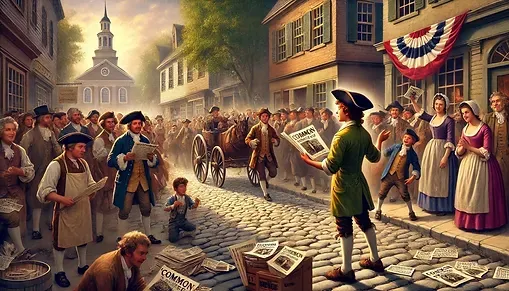
- Common Sense Thomas Paine, Philadelphia, January 1776The whole pamphlet, free and complete. It is short. Read the argument against hereditary monarchy in the second section and the reckoning of American shipbuilding capacity in the fourth, and notice how different the two are in kind.
- The Declaration of Independence Congress, 4 July 1776The engrossed text as it was signed, transcribed line for line. The grievances are the long middle section, and they are specific: each one answers something in the preceding twelve years.
- The Writings of Thomas Paine, Complete Thomas PaineCommon Sense, the thirteen numbers of The American Crisis — the first of which opens "These are the times that try men's souls" and was written in the retreat across New Jersey — and everything else he published.
- Jefferson's rough draft of the DeclarationJune 1776, with the changes markedThe draft survives with Congress's deletions visible, including the passage on the slave trade that was struck out. The cut is in the document; the arguments about it are not.
The Campaigns of 1777
- The Convention of SaratogaBurgoyne and Gates, 17 October 1777The surrender terms as signed — Burgoyne insisted the word "convention" be used rather than "capitulation" — under which an entire British army laid down its arms.
- The Treaty of Amity and Commerce and the Treaty of Alliance France and the United States, Paris, 6 February 1778The two treaties signed together. The first opened trade; the second is the military alliance, and its article stating that neither party would make a separate peace is the clause that shaped the rest of the war.
- Saratoga National Historical Park Stillwater, New YorkFreeman's Farm, Bemis Heights, the Breymann redoubt and the surrender ground, all on the original terrain.
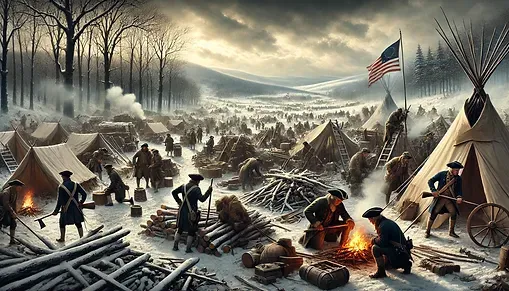
- Valley Forge National Historical Park PennsylvaniaThe encampment ground, the reconstructed huts, and the outlines of the lines the army laid out in December 1777.
Documents and Archives to Search Yourself
- Familiar Letters of John Adams and His Wife Abigail Adams During the Revolution published 1875Their correspondence across exactly these years, including Abigail Adams's letter of 31 March 1776 asking him to "remember the ladies" and his reply.
- Founders Online the U.S. National ArchivesWashington's letters through the Philadelphia campaign and the Valley Forge winter, including the returns showing how many men were fit for duty.
- The Avalon Project Yale Law SchoolThe French treaties, the Articles of Confederation, and the resolutions of Congress, transcribed in full.
- The Internet Archive a non-profit digital libraryScanned regimental histories, orderly books, soldiers' memoirs and nineteenth-century document collections, complete and searchable.
Pick two or more of these chapters to read. Finish two of the ones you choose to open Week 5.

K–5th Grade
6th–8th Grade
9th–12th Grade
Espionage, in the Papers It Left
- The Culper Ring lettersLong Island and New York, 1778–1783Real letters, written in a numeric code and in invisible ink, addressed to Washington under the cover names Samuel Culper Senior and Junior. The code book survives; so does the ink's formula. Most are transcribed in the Washington papers.
- Washington's own letters on intelligence 1776–1781He wrote about spying constantly, in his own hand, including his instructions on what he needed to know and how little he wanted to know about who was telling him.
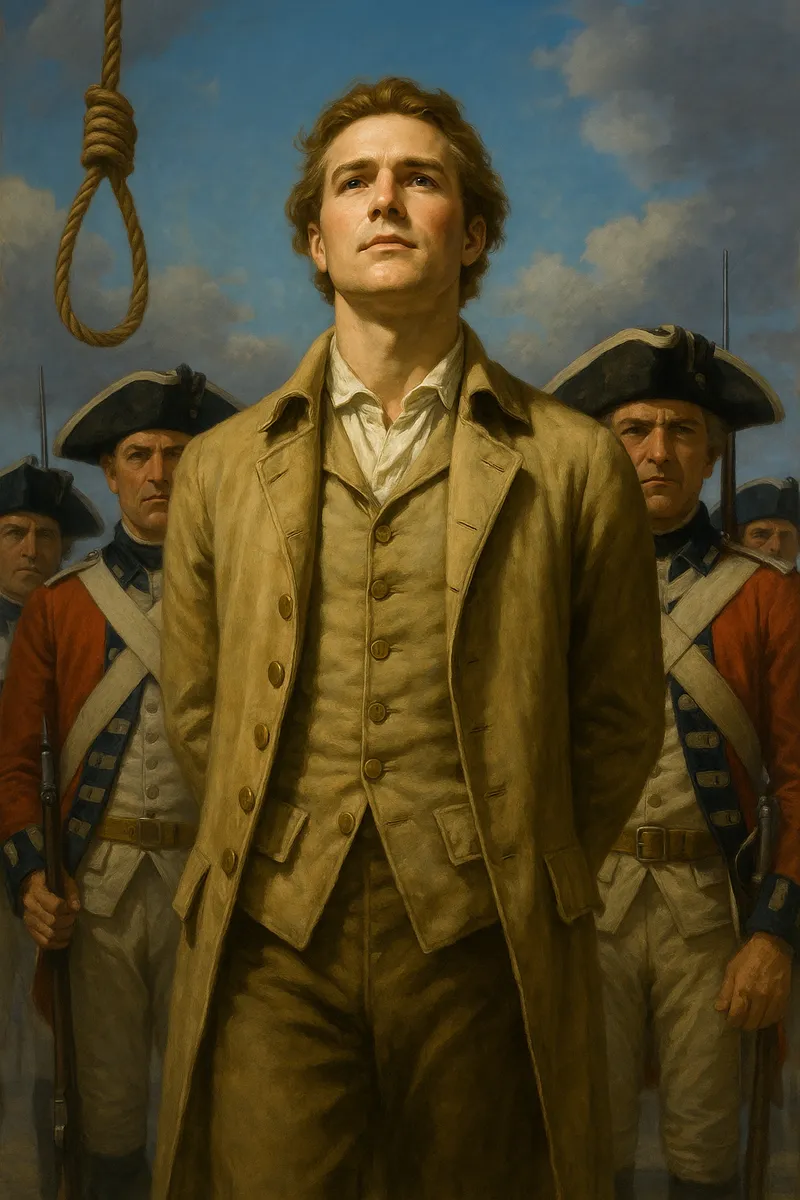
- The record of Major John André's capture and trialTappan, New York, September and October 1780The papers found in his boot, the board of officers' proceedings, and his own letters. Almost nothing else in this war is documented as tightly as this fortnight.
The Northern and Southern Campaigns
- The journals of the Sullivan Expedition 1779Roughly two dozen officers kept journals on the march into Iroquoia, and they were published together. They count the towns burned and the fields destroyed, in the officers' own words, which is why this campaign can be described without either side's later summary. Lieutenant Hardenbergh's is free and complete.
- A Narrative of the Life of Mrs. Mary Jemison taken down by James E. Seaver, 1824Jemison was taken as a child in the French and Indian War, lived among the Seneca for the rest of her life, and dictated her account as an old woman. It includes what the Sullivan expedition did to her valley. It is a narrative recorded at second hand nearly fifty years after; read it as that, and read it.
- The Articles of Capitulation at Charleston12 May 1780The terms on which General Benjamin Lincoln surrendered the town and the largest American army lost in the war.
- Cowpens and Kings Mountain National Battlefields South CarolinaBoth fields are preserved, and both are small enough to walk across in an afternoon, which is the fastest way to understand what happened on them.
Archives to Search Yourself
- Founders Online the U.S. National ArchivesThe whole intelligence correspondence, the Sullivan orders, and Greene's letters from the southern command.
- The Internet Archive a non-profit digital libraryThe published expedition journals, Loyalist claims commission records and nineteenth-century collections of southern campaign documents.
- Guilford Courthouse National Military Park Greensboro, North CarolinaThe field where Cornwallis won and lost a quarter of his army doing it.
- The American Antiquarian Society Worcester, MassachusettsHolds the largest collection of American printed material before 1821 — the newspapers, broadsides and almanacs in which people actually read about all of this.
Pick at least one of these chapters to read.
K–5th Grade
6th–8th Grade
9th–12th Grade
The End of the Fighting
- The Articles of Capitulation, Yorktown19 October 1781Fourteen articles, negotiated over two days and signed in a field. Article by article they settled what happened to the garrison, the ships, the Loyalists in the town and the people the British had taken with them.
- Colonial National Historical Park, Yorktown Battlefield VirginiaThe siege lines, Redoubts 9 and 10 that were stormed on the night of 14 October 1781, and the surrender field.
- The French and British naval logs of the Battle of the Chesapeake5 September 1781Both fleets kept logs, and they are the reason a five-hour action fought out of sight of land can be reconstructed hour by hour.
The Peace, and What Followed It
- The Treaty of Paris Britain and the United States, 3 September 1783Ten articles. The first recognises independence; the others set the boundaries, the fishing rights, the pre-war debts and what was to be recommended to the states about Loyalist property. Reading article five against what actually happened to Loyalists is the whole post-war problem in one page.
- The Articles of Confederation agreed 1777, ratified 1781The government the war was fought under, and the one that could not pay for it. Its want of a taxing power is not a matter of interpretation; it is in the text.
- The Revolutionary War pension applicationsfiled under the acts of 1818, 1820 and 1832Tens of thousands of old soldiers and widows swore out accounts of their service in order to be paid. They are the largest body of first-hand testimony about this war that exists, and most of it was never meant to be read as history.
Archives to Search Yourself
- The Avalon Project Yale Law SchoolThe Treaty of Paris, the Articles of Confederation and the preliminary articles of 1782, in full.
- Founders Online the U.S. National ArchivesThe peace commissioners' correspondence — Franklin, Adams and Jay in Paris — and Washington's Farewell Orders to the Armies of 1783.
- George Washington's Mount Vernon the estate and its libraryHolds the papers and objects of the man who resigned his commission in December 1783, and explains what that resignation was.
- The Internet Archive a non-profit digital libraryLoyalist claims, the published peace correspondence, and the nineteenth-century collections of Revolutionary documents.
What comes with the book
The Ultimate Guide
The textbook itself — the twenty-two chapters these lessons are built from.
Living History
Heroes and Villains: American Revolution — Told By Those Who Were There. The Heroes & Villains series, in the first person.
The Adventure Box
Cards, lesson plans, activities, coloring pages and the craft kit for this era.